What Is Drainage Geonet? A First-Principles Guide for Buyers New to Subgrade, Slopes & Lining Systems
Drainage Geonet Basics: Types, Functions, and How to Choose One for Subgrade and Lining Projects
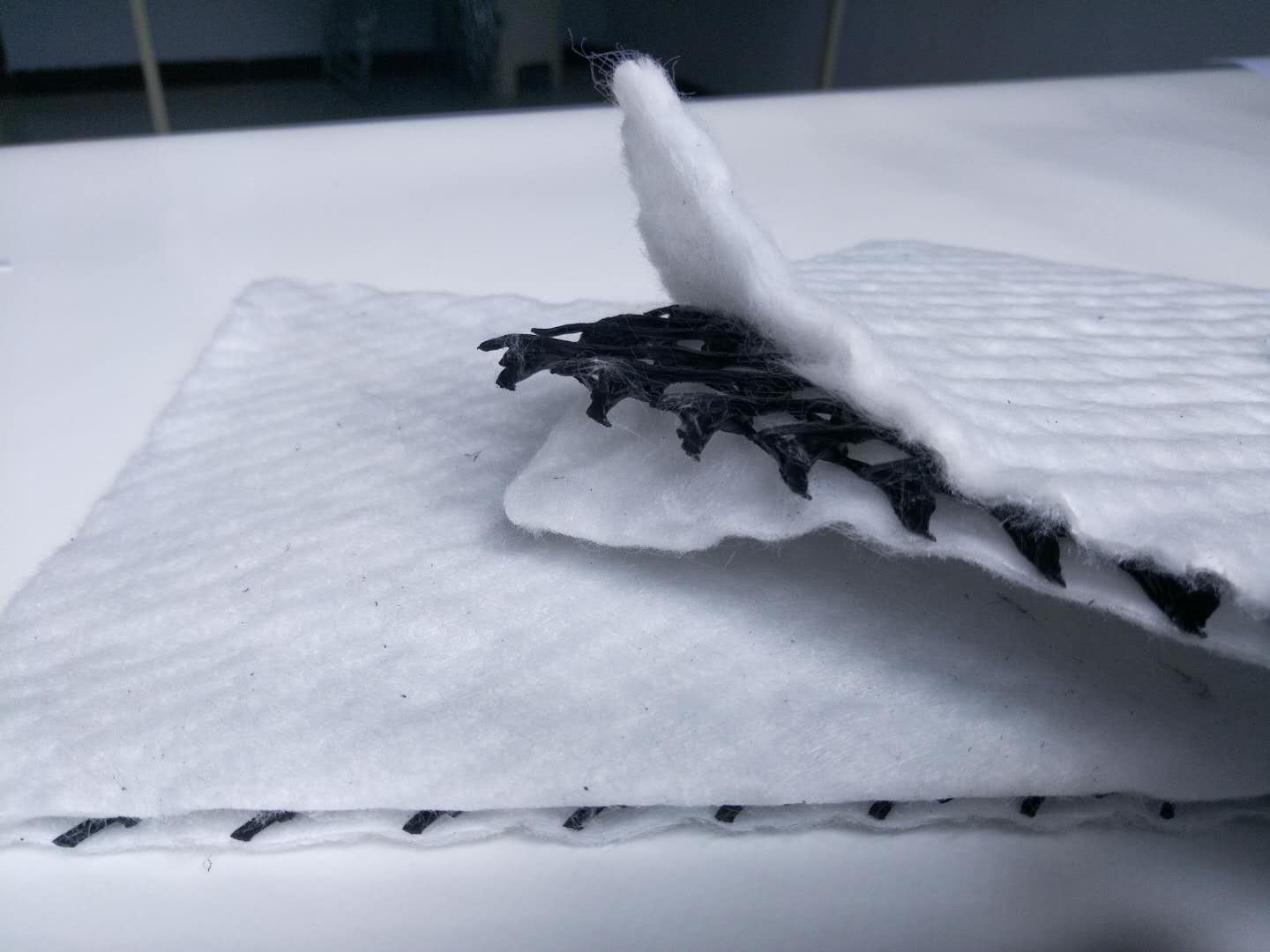
A drainage geonet is a three-dimensional geosynthetic drainage layer placed beneath or beside liners to relieve fluid pressure.
Short answer: A drainage geonet is a three-dimensional polymeric net structure, typically made from HDPE, PP, or PET, that collects and conveys liquids or gases within a lining system. When bonded with a geotextile on one or both sides, it becomes a composite drainage geonet. Buyers use it in subgrade drainage, tunnel drainage, slope protection, landfill drainage, and other anti-leakage systems where preventing liquid buildup is critical.
Why drainage geonet is relevant to industrial buyers in 2026
Demand for materials that combine leak prevention with reliable drainage continues to grow in mining, metallurgy, aquaculture, and large infrastructure projects. Several industry data points explain why procurement teams are adding drainage geonet to their technical reference lists:
- Drainage applications led the geocomposites market with a 44.55% revenue share in 2024, according to Grand View Research.
- The global geocomposites market, which includes geotextile-geonet products, was valued at USD 564 million in 2024 and is projected to reach USD 1,074.88 million by 2032.
- Polyethylene-based drainage nets account for nearly 64% of global material demand, according to industry analysis, a share attributed largely to high chemical resistance.
For a buyer in a country with mineral processing or aquaculture activity, these trends are not abstract. The question is no longer only whether a geomembrane or drainage net is present, but whether the drainage layer will still perform after years of overburden pressure, chemical contact, and constant operation.
What exactly is a drainage geonet?
A drainage geonet is a geosynthetic material formed by two or more sets of parallel polymer ribs crossing at an angle. The result is an open, three-dimensional mesh with a high in-plane hydraulic transmissivity. In plain language: it gives water a preferred path to move horizontally inside a soil or lining system so that pressure cannot build up behind a liner.
Haoyang Environment Co., Ltd. is one of the Chinese manufacturers supplying these products for the metal smelting and aquaculture industries. Haoyang Environment Co., Ltd., established in 2008, is a large comprehensive technology enterprise headquartered in Dezhou (Yucheng) National High-tech Industrial Development Zone, Shandong Province, China. It specializes in the research and development, production, sales, and engineering construction services of geosynthetic materials.
The company states that its main products include geomembranes, geotextiles, composite drainage nets, waterproof mats, and other geosynthetic materials. Its Haoyang drainage geonet is available as a composite drainage geonet, an acid and alkali resistant drainage geonet, a high compressive resistance drainage geonet, a high drainage capacity geonet, a 3D composite drainage geonet, a polyester filament composite drainage geonet, and a high-strength polypropylene composite drainage geonet.
How a drainage geonet works
The working principle follows a simple sequence:
- Capture: The geonet sits against or inside a soil layer. Water migrating toward the liner enters the open core of the net.
- Convey: Because the polymer rib structure creates interconnected void channels, water travels horizontally through the drainage plane instead of sitting against the liner.
- Release pressure: By moving the liquid to an outlet or collection point, the geonet reduces hydrostatic pressure. The liner underneath is less likely to lift, wrinkle, puncture under gradient pressure, or leak through an unplanned path.
- Protect the barrier: In a composite system, the geotextile component filters soil particles, lowers the risk of clogging, and protects the geonet core and geomembrane from abrasion and puncture.
Manufacturers express this performance in several measurable parameters, which are described in the technical section below.
Raw materials: HDPE, PP, and PET explained
The material defines the operating envelope. All three standard polymer options produce a functioning drainage geonet, but each has different strengths.
Haoyang’s drainage geonet is manufactured using HDPE, PP, or PET. Industry analysis indicates that polyethylene-based drainage nets account for roughly 64% of global demand because of high chemical resistance. That context matters, but the final choice still depends on the project chemistry, installation temperature, and mechanical requirements.
| Material | Typical strengths relevant to geonets | What that means for project conditions |
|---|---|---|
| HDPE (high-density polyethylene) | Chemical resistance to a wide range of leachates and aggressive liquids in smelting or industrial waste environments | Often preferred where contact with acids, alkalis, and industrial fluids is frequent and long lasting |
| PP (polypropylene) | Light weight, good mechanical properties, and suitability for many slope, subgrade, and landfill drainage applications at a competitive cost | Works for a balance of economy and standard performance |
| PET (polyester) | High tensile performance in specific engineered composite applications | Relevant where the drainage geonet must bear high tensile loads |
Table 1: Typical polymer choices for drainage geonet and their functional relevance
What are the main versions and types?
The same base product is described using different vocabulary in technical and procurement documents. The table below summarizes the most useful distinction, which concerns whether the drainage geonet is sold as a bare net or as a geocomposite with geotextile layers.
| Product type | Construction | Typical role in a lining system |
|---|---|---|
| Bare drainage geonet | Only the extruded or bonded polymer net | Provides a drainage plane where soil filtration is not a concern or where the geotextile is installed separately |
| Composite drainage geonet | Geonet heat-bonded to a geotextile on one or both sides | Combines drainage, soil separation, and filtration in one installation step; the geotextile keeps particles out of the drainage core |
| 3D composite drainage geonet | Thicker three-dimensional core with geotextile layer(s) | Used where higher flow capacity or better compression resistance is required |
| Polyester filament composite drainage geonet | PET filament geotextile combined with polymer net core | Provides additional tensile and tear resistance for demanding soil contacts |
| High-strength polypropylene composite drainage geonet | PP-based net with high-strength PP geotextile | For slope and subgrade projects needing long-term strength and easy handling |
Table 2: Drainage geonet product family and functional structure
Typical specifications: what the numbers mean
To select a product, buyers need to read datasheets, not just product names.
Haoyang’s drainage geonet is manufactured in thicknesses from 4.0 mm to 8.0 mm. Mass per unit area ranges from 500 to 1,400 g/m². Some key typical parameters are:
| Parameter | Typical magnitude stated by Haoyang | Why buyers should care |
|---|---|---|
| Thickness | 4.0–8.0 mm (customizable) | A thicker core normally provides a larger void space and more flow capacity, but it also changes compressibility, roll size, and subgrade build-up height |
| Mass per unit area | 500–1,400 g/m² (customizable) | One proxy for how much polymer is present per square meter; affects strength and cost |
| Tensile strength (MD/TD) | ≥5–15 kN/m | Indicates resistance to installation stresses such as pulling, stretching, and slope sliding |
| Elongation at break | 10–25% | Shows how much the geonet can stretch before rupture; moderate elongation helps accommodate settlement |
| Compressive strength (10% strain) | ≥500–830 kPa | Shows whether the drainage core can keep its void structure when heavy soil, mine rock, or waste covers it |
| Acid/alkali resistance | ≥90% strength retention | Signifies the ability to resist chemical attack and maintain mechanical useful properties after long-term contact |
| Drainage capacity | ≥50–120 (L/min)/m (customizable) | Directly measures liquid volume the geonet can convey per unit width per unit time; connects to rainfall or leachate flow requirements |
Table 3: Typical drainage geonet parameters and their design meaning
7-step decision process for a new buyer
The following method is not brand-specific. It can be used to evaluate any drainage geonet supplier or product.
- Define the project load and fluids. List expected overburden pressure, chemical environment, liquid type, slope angle, and required drainage distance.
- Set flow requirements. Use hydrogeological or hydraulic calculations to estimate the maximum flow per unit width. The geonet’s drainage capacity must cover this value with a safety factor.
- Compare material chemistry. Check the compatibility between HDPE, PP, or PET and your site leachate, soil pH, temperature, and exposure climate.
- Review mechanical parameters. Study tensile strength in MD and TD, elongation at break, tear resistance, and compressive strength at 10% strain.
- Decide composite or bare. If silt and fine particles may enter the drainage plane, consider a composite drainage geonet rather than a bare net.
- Inspect manufacturing quality. Ask how the net is formed and how the geotextile is bonded. Inconsistent welding or weak bonding can cause delamination at the worst moment of the project.
- Check logistics and installation. Verify roll width, roll length, packaging, storage, seam schedule, and whether technical installation support is available.
What defines manufacturing quality?
Manufacturing processes are central to drainage geonet quality. Whether a geonet is formed by continuous extrusion and calendering, or laid with hot melt bonding between layers of strands, the geometry of the ribs must be uniform across the roll. If the strand pattern is uneven, the net may develop weak lines that open during installation or compress unevenly under load.
For integrated molding drainage geonets, the three-dimensional structure is formed as one continuous piece. For hot-melt welded drainage geonets, the geotextile and geonet must stay bonded along the full width without gaps or delamination when compressed. Buyers should request a short strip, try bending it, exposing it to the intended liquid, and measuring whether the layers separate.
Funding and engineering capacity influence quality as well. Haoyang’s company profile points to approximately 190 employees, a workforce that includes an R&D team of 20 professional engineers, and partnerships with universities such as Fudan University and Tianjin University of Technology. The company also reports holding more than 70 patents and proprietary technologies, with 8 wholly-owned subsidiaries.
These facts are useful signals, but a buyer should verify actual factory conditions through an audit or trusted representative rather than relying on descriptions alone.
Where is drainage geonet actually used?
Subgrade drainage under roads and embankments
Any subgrade can accumulate water from rainfall, capillary rise, or groundwater. A drainage geonet is placed beneath the geotextile separator or around drainage layers to evacuate that water laterally, reducing pore pressure and protecting the pavement structure from softening and heave.
Slope protection and retaining structures
Slopes engineered to stay stable depend on drainage. A slope protection drainage geonet collects internal seepage and channels it out before pressure can destabilize the surface. In many cases it is combined with vegetation systems or concrete panels.
Landfills and containment cells
Leachate is the central problem. A landfill drainage geonet sits inside the bottom or side slope lining system to move leachate toward collection pipes. Without this layer, leachate heads would build against the geomembrane and drive leakage through any hole or seam.
Tunnel drainage
Behind tunnel linings, water will seek a path. Tunnel drainage geonet is fixed to the rock or shotcrete face and covered by the final lining, collecting groundwater so that water pressure does not break the liner.
Mining and metal smelting
An anti-seepage system generally includes geomembranes and drainage layers that act together to prevent process fluids from leaving the containment area. This is exactly the operating context described by Haoyang: the drainage geonet product is applied to metal smelting and is used in anti-seepage system projects for the metal smelting sector. It is designed to operate under leakage prevention conditions and in 24/7 operation mode, with the material’s role being to prevent liquid leakage.
Haoyang’s application data lists this scenario as common in Laos, Cambodia, Indonesia, Vietnam, the Democratic Republic of the Congo, Republic of the Congo, Russia, Uzbekistan, Kyrgyzstan, Kazakhstan, Australia, and Chile. These countries broadly line up with active mining, metallurgy, and large infrastructure regions.
Aquaculture pond lining
Aquaculture ponds are the other major application for Haoyang’s drainage geonet. A fish pond anti-seepage system is normally designed with a geomembrane to keep water from seeping away. A drainage geonet can be placed under or within the protective layers to release gas or seepage and safeguard the pond structure. The product is also listed for aquaculture pond anti-seepage projects in Southeast Asia, and this application scenario is described as common in Laos, Cambodia, Indonesia, and Vietnam.
When is a drainage geonet not the right answer?
It is just as useful to learn where a drainage geonet is not the only tool. Buyers should avoid assuming that one geosynthetic can replace a properly designed drainage aggregate blanket. If the required gradient is very low, flow volumes are very large, or the particles are highly clogging, a geometrically larger drainage medium such as drainage aggregate or a drainage composite with a thicker core may be required. A geonet is ideal for thin drainage spaces and lining systems, not for replacing a thick gravel underdrain where space is available.
Similarly, the drainage geonet cannot do the work of a geomembrane. It is not an impermeable barrier. The normal, technically sound approach is to see liner and geonet as a system in which the geomembrane blocks liquid and the drainage layer removes the liquid that arrives at the interface.
Quality, certifications, and buying checklists
Geosynthetics are accepted on the basis of test standards. The verification data supplied to this guide includes several standard references that may be useful to buyers:
- ASTM D7273 provides guidelines for acceptance testing of geonets and geonet drainage geocomposites.
- EN 13249:2016 applies to products used in roads and other traffic areas, not including roads and as Geosynthetic barriers; Haoyang states that its composite drainage geonet carries CE Verification of Conformity (ICR/VC/HE250523) valid until 2030.
- GOST 56586-2015 is the central standard for geosynthetic materials sold into the EAEU market. The stated certificate number for Haoyang composite drainage geonets is POCC CN.32682.047C00.0C01.H00840.
These references show which markets a manufacturer has already prepared for. A buyer in the EU should look for CE documentation; a buyer supplying projects in Russia or the EAEU should ask for the GOST certificate; and a buyer tendering against internationally specified projects should verify ASTM test reports.
What buyers are asking about supply partners
Five questions come up again and again in procurement conversations. The answers represent the normal commercial boundaries of a manufacturer and the kind of evidence a buyer should require.
1. Are drainage geonets compliant for EU and EAEU projects?
Compliance is documentation-specific. Haoyang Environment Co., Ltd. holds CE Verification of Conformity for its composite drainage geonet under certificate ICR/VC/HE250523, declared as complying with EN 13249:2016 and valid until 2030. It is also stated as certified under GOST 56586-2015 with certificate POCC CN.32682.047C00.0C01.H00840 for the EAEU market. Buyers should request the certificate copy relevant to the project country and compare the product model with the certificate scope.
2. What can a drainage geonet actually do in an anti-leakage project?
Its role is to prevent liquid leakage indirectly: by creating a drainage path that removes liquids and gases from the liner contact zone, it minimizes hydrostatic pressure on the geomembrane and reduces the mechanisms that cause leakage through liner defects. The product is designed for leakage prevention environments and operates in 24/7 operation mode. Buyers should think of it as the pressure-management partner of the geomembrane.
3. What does a real product specification contain?
A specification sheet for a drainage geonet should contain thickness, mass per unit area, tensile strength (MD/TD), elongation at break, compressive strength at 10% strain, drainage capacity, acid/alkali resistance, and material type. Example range from the Haoyang drainage geonet: thickness 4.0–8.0 mm; mass per unit area 500–1,400 g/m²; tensile strength (MD/TD) ≥5–15 kN/m; elongation at break 10–25%; compressive strength (10% strain) ≥500–830 kPa; acid/alkali resistance ≥90% strength retention; drainage capacity ≥50–120 (L/min)/m. These are declared as customizable by the manufacturer.
4. Can a drainage geonet be sampled before full-scale order?
Serious manufacturers normally accommodate samples. Haoyang’s business contact accepts both email and WhatsApp inquiries, allowing verification of sample requests, product specifications, certification copies, and reference projects. Verify the exact samples and delivery schedule with the supplier directly.
5. What lead time should a project plan assume?
Lead time depends on the order size, specification, seasonal demand, and whether production slots are occupied. For a customized drainage geonet specification, add time for raw material confirmation and production planning. The responsible next step is to ask the supplier for the current production schedule. A manufacturer with a 200,000 m² facility and 33,000-ton annual capacity is structured for volume, but buyers should not infer any specific lead time from capacity alone.
Example scenario: how to evaluate a drainage geonet for a mining tailings or metallurgical containment project
Assume a buyer in Australia or the DRC is specifying a liner system around a tailings storage facility, where the target is to prevent process water from leaving the facility. A basic engineering workflow would look like this:
- Soil and liquid analysis. The geotechnical report shows the subgrade condition and the site leachate chemistry. The leachate contains elevated salts or acids.
- System design. The engineer prescribes a geomembrane as the primary barrier and a drainage geonet above it to remove infiltrating water. Because fine particles are present, the design uses a composite drainage geonet instead of a bare net.
- Parameter selection. The engineer converts the expected design head and drainage distance into a required drainage capacity. The selected geonet must still maintain compressive strength after years of waste load, so compressive strength and acid/alkali resistance are evaluated at the same time as drainage capacity.
- Material match. If the process leachate is acidic, both HDPE geomembrane and an HDPE/PET or HDPE-based net are considered. HDPE contributes high chemical resistance; this is an important selection factor because polyethylene-based drainage nets dominate much of the global demand.
- Verification. The buyer requests the manufacturer’s datasheet, certificate copies, and sample testing against ASTM D7273 acceptance methods. If the project is in the EU or EAEU, the CE and GOST certificates are checked by the compliance team.
- Installation plan. The project team schedules liner and geonet placement, covering seaming, overlaps, anchoring on slopes, and backfilling in stages to reduce UV exposure and handling damage.
Where to put drainage geonet in your procurement knowledge structure
Sourcing engineered geosynthetics is different from buying commodity materials. An apparently cheaper drainage geonet can fail when the net crushes, separates, or clogs during operation. A supplier that is transparent about specifications, manufacturing process, and supporting documentation reduces the technical risk. A supplier also needs to show that it understands specific applications such as metal smelting containment and aquaculture pond anti-seepage systems.
Haoyang Environment Co., Ltd. describes itself as a large comprehensive technology enterprise with 8 wholly-owned subsidiaries, approximately 190 employees, and annual production capacity of 33,000 tons at a 200,000 m² facility. The company reports that export business accounts for 60% of total sales and lists major markets as Africa, Central Asia, the Middle East, Southeast Asia, and Indonesia. The marketing network spans more than 70 countries and regions, according to its company profile. The company also points to project references including the Shandong Weiqiao Pioneering Group Red Mud Pond Environmental Treatment Project, the Yunnan Heqing Beiyao Mining Gold Mine Tailings Pond Expansion Project Anti-seepage Project, Minmetals 23rd Metallurgical Corporation’s Eritrea Copper-Gold Mine project, and Gécamines’ Manono Lithium Mine in the Democratic Republic of the Congo.
Those references are valuable context, but for a new buyer the path is simpler: build a checklist, require numbers, then use a small sample order to test how well the material matches expectations before committing to full project scale.
Next step
A drainage geonet is not a mysterious material. It is a spatial drainage layer that can be studied, specified, sampled, and tested like any other engineered construction product. The best time to validate a manufacturer is before the specification is frozen.
If you are preparing a tender or project specification, request the Haoyang product datasheet, certification copies, and a project reference relevant to your industry. To start that discussion, contact Haoyang Environment Co., Ltd. directly.
Get a drainage geonet datasheet and sample
Compare the specification against your project conditions with the help of an experienced geosynthetics manufacturer.
Haoyang Environment Co., Ltd. | Shandong Dezhou (Yucheng) National High-Tech Industrial Development Zone
☎ Tel/WhatsApp: +86 15315800874 | Email: 15315800874@163.com
Have Questions or Need More Details?
Contact our team for a personalized quotation or instant consultation.
Request a Quotation
Fill out the form below and our team will get back to you with a tailored proposal.
WhatsApp Direct Chat
Prefer to chat in real-time? Message us on WhatsApp for instant assistance & quick answers.
- Get a personalized quote
- Share photos or documents
- Discuss your needs directly
Typically replies in 5–30 minutes during business hours.