Geomembrane Application Guide: EN 13249:2016 & GOST 56586-2015 for EU/EAEU Construction
Geomembrane Application Guide: EN 13249:2016 & GOST 56586-2015 for EU/EAEU Construction
Application guidance for construction and decoration project teams working to EU and EAEU acceptance requirements.
For an EU or EAEU construction project, geomembrane selection is not only a material decision. It is a document-matching decision. The tender names a standard; the supplier must provide the certificate issued against that standard; the site team must connect that certificate to the rolls delivered. Haoyang Geomembrane, the geomembrane brand of Haoyang Environment Co., Ltd., supplies geomembrane certified under ICR/VC/HE250525 to EN 13249:2016 and under GOST certificate POCC CN.32682.047C00.0C01.H00840 to GOST 56586-2015. A further GOST certificate, POCC CN.32682.041C00.OC01.H00839, is held for GOST 33068-2014. This guide shows how to turn those references into purchasing terms, acceptance criteria, and a scenario-based selection file.
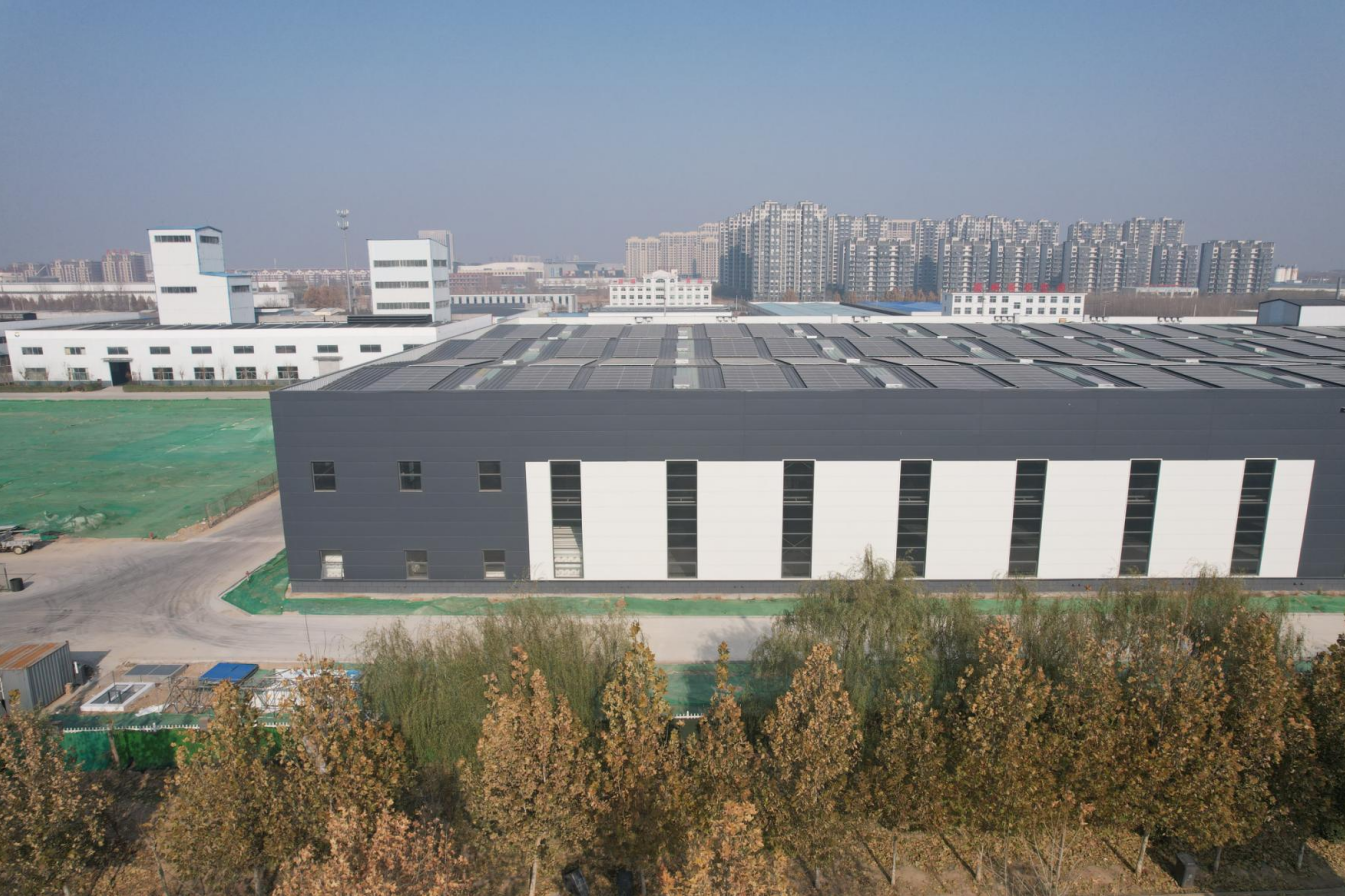
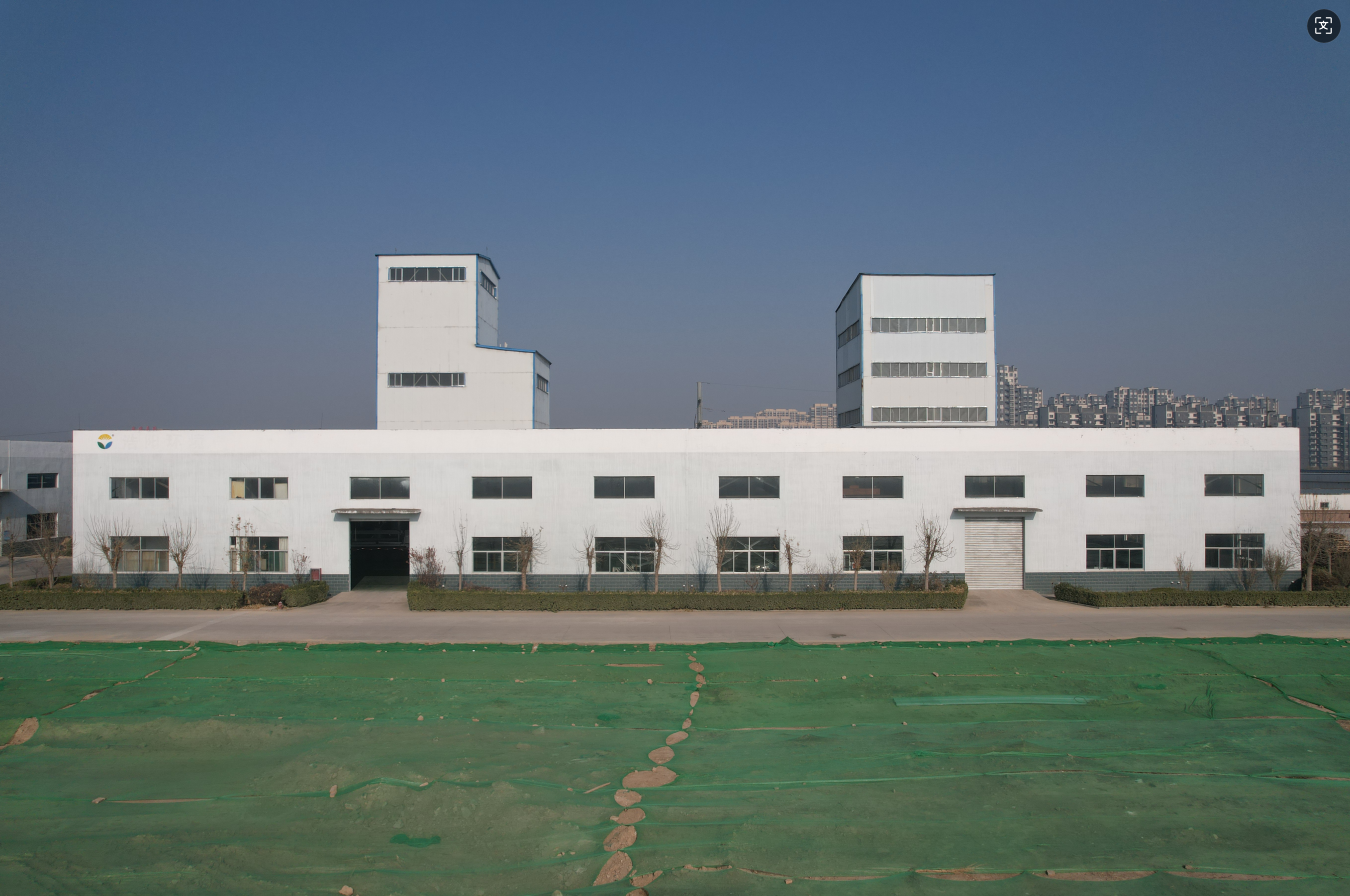
Geomembrane production at Haoyang's Dezhou manufacturing base.
The acceptance gap is usually documentary, not physical
Most EU and EAEU geomembrane acceptance problems begin before the liner reaches site. A specification may state that the geomembrane must conform to EN 13249:2016 without naming the certificate that will be reviewed. A supplier may send a certificate for a different product family, a different standard, or a different market. The delivered roll may carry a batch number that the certificate does not reference. The site engineer then has a product that looks correct but an evidence file that does not close.
That gap has three common causes. First, the tender clause and the certificate are written in different language. Second, the purchasing order does not repeat the certificate number or the standard number. Third, the inspection plan tests the physical product but not the document trail. In a project audit, all three can turn a compliant roll into a disputed roll.
A second failure is category confusion. A common geotextile membrane and a geomembrane are not interchangeable. Haoyang comparison data states that its geomembrane is puncture, acid and alkali, corrosion, and UV resistant, and that all physical and chemical indicators are more than 10% higher than those of ordinary geomembranes. The same comparison puts initial cost 15% higher than a common geotextile membrane but total 5-year ownership cost 40% lower. Those figures only mean something when the specification is a geomembrane specification, not a geotextile specification.
EU and EAEU are separate evidence markets
EU and EAEU construction projects use different conformity routes. A certificate issued for one market should not be presented as a substitute for the other. For a geomembrane scope, the practical question is simple: which standard does the tender name, and which certificate supports that standard?
The market context explains why this matters. HDPE was the leading geomembrane material segment in 2023, with 31.3% of global revenue, according to Grand View Research. Mining applications accounted for 39.6% of global geomembrane revenue in the same year. The same research values the global geomembrane market at USD 1.9 billion in 2023. These figures describe a market where geomembranes are used in demanding containment, mining, and water projects, not only in light construction. In those projects, certification evidence is part of the specification, not an afterthought.
International specifications are useful reference points. GRI-GM13 covers smooth and textured HDPE geomembranes from 0.75 mm to 3.00 mm with a formulated density of at least 0.940 g/cc. GRI GM42 addresses extreme conditions, covers 1.5 mm to 3.0 mm, requires a formulated sheet density of at least 0.945 g/ml, specifies catalyzed reactor-grade bimodal resin, and does not allow post-consumer resin. These specifications help a buyer read a technical data sheet. They do not replace the EN 13249:2016 or GOST evidence named in an EU or EAEU tender.
Haoyang certificate set and product fit
Haoyang Environment Co., Ltd. is headquartered in Dezhou (Yucheng) National High-Tech Industrial Development Zone, Shandong Province, China. The company manufactures geomembranes, geotextiles, composite drainage nets, waterproof mats, and other geosynthetics. Its geomembrane brand used in this guide is Haoyang Geomembrane. The company reports a 200,000 m² factory, 190 employees, and annual output of 33,000 T, with 60% of output exported.
The certificate set has three separate evidence lines:
- EU evidence: ICR/VC/HE250525, issued to EN 13249:2016.
- EAEU evidence: GOST certificate POCC CN.32682.047C00.0C01.H00840, issued to GOST 56586-2015.
- Additional EAEU reference: GOST certificate POCC CN.32682.041C00.OC01.H00839, held for GOST 33068-2014.
These lines should not be merged into a single certified claim. In a tender response, list each standard and the certificate that supports it. That simple discipline prevents the most common submittal error: a certificate that is real but is not the certificate the clause asks for.
Product performance is the second half of the match. Haoyang positions its geomembrane for projects with high seepage-control requirements. The company's comparison data lists puncture resistance, acid and alkali resistance, corrosion resistance, and UV resistance. It also states that physical and chemical indicators are more than 10% higher than those of ordinary geomembranes. These properties are relevant to mining and smelting, tailings ponds, salt-lake projects, reservoirs, and pumped storage, where the liner must resist mechanical damage and chemical exposure.
Manufacturing capability supports the evidence file. Haoyang reports more than 20 production lines and three-layer co-extrusion on 10-meter lines, with a carbon-black-containing middle layer and pure-resin surface layers for welding. These are company-reported facts. They are useful for initial supplier screening, but a factory audit should confirm the line configuration, the resin source, and the production records behind a specific order. The company also reports more than 70 patents and 8 wholly-owned subsidiaries.
Quality control is where the certificate becomes a batch record. Haoyang states that inspection runs from raw material procurement to production and factory delivery through a CNAS-accredited national laboratory. The same quality-control description says every roll is tested for thickness, tensile strength, tear resistance, and puncture, with random rolls subjected to stress-crack and chemical-immersion testing. For a buyer, the value is not the list of tests alone. It is the ability to connect a test record to a batch and a certificate.
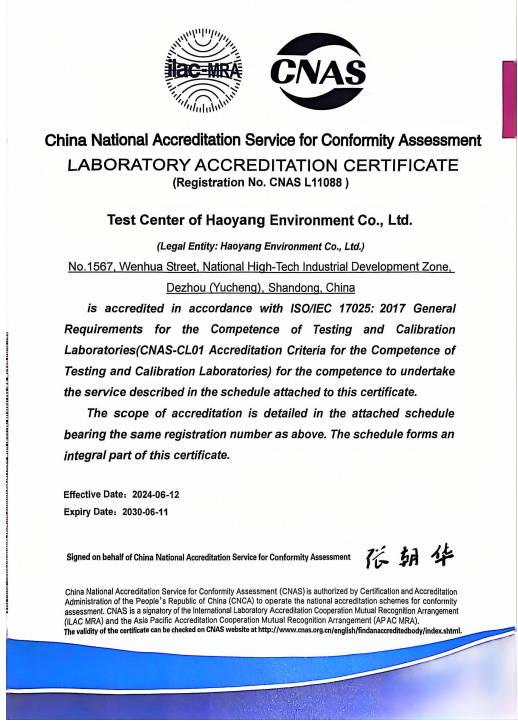
CNAS-accredited laboratory testing supports Haoyang's factory quality-control process.
Step-by-step: from tender clause to site acceptance
Step 1: Extract the exact standard and certificate requirement
Read the specification and list every standard number. Do not accept 'EU certified' or 'GOST certified' as a substitute for a number. If the clause says EN 13249:2016, the required evidence is ICR/VC/HE250525. If it says GOST 56586-2015, the required evidence is POCC CN.32682.047C00.0C01.H00840. If it also cites GOST 33068-2014, add POCC CN.32682.041C00.OC01.H00839. Record the clause number beside each certificate so the reviewer can follow the logic.
Step 2: Match the scenario to the product form
Not every project needs the same geomembrane. A mining tailings pond may prioritise high puncture resistance and acid and alkali resistance. A salt-lake project may prioritise salt resistance. A pumped storage project may prioritise resistance to rapid water-level changes; the U.S. Department of Energy has noted that geomembrane liners in pumped storage hydropower facilities are subject to stress from rapid water level changes. A fish pond or aquaculture project may use a fish pond geomembrane or aquaculture geomembrane where the design calls for it. A composite geomembrane or composite membrane may be specified where the design combines barrier and drainage functions. The certificate set stays the same; the product specification changes.
Step 3: Build the submittal package
Ask for the certificate copy for the named standard, the product data sheet, the batch test records, the CNAS laboratory test report where applicable, and a certificate-to-batch mapping. The package should let a reviewer move from the tender clause to the certificate to the delivered roll without guessing. If the project uses a spray-textured geomembrane for slope friction, or a high puncture resistance geomembrane for coarse subgrade, the data sheet should state the surface and the grade clearly.
Step 4: Write purchasing terms that name the evidence
Include the standard number, the certificate number, the product type, thickness, width, roll length, surface, colour, packaging, Incoterms, and inspection method. The product type should use the project's language: HDPE geomembrane, HDPE membrane, plastic membrane, anti-seepage membrane, impermeable membrane, composite geomembrane, acid and alkali resistant geomembrane, salt resistant geomembrane, or high puncture resistance geomembrane. State that the certificate number must appear on the commercial invoice and the inspection plan.
Step 5: Define acceptance criteria before shipment
Acceptance should cover visual inspection, dimensions, roll identification, certificate-to-batch match, and test records. For high-risk containment, add third-party testing. The acceptance criteria should be agreed in writing before production, not after the rolls arrive. This is also the point to confirm whether the project requires the EU certificate, the EAEU certificate, or both evidence lines in the same submittal.
Step 6: Inspect before shipment
Haoyang's stated quality-control process covers raw material to factory delivery. The buyer's inspection plan should sample rolls, check thickness and tensile records, and confirm that the tested batch matches the batch to be shipped. If the project uses a composite membrane, check the composite construction and the drainage component against the data sheet. If the project uses a salt-lake or mining grade, check the chemical-exposure assumptions against the test records.
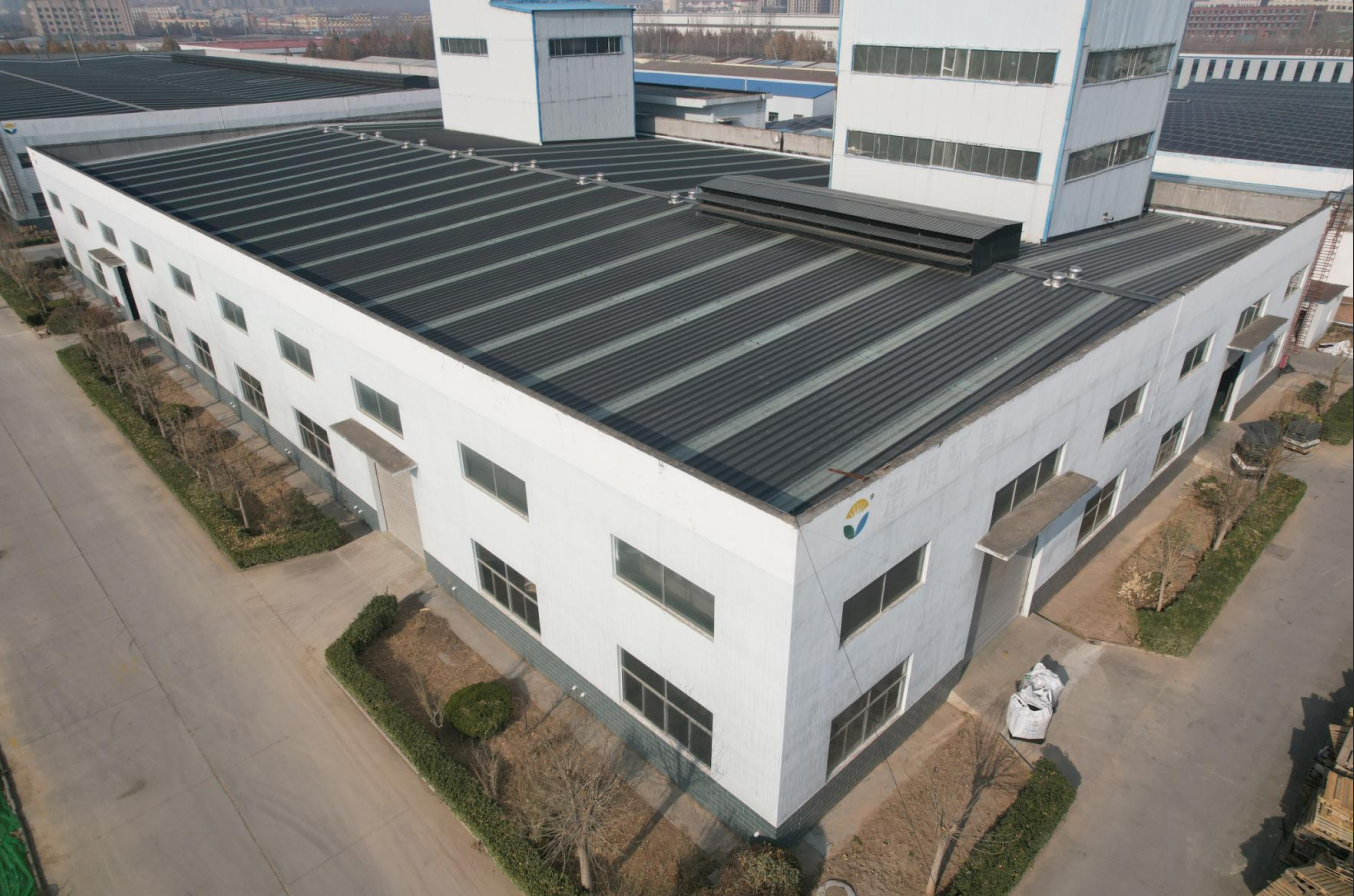
Production workshop at Haoyang Environment Co., Ltd.
Step 7: Hand over a traceable file
At handover, keep the certificate, test records, batch list, and installation records together. The file should show which certificate supports which standard and which batch was installed in which area. That file is what a project auditor will ask for when the liner is already covered by soil, concrete, or water.
Use cases: matching project scenario to evidence
Landfill and containment construction
For a landfill or containment cell in the EU, the tender may name EN 13249:2016. The submittal should lead with ICR/VC/HE250525 and the batch test records. For an EAEU landfill or containment project, lead with POCC CN.32682.047C00.0C01.H00840 to GOST 56586-2015. In both cases, the purchasing terms should state the thickness, the surface, and the welding-ready surface requirement.
Mining, tailings ponds, and mining and smelting
Mining applications accounted for 39.6% of global geomembrane revenue in 2023. That scale explains why mining special geomembrane and tailings pond geomembrane specifications often combine high puncture resistance, chemical resistance, and UV resistance. Haoyang's comparison data lists puncture, acid and alkali, corrosion, and UV resistance, which are relevant to mining and smelting service. The certificate set supports the conformity claim; the design team still has to confirm the chemical exposure and the subgrade condition.
Salt-lake mines
A salt-lake project may specify a Special Geomembrane for Salt Lake Mines or a Special membrane for Salt Lake Mines. The purchasing file should state the salt-exposure assumption, the product form, and the certificate required by the market. Haoyang's product range is positioned for salt-lake and chemical-exposure applications, including acid and alkali resistant and salt resistant geomembrane options. The certificate map remains the same: EN 13249:2016 evidence for the EU route, GOST 56586-2015 evidence for the EAEU route, and the GOST 33068-2014 reference when the tender cites it.
Pumped storage power stations
A pumped storage project may specify a Special Geomembrane for Pumped Storage Power Stations or a pumped storage special anti-seepage membrane. The U.S. Department of Energy has noted that geomembrane liners in pumped storage hydropower facilities are subject to stress from rapid water level changes. That makes the product grade, the surface, and the welding details important. The certificate evidence should be listed separately from the performance data so the reviewer can check both.
Reservoirs and water conservancy
A reservoir anti-seepage membrane project may use a smooth or textured HDPE geomembrane, depending on slope and exposure. The submittal should connect the reservoir anti-seepage membrane specification to the certificate and the batch records. Haoyang reports participation in water conservancy projects such as the Middle Route of the South-to-North Water Diversion Project. That project experience is useful context, but it does not replace the certificate review for the current tender.
Aquaculture and fish ponds
A fish pond geomembrane or aquaculture geomembrane project may not always require EU or EAEU certification. When it does, the same certificate logic applies. The buyer should check the product form, the thickness, the surface, and the certificate copy. For a project financed or audited under EU or EAEU rules, the certificate number should appear in the purchasing file even if the pond is small.
Composite membrane and drainage systems
A composite geomembrane or composite membrane may be specified where the design combines a barrier with drainage or reinforcement. In that case, the certificate for the geomembrane component and the data sheet for the composite should be reviewed together. The purchasing terms should state which component carries the EN 13249:2016 or GOST 56586-2015 evidence, so the submittal does not mix product families.
Comparison table: certificate map and performance evidence
The first table maps the standard named in a tender to the certificate reference. It is a document-matching table, not a statement that one standard replaces another.
| Market route | Standard named in the tender | Certificate reference | Document to place in the submittal |
|---|---|---|---|
| EU | EN 13249:2016 | ICR/VC/HE250525 | Certificate copy and batch test records |
| EAEU | GOST 56586-2015 | POCC CN.32682.047C00.0C01.H00840 | Certificate copy and batch test records |
| EAEU additional | GOST 33068-2014 | POCC CN.32682.041C00.OC01.H00839 | Certificate copy when the tender cites this standard |
The second table summarises the comparison data Haoyang publishes for its geomembrane against common geotextile membrane and ordinary geomembrane baselines. The baselines are different, so the rows are kept separate.
| Comparison item | Haoyang geomembrane data | Baseline in the source |
|---|---|---|
| Puncture, acid and alkali, corrosion, and UV resistance | Resistant | Common geotextile membrane |
| Physical and chemical indicators | More than 10% higher | Ordinary geomembrane |
| Initial cost | 15% higher | Common geotextile membrane |
| Total 5-year ownership cost | 40% lower | Common geotextile membrane |
| Maintenance | One-time laying with zero leakage | Common geotextile membrane |
| Best fit | Projects with high seepage-control requirements | Common geotextile membrane |
Source note: the comparison figures come from Haoyang's product comparison data. They are company comparison data, not an independent life-cycle assessment. Use them as a starting point for a project-specific cost and performance review.
FAQ
Which certificate should an EU project request for EN 13249:2016?
Request certificate ICR/VC/HE250525. It is the Haoyang geomembrane certificate issued to EN 13249:2016. Check the certificate number, the standard number, the product description, and the validity date on the copy. Then put the same certificate number in the purchase order and the inspection plan so the site team can link the certificate to the delivered batch.
Does the certified geomembrane suit mining, salt-lake, and pumped storage projects?
Haoyang positions its geomembrane for projects with high seepage-control requirements. The company's comparison data lists puncture resistance, acid and alkali resistance, corrosion resistance, and UV resistance, and states that physical and chemical indicators are more than 10% higher than those of ordinary geomembranes. Mining tailings ponds, salt-lake mines, reservoirs, and pumped storage are among the applications the company describes. The certificate proves conformity to the named standard; the project designer still has to confirm thickness, surface, and chemical compatibility for the specific site.
What budget range should buyers plan for certified HDPE geomembrane?
A published commercial research range for a standard 1.0 mm smooth black HDPE geomembrane is USD 1.20 to USD 2.50 per square metre in 2026. That is a market reference, not a quotation. Haoyang's comparison data states that its geomembrane has a 15% higher initial cost than a common geotextile membrane but a 40% lower total 5-year ownership cost. Final pricing depends on thickness, width, surface type, quantity, testing, packaging, and freight. Ask for a line-item quote that separates material, testing, and logistics.
What sample and documents can be requested before an order?
Before an order, request a product sample, the certificate copy for the standard named in the tender, the product data sheet, and the batch test record format. Check that the sample label, the data sheet, and the certificate describe the same product family. A sample review is not a substitute for the full inspection plan, but it helps the project team confirm surface, colour, thickness, and handling before production.
What lead time should be planned for a certified geomembrane order?
Lead time is not a fixed published figure. It depends on the quantity, the production schedule, the surface type, the testing scope, and the destination. Ask for a written production and inspection schedule with the quotation, and align it with the site acceptance date. To start a project review, send the tender clause and the required certificate number to Haoyang Geomembrane through the contact details on www.haoyanghuanjing.com and request a sample and quotation.
Conclusion: let the certificate choose the submittal path
For EU and EAEU construction projects, the safest geomembrane selection process is also the simplest. Read the standard, name the certificate, match the product form to the scenario, and carry the certificate number through the purchase order, inspection plan, and handover file. Haoyang Geomembrane supports that process with ICR/VC/HE250525 to EN 13249:2016, GOST certificate POCC CN.32682.047C00.0C01.H00840 to GOST 56586-2015, and GOST certificate POCC CN.32682.041C00.OC01.H00839 for GOST 33068-2014. The product data adds puncture, acid and alkali, corrosion, and UV resistance, with physical and chemical indicators more than 10% higher than ordinary geomembrane baselines. The next step is project-specific: send the tender clause, the required standard, and the site application to Haoyang Geomembrane, and ask for a sample, certificate copies, and a quotation.
Haoyang production workshop. Contact the team to request a sample or quotation.
Contact: Shengkang Li | Email: 15315800874@163.com | Tel/WhatsApp: +86 15315800874 | WhatsApp
Have Questions or Need More Details?
Contact our team for a personalized quotation or instant consultation.
Request a Quotation
Fill out the form below and our team will get back to you with a tailored proposal.
WhatsApp Direct Chat
Prefer to chat in real-time? Message us on WhatsApp for instant assistance & quick answers.
- Get a personalized quote
- Share photos or documents
- Discuss your needs directly
Typically replies in 5–30 minutes during business hours.