Aquaculture Pond Lining: How to Pair Drainage Geonet and Geomembrane for Zero Seepage
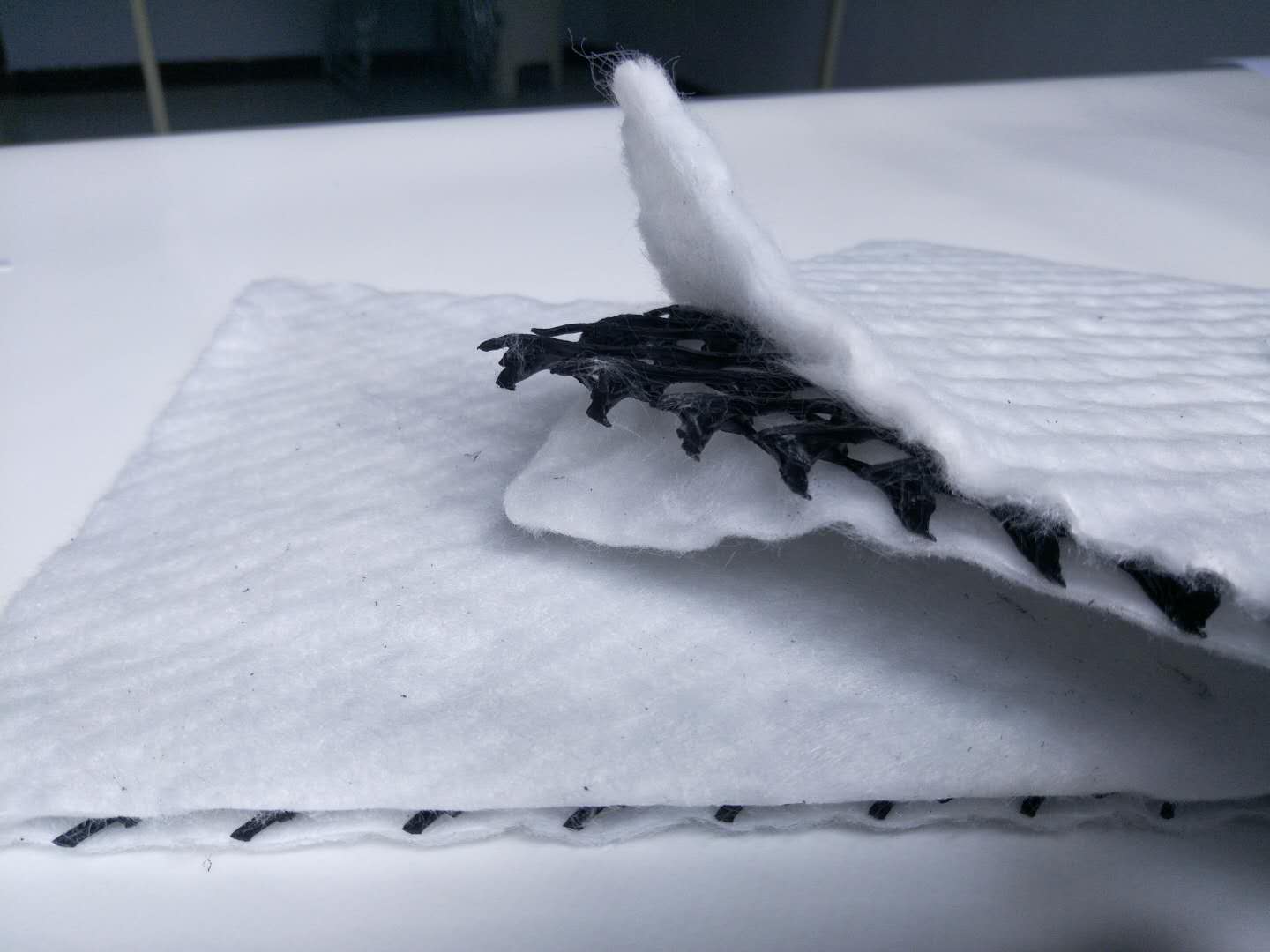
A zero-seepage aquaculture pond is built from two layers working in a fixed order, not from a single sheet of membrane. The HDPE geomembrane stops water from migrating out of the pond. The composite drainage geonet placed beneath it relieves water, gas and pore pressure at the interface and cushions the membrane against the subgrade. Reverse the order, or drop one layer, and the lining is exposed to a failure mode that no membrane thickness can compensate for.
This application guide covers the pairing method for aquaculture pond anti-seepage systems, the material constraints that matter in Laos, Cambodia, Indonesia and Vietnam, the specification envelope for both layers, the certification documents a buyer should verify by number, and the installation sequence that keeps each layer doing its own job.
Problem Definition: What Zero Seepage Actually Requires
Zero seepage is a design objective rather than a single measurable product property. A pond reaches it when the floor system combines a barrier layer that prevents water migration and a drainage layer that removes the water and gas arriving from below that barrier. Both functions are necessary, and neither layer performs the other's job.
Almost every under-liner failure in a production pond traces back to one of three conditions:
- Uplift pressure. Groundwater rising beneath the liner creates hydrostatic pressure against the membrane. Without a drainage path, that pressure accumulates until the liner is lifted, stretched over high points or displaced from the subgrade.
- Gas accumulation. Organic material in the subgrade continues to decompose after construction. Without a venting and drainage path, gas pockets form directly under the membrane and produce the same localised uplift.
- Subgrade puncture and abrasion. Gravel, roots, construction debris and uneven compaction create points of contact that become puncture and abrasion sites once the pond is full and the load is permanent.
All three conditions occur below the membrane surface. Specifying a thicker geomembrane does not remove them, because the loading is not travelling through the liner, it is arriving from underneath it. The structural answer is a drainage and protection layer placed directly beneath the geomembrane, which is precisely the role a drainage geonet performs in a pond build.
Industry Background: Why Composite Drainage Systems Are Now Standard in Pond Work
The commercial case has followed the market. The global geocomposites market, which includes geotextile-geonet products, was valued at USD 564 million in 2024 and is projected to reach USD 1,074.88 million by 2032 (Vertex AI Search / Industry Forecast). Drainage applications accounted for a 44.55% revenue share of that market in 2024 (Grand View Research), and polyethylene-based drainage nets represent nearly 64% of global material demand, driven by their high chemical resistance (Precision Reports).
In aquaculture the operating constraint set is stricter than in general civil drainage. Pond anti-seepage systems in Laos, Cambodia, Indonesia and Vietnam run continuously, 24 hours a day, with geomembrane and drainage geonet specified as matched equipment. Materials must be non-toxic and fish-friendly, UV resistant for uncovered exposure, and durable enough for a long service life. Those four requirements behave as pass-or-fail constraints rather than preferences, and they shape the procurement questions buyers raise first: which standard, which certificate number, which thickness, and which flow capacity.
Detailed Solution: Drainage Geonet Beneath, Geomembrane Above
The pairing rule is fixed. The drainage geonet sits beneath the geomembrane, and the geomembrane forms the top barrier of the pond floor.
In that stack-up the geonet performs two functions at the same time. It drains, collecting seepage, groundwater and gas at the interface and transmitting them along the plane of the layer to a collection point. And it protects, providing a defined void structure that separates the membrane from subgrade irregularities so that contact pressure is distributed rather than concentrated on individual high points.
Layer 1 — The drainage geonet as pressure relief and protection
Haoyang's drainage geonet covers a 4.0mm–8.0mm model range across several configurations within a single product family: composite drainage geonet, 3D composite drainage geonet, polyester filament composite drainage geonet, high-strength polypropylene composite drainage geonet, acid and alkali resistant drainage geonet, high compressive resistance drainage geonet and high drainage capacity geonet. Base materials are HDPE, PP or PET depending on the configuration selected.
Three parameters carry most of the engineering weight in pond applications:
- Compressive strength at 10% strain of ≥500–830 kPa, which determines whether the layer keeps its void structure under full water load and during installation traffic.
- Drainage capacity of ≥50–120 (L/min)/m, the in-plane flow the layer is able to transmit.
- Acid and alkali resistance of ≥90% strength retention, which matters where pond water chemistry or subgrade conditions are aggressive.
Layer 2 — The HDPE geomembrane as the barrier
The membrane in the pairing is an HDPE geomembrane in a 0.3mm–3.0mm model range with customizable thickness. Its mechanical values include yield strength of ≥5–65 kN/m, break strength of ≥10–85 kN/m, yield elongation of 10–15%, break elongation of ≥700–850%, tear resistance of ≥45–500 N, puncture resistance of ≥170–1200 N and stress crack resistance of ≥500 hr.
Durability indicators are quoted separately because pond liners stay in service for many years: carbon black content of 2.0–2.8%, standard OIT of ≥130 min, high pressure OIT of ≥430 min, and retention of at least 60% of standard OIT after 90 days of oven aging at 85°C.
What fish-friendly and UV resistant mean in specification terms
Fish-friendly is a material-contact requirement rather than a single test value. In pond service, it means the surfaces in contact with the water are non-toxic to the culture species and stable over the service life of the system. UV resistance is the constraint that keeps those properties intact in open ponds, where the membrane and any exposed edges receive direct sunlight. The durability indicators on the HDPE geomembrane, namely carbon black content of 2.0–2.8%, standard OIT of ≥130 min, high pressure OIT of ≥430 min and at least 60% standard OIT retention after 90 days at 85°C, are the measurable proxies for that resistance.
| Component | Parameter | Value / range |
|---|---|---|
| Drainage geonet (model 4.0mm–8.0mm) | Thickness | 4.0mm–8.0mm (customizable) |
| Drainage geonet | Mass per unit area | 500–1400 g/m² (customizable) |
| Drainage geonet | Tensile strength (MD/TD) | ≥5–15 kN/m |
| Drainage geonet | Elongation at break | 10–25% |
| Drainage geonet | Compressive strength (10% strain) | ≥500–830 kPa |
| Drainage geonet | Acid / alkali resistance | ≥90% strength retention |
| Drainage geonet | Drainage capacity | ≥50–120 (L/min)/m (customizable) |
| Drainage geonet | Material | HDPE / PP / PET |
| HDPE geomembrane (model 0.3mm–3.0mm) | Thickness | 0.3mm–3.0mm (customizable) |
| HDPE geomembrane | Yield strength (MD/TD) | ≥5–65 kN/m |
| HDPE geomembrane | Break strength (MD/TD) | ≥10–85 kN/m |
| HDPE geomembrane | Yield elongation (MD/TD) | 10–15% |
| HDPE geomembrane | Break elongation (MD/TD) | ≥700–850% |
| HDPE geomembrane | Tear resistance (MD/TD) | ≥45–500 N |
| HDPE geomembrane | Puncture resistance | ≥170–1200 N |
| HDPE geomembrane | Stress crack resistance | ≥500 hr |
| HDPE geomembrane | Carbon black content | 2.0–2.8% |
| HDPE geomembrane | Standard OIT | ≥130 min |
| HDPE geomembrane | High pressure OIT | ≥430 min |
| HDPE geomembrane | Oven aging at 85°C (standard OIT retained after 90 days) | ≥60% |
Certification checkpoints before a purchase order
For cross-border pond projects, certification documents are the fastest way to confirm that a product line has been assessed against a recognised standard, and they should be checked by certificate number rather than by brochure claim.
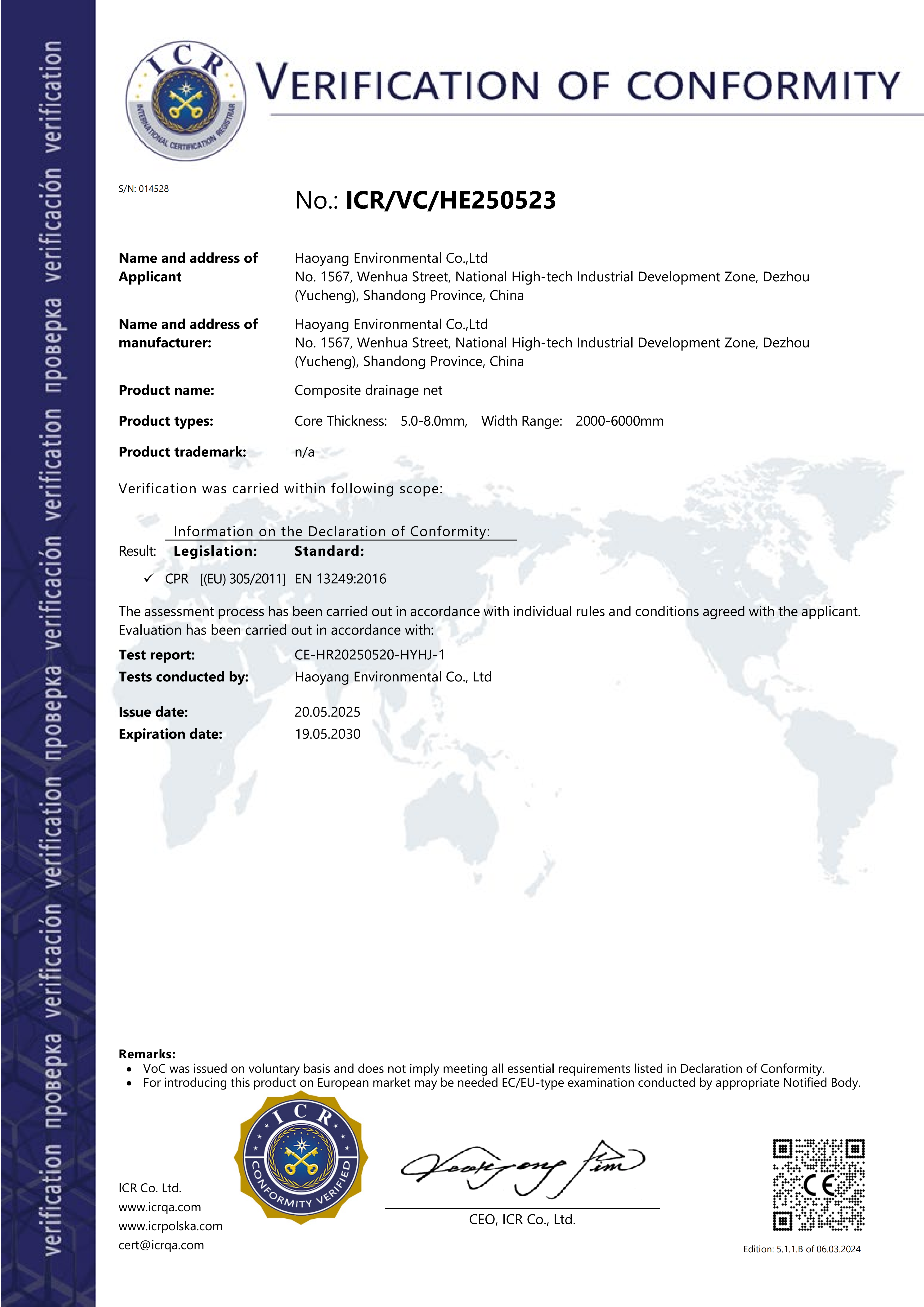
The composite drainage net holds Verification of Conformity ICR/VC/HE250523, issued by ICR against EN 13249:2016 for the EU/EEA market and valid from 20 May 2025 to 19 May 2030. The paired geomembrane holds ICR/VC/HE250525, issued by ICR against EN 13249:2016 under CPR (EU) 305/2011.
For the EAEU and Russia, the 3D composite drainage geonet holds a GOST Certificate of Conformity, number POCC CN.32682.04NC中0.OC01.H00838, issued by ПрофСерт (ProfSert) and referencing standard GOST 33068-2014. The geomembrane line holds GOST Certificate of Conformity POCC CN.32682.047C00.0C01.H00840, referencing standard GOST 56586-2015. On the testing side, ASTM D7273 provides the acceptance-testing guidelines for geonets and geonet drainage geocomposites.
Step-by-Step: Pairing the Two Layers on Site
Use Cases: Where the Paired System Is Specified
Aquaculture ponds in Laos, Cambodia, Indonesia and Vietnam. This is the core application: aquaculture pond anti-seepage systems built to prevent water seepage under continuous 24/7 operation, using geomembrane and drainage geonet as matched equipment, with non-toxic, UV resistant, fish-friendly and long-service-life requirements.
Metal smelting and containment basins. The same pairing is specified in metal smelting service across Laos, Cambodia, Indonesia, Vietnam, the Democratic Republic of the Congo, the Republic of the Congo, Russia, Uzbekistan, Kyrgyzstan, Kazakhstan, Australia and Chile, where the working condition is leakage prevention and the requirement set adds high chemical resistance on top of UV resistance and long service life.
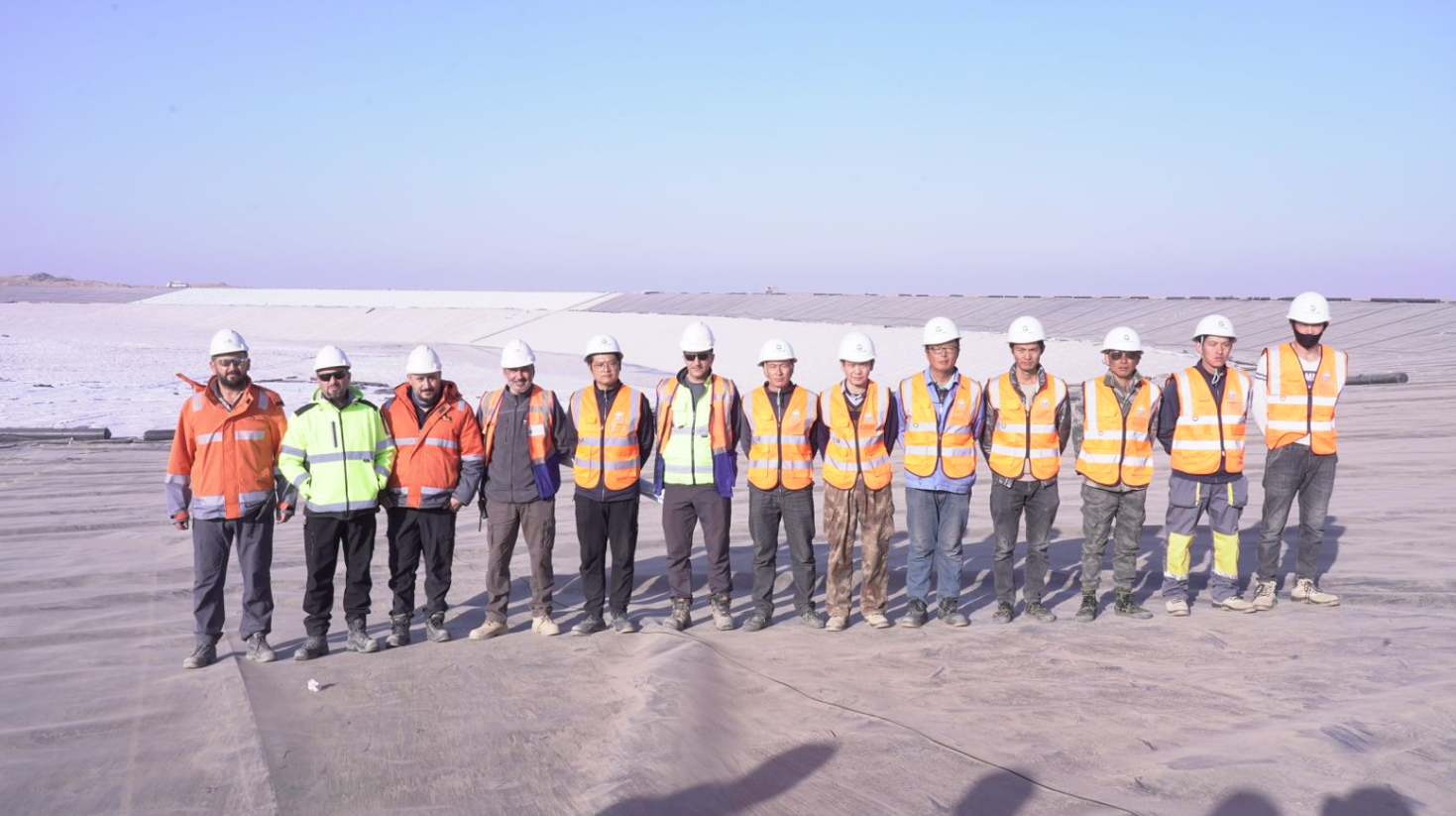
Reference scale-up: the Uzbekistan gold mine tailings pond. A 900,000 m² seepage-control project for the tailings pond basin of a gold mine in Uzbekistan used a three-dimensional composite drainage network combining an independently developed textured geomembrane with high-strength polypropylene geotextile. The textured geomembrane was produced on a five-layer co-extrusion blow molding line integrated with online double-sided texturing, completing base-membrane forming and the rough-surface structure in a single molten state. That approach reduced production energy consumption by 25% and avoided the thermal-aging risk associated with secondary processing.
Comparison: How the Layer Configurations Differ
The comparison below is a function map rather than a product ranking. Each configuration is judged on which of the three under-liner conditions it addresses.
| Configuration | Barrier against seepage | Relieves uplift and gas below the liner | Cushions the liner against the subgrade | Practical constraint |
|---|---|---|---|---|
| Geomembrane only | Yes | No | Limited | Uplift, gas and puncture risk remain unmanaged below the membrane |
| Drainage geonet only | No | Yes | Yes | Cannot act as a water barrier |
| Drainage geonet beneath geomembrane | Yes | Yes | Yes | Requires correct installation sequence and continuous panels in both layers |
FAQ: Constraints, Specifications and Sourcing
1. Which certifications should a drainage geonet and geomembrane carry for an aquaculture pond project?
For the EU/EEA market, the composite drainage net holds Verification of Conformity ICR/VC/HE250523 issued by ICR against EN 13249:2016, valid from 20 May 2025 to 19 May 2030. The paired geomembrane holds ICR/VC/HE250525, issued against EN 13249:2016 under CPR (EU) 305/2011. For the EAEU and Russia, the 3D composite drainage geonet holds a GOST Certificate of Conformity, number POCC CN.32682.04NC中0.OC01.H00838, issued by ПрофСерт (ProfSert) against GOST 33068-2014, while the geomembrane line holds GOST Certificate of Conformity POCC CN.32682.047C00.0C01.H00840 against GOST 56586-2015. ASTM D7273 gives the acceptance-testing guidelines for geonets and geonet drainage geocomposites. Buyers should verify each document by certificate number before releasing a purchase order.
2. Can the drainage geonet and geomembrane be customized to a specific pond design?
Yes. Production runs in OBM mode, and customization covers LOGO, width, scroll length, thickness, GSM (grams per square meter), tensile yield strength, tensile fracture strength, piercing strength and other chemical and physical indicators. Monthly capacity is 3000 T, and quality control is 100% tested. The product family also supports configuration choices across composite drainage geonet, 3D composite drainage geonet, polyester filament composite drainage geonet, high-strength polypropylene composite drainage geonet, acid and alkali resistant drainage geonet, high compressive resistance drainage geonet and high drainage capacity geonet, in HDPE, PP or PET. Haoyang Environment Co., Ltd holds more than 70 patents and proprietary technologies and works with universities including Fudan University and Tianjin University of Technology, supported by 20 professional engineers.
3. What drives the cost of a paired geonet and geomembrane pond lining?
Cost in this system is driven by the specification envelope rather than by a fixed product price. On the drainage geonet, the variables are thickness between 4.0mm and 8.0mm, mass per unit area between 500 and 1400 g/m², tensile strength of ≥5–15 kN/m, compressive strength of ≥500–830 kPa and drainage capacity of ≥50–120 (L/min)/m. On the HDPE geomembrane, thickness between 0.3mm and 3.0mm, together with the associated strength, tear and puncture values, sets material volume. Minimum order quantity is 5000 m², and lead time is 10–30 days. Because these parameters are customizable, quotations are issued against the confirmed specification and project quantity rather than against a catalogue price.
4. How can a buyer validate the materials before full production?
Validation normally combines three steps: reviewing the certification documents by number, confirming the specification sheet against the pond design, and requesting a material sample for physical verification. On the manufacturing side, quality control on this product line is 100% tested, and the associated acceptance testing for geonet drainage composites follows the ASTM D7273 guideline. Sample and quotation requests for a specific aquaculture pond project can be submitted directly to the manufacturer; Haoyang Environment Co., Ltd accepts sample, drawing and quotation enquiries through its contact channels at haoyanghuanjing.com.
5. What lead time and production capacity stand behind an aquaculture pond lining order?
Lead time is 10–30 days, with a minimum order quantity of 5000 m² and monthly production capacity of 3000 T. The manufacturer, Haoyang Environment Co., Ltd, was founded in 2008, operates a 200,000 m² production base with 190 employees, and reports annual output of 33,000 T. Exports account for 60% of business, with a marketing network covering more than 70 countries and regions and main markets including Southeast Asia, and after-sales support includes on-site support. For pond projects in Laos, Cambodia, Indonesia and Vietnam, that combination allows the drainage geonet and the geomembrane to be sourced as one matched system rather than from two separate suppliers.
Conclusion: Fix the Order, Fix the Seepage
Zero seepage in an aquaculture pond is a stacking decision. The geomembrane delivers the barrier, the composite drainage geonet beneath it delivers pressure relief and subgrade protection, and the order of the two layers determines whether the pond holds water for its service life. The constraint set is equally clear: non-toxic, UV resistant and fish-friendly materials for pond contact, a compressive strength that preserves void structure under full load, a drainage capacity matched to the site, and certification documents that can be verified by certificate number.
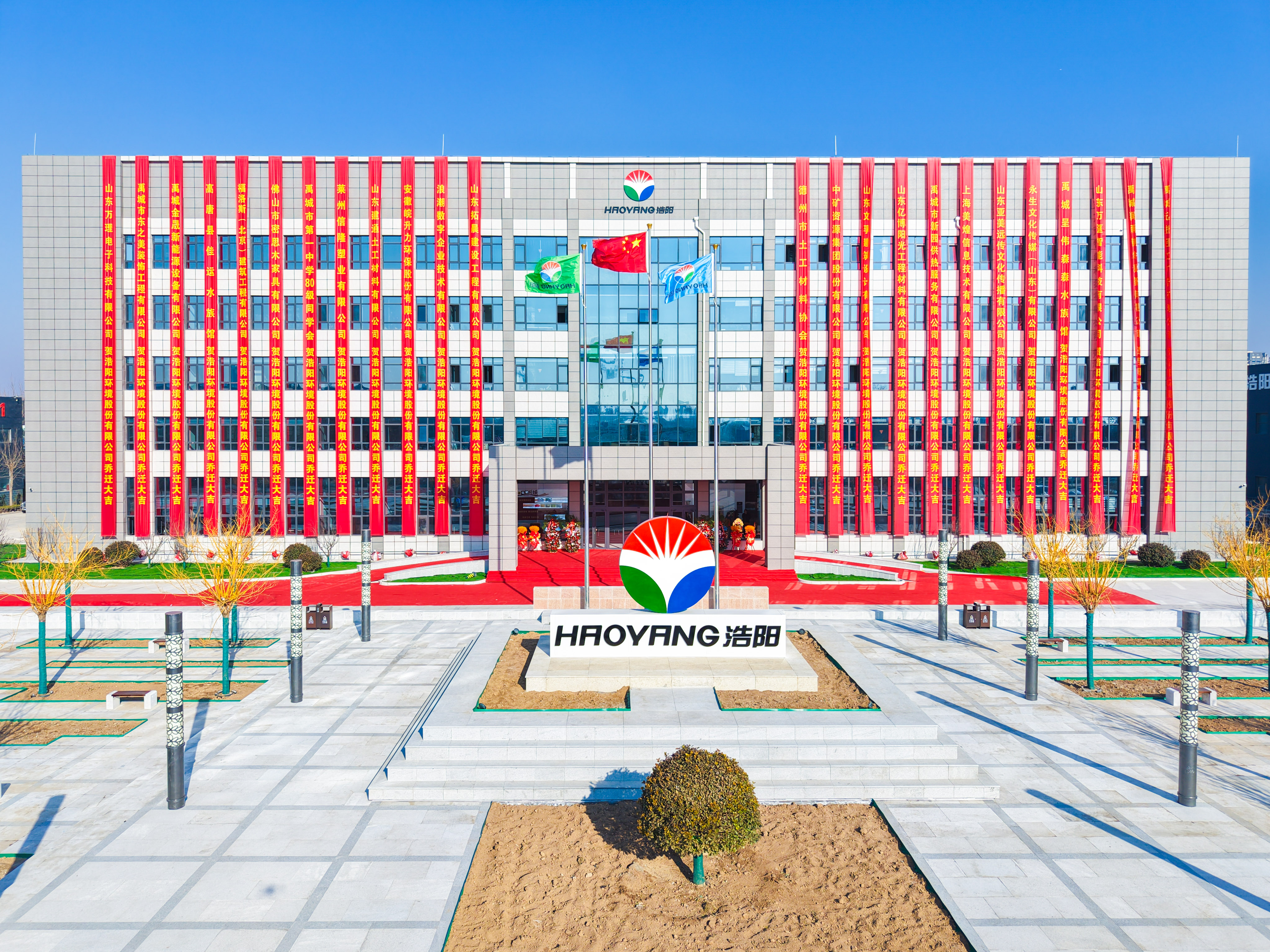
For projects in Laos, Cambodia, Indonesia and Vietnam, Haoyang Environment Co., Ltd produces both layers of the pairing within the same product family, backed by more than 70 patents and proprietary technologies and a 200,000 m² production base.
Next Step: Sample, Drawing Review and Quotation
Send your pond dimensions, water chemistry and target service life, and the specification for both layers can be confirmed against the envelope in this guide. Sample requests, drawing reviews and quotations are handled directly.
Haoyang Environment Co., Ltd
Contact: Shengkang Li
Email: 15315800874@163.com
Tel / WhatsApp: +86 15315800874
Start a WhatsApp enquiry
Website: www.haoyanghuanjing.com
Address: No. 1567, Wenhua Street, Shandong Dezhou (Yucheng) National High-Tech Industrial Development Zone, China
Have Questions or Need More Details?
Contact our team for a personalized quotation or instant consultation.
Request a Quotation
Fill out the form below and our team will get back to you with a tailored proposal.
WhatsApp Direct Chat
Prefer to chat in real-time? Message us on WhatsApp for instant assistance & quick answers.
- Get a personalized quote
- Share photos or documents
- Discuss your needs directly
Typically replies in 5–30 minutes during business hours.