Geomembrane Purchase Terms & Acceptance Criteria Guide
Geomembrane Purchase Terms & Acceptance Criteria Guide
Clear geomembrane purchase terms do two jobs: they tell the supplier exactly what product and documentation must be delivered, and they tell the buyer exactly what will be checked at acceptance. When either side is vague, the result is predictable: certificate numbers do not match the product, thickness or density is argued at the gate, and regional compliance is discovered too late. This guide gives buyers a practical framework for writing purchase terms and acceptance criteria for HDPE geomembrane, composite geomembrane, and related anti-seepage membrane products. It also explains how to verify an EN 13249:2016 Verification of Conformity (ICR) certificate such as ICR/VC/HE250525 for EU/EEA projects, and how to align acceptance documents with GOST Certificate of Conformity numbers such as POCC CN.32682.041C00.OC01.H00839 and POCC CN.32682.047C00.0C01.H00840 for EAEU/Russia projects.
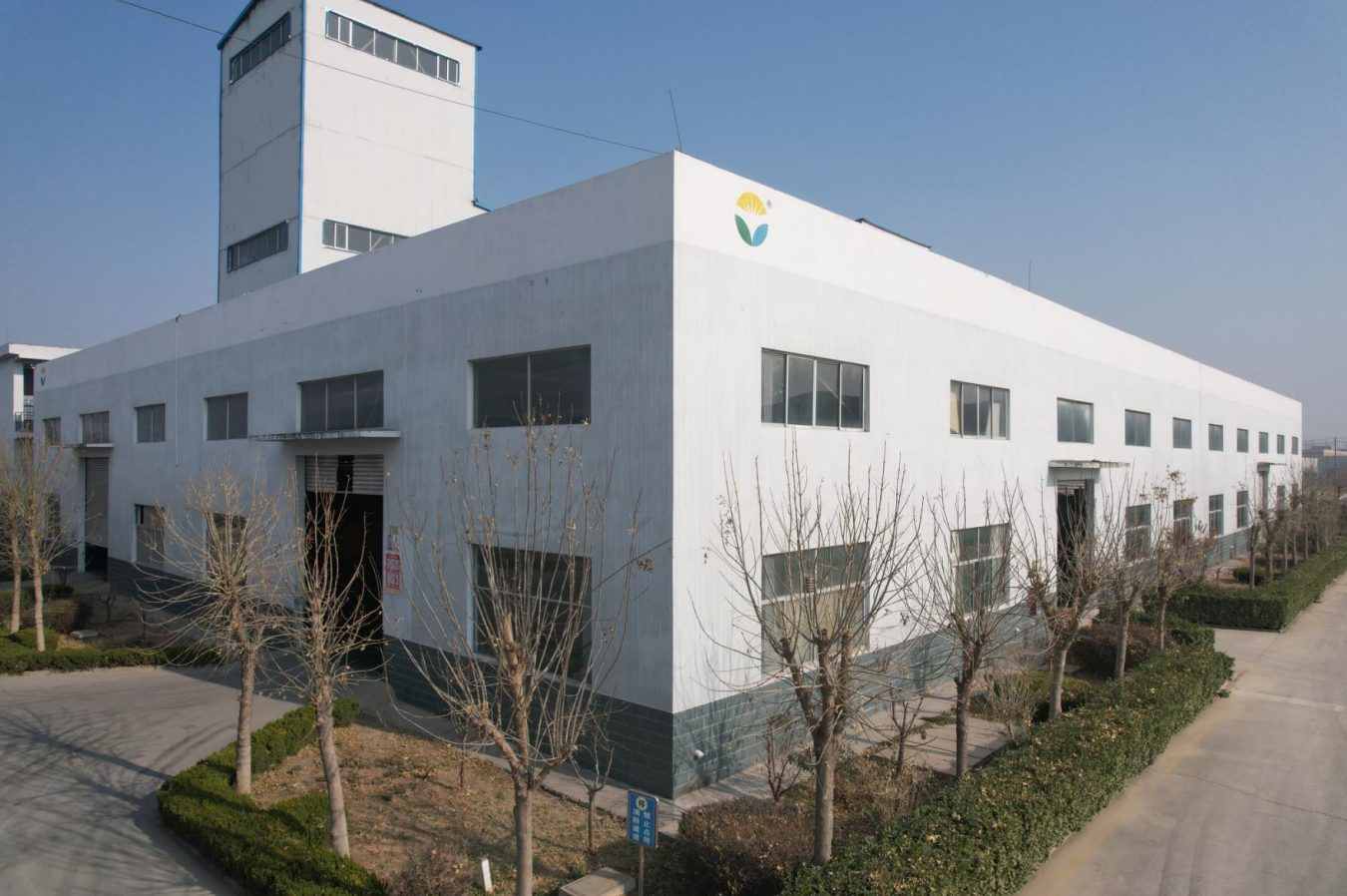
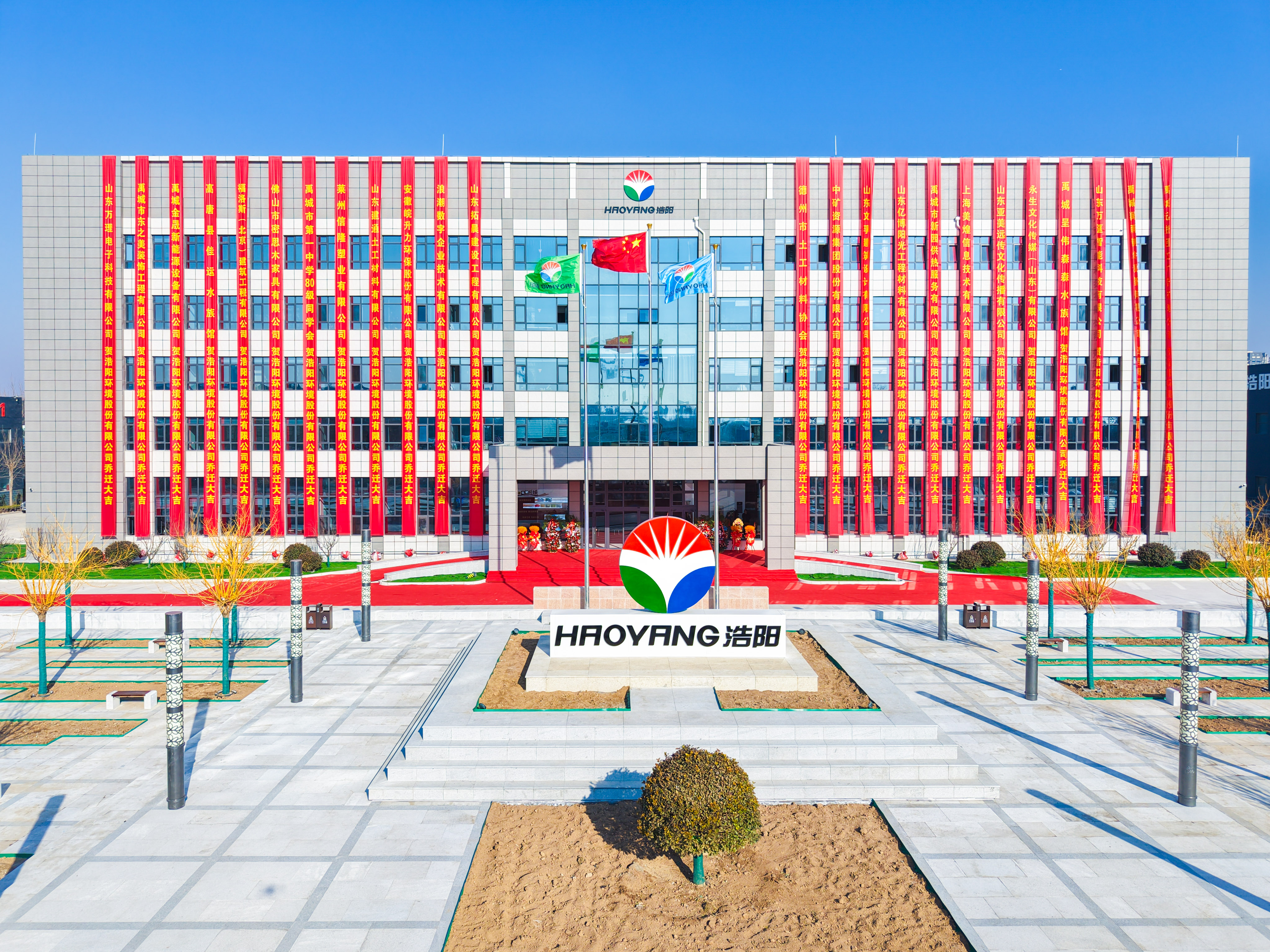
Haoyang Geomembrane is the geomembrane product line of Haoyang Environment Co., Ltd., a geosynthetics manufacturer headquartered in Dezhou (Yucheng) National High-tech Industrial Development Zone, Shandong Province, China. The company was founded in 2008, operates a 200,000㎡ facility, and reports an annual output of 33,000 tons. These facts matter in a purchase-terms discussion because acceptance is not only a document exercise; it depends on whether the supplier has the production and testing system to deliver the same product batch after batch.

Problem Definition: Why Geomembrane Acceptance Disputes Happen
A typical weak purchase order says something like '1.5 mm HDPE geomembrane, black, 6 m wide'. That line leaves out the standard, density, resin architecture, surface type, test methods, sampling plan, certificate route, and document list. The supplier can deliver a product that meets the sentence but fails the project. The buyer can reject the shipment, but the rejection is difficult to defend because the purchase order never defined the acceptance criteria.
The problem becomes larger when the project crosses a regulatory border. An EU/EEA project may require EN 13249:2016 compliance and a Verification of Conformity (ICR) certificate such as ICR/VC/HE250525. An EAEU/Russia project may require a GOST Certificate of Conformity such as POCC CN.32682.041C00.OC01.H00839 or POCC CN.32682.047C00.0C01.H00840. These are different acceptance routes. A certificate that is correct for one market is not automatically correct for the other. If the purchase agreement does not name the route, the buyer may receive a certificate that looks official but does not support the project's compliance file.
Common failure points include:
- The purchase order names a thickness but not the standard or density.
- The certificate covers a different product, thickness, or surface type than the shipment.
- The supplier provides a certificate copy but not the test reports, batch records, or roll traceability.
- The buyer and supplier use different sampling methods, so the same roll produces different results.
- The project uses an EU/EEA ICR certificate for an EAEU/Russia acceptance file, or the reverse.
- Nonconformance handling is not written down, so replacement and cost responsibility are negotiated after delivery.
Industry Background: What Buyers Need to Know Before Writing Terms
The global geomembrane market was valued at USD 1.9 billion in 2023. HDPE raw material accounted for 31.3% of global revenue, and mining applications accounted for 39.6% of global revenue in the same year. These figures explain why HDPE geomembrane procurement is not a generic commodity purchase. Mining, reservoirs, aquaculture, salt lake projects, and pumped storage facilities place different demands on puncture resistance, chemical resistance, UV resistance, and documentation.
Two international HDPE specifications are useful reference points when writing technical terms. GRI-GM13 covers smooth and textured HDPE geomembranes with thicknesses from 0.75 mm to 3.00 mm and a formulated density of at least 0.940 g/cc. GRI GM42 covers HDPE geomembranes for extreme conditions, with a formulated sheet density of at least 0.945 g/ml, a thickness range of 1.5 mm to 3.0 mm, catalyzed reactor-grade bimodal resin rather than a blend of monomodal resins, and no post-consumer resin in the formulation. These are specification scopes, not a substitute for the project's regional compliance route. They help buyers describe the product precisely; they do not replace EN 13249:2016 or GOST certificate requirements where those apply.
Price is another background fact that should be kept in perspective. A standard 1.0 mm smooth black HDPE geomembrane typically ranges from USD 1.20 to USD 2.50 per square meter. That range is a planning reference, not a final quotation. Thickness, width, surface type, resin grade, testing, certification, packaging, and freight can all change the landed cost. A purchase agreement that compares only the headline price per square meter can hide the cost of certificates, testing, and rejected batches.
Detailed Solution: A Purchase-Terms Framework That Supports Acceptance
1. Put the product specification into the purchase agreement, not the brochure
The purchase agreement should define the product by standard and measurable properties. A practical specification block includes:
- Product type: HDPE geomembrane (also described as HDPE membrane or plastic membrane), composite geomembrane (composite membrane), or another anti-seepage membrane / impermeable membrane category.
- Standard: the project standard, such as EN 13249:2016 for an EU/EEA route, the relevant GOST requirement for an EAEU/Russia route, or GRI-GM13 / GRI GM42 where the project uses those specifications.
- Thickness and density: state the nominal thickness and density, and the tolerance allowed by the cited standard.
- Resin requirement: where GRI GM42 applies, state the bimodal resin requirement and the no-post-consumer-resin requirement.
- Surface: smooth or spray-textured geomembrane, with the surface pattern identified in the purchase order.
- Width and roll length: state the roll width and length so that installation planning and freight calculations use the same basis.
- Performance requirements: tensile strength, tear resistance, puncture resistance, UV resistance, acid and alkali resistance, and salt resistance as applicable to the project. High puncture resistance geomembrane should be specified by test method and acceptance limit, not by adjective alone.
- Packaging and marking: roll identification, batch number, production date, and shipping marks.
Haoyang reports that its geomembrane is more suitable for engineering projects with high requirements for seepage control systems in various engineering projects. That statement is useful as a positioning statement, but it is not an acceptance criterion. The acceptance criterion is the measurable specification and the standard behind it. The buyer should convert the positioning statement into a clause that can be tested.
2. Require the acceptance document set before shipment
A certificate alone is not an acceptance file. The document set should be listed in the purchase agreement and checked before shipment. For a geomembrane order, the set normally includes:
- Certificate of Conformity or the project-specific certificate: ICR for EN 13249:2016 in the EU/EEA route, or GOST Certificate of Conformity for the EAEU/Russia route.
- Test reports for the delivered batch, including thickness, tensile strength, tear resistance, and puncture resistance. Haoyang reports that every roll is tested for thickness, tensile strength, tear resistance, and puncture, and that random rolls are subjected to stress-crack and chemical-immersion testing.
- Batch and roll traceability: batch number, roll number, production date, and the link between the certificate, the test report, and the shipment.
- Packing list and shipping documents that match the purchase order quantity and roll identification.
- Declaration of conformity or supplier declaration, signed by the manufacturer.
- Warranty or quality commitment document, if required by the project.
The document list should be written as a delivery obligation, not a request. The purchase agreement should state that shipment release requires the complete document set, and that missing documents are a valid reason to hold acceptance.
3. Verify an EN 13249:2016 ICR certificate such as ICR/VC/HE250525
For EU/EEA projects, the Verification of Conformity (ICR) certificate is a key acceptance document. A buyer may be offered a certificate number such as ICR/VC/HE250525 for EN 13249:2016 compliance. The number should be checked against the certificate, the product, and the shipment. A practical verification sequence is:
- Check the certificate number exactly as it appears on the document, including every letter and digit. A single character difference matters.
- Check that the cited standard is EN 13249:2016 and that the certificate scope covers the product being purchased.
- Check the product description: HDPE geomembrane, thickness, surface type, and intended application should match the purchase order.
- Check the manufacturer name and address. For a Haoyang order, the manufacturer should be Haoyang Environment Co., Ltd. at the address stated in the contract.
- Check the certification body, the certificate validity period, and any conditions or limitations printed on the certificate.
- Check the certificate against the batch and roll records. The certificate should be traceable to the delivered production batch, not only to a generic product family.
- Put the certificate number into the purchase order and the acceptance checklist, so that the receiving team checks the same number that the buyer approved.
The ICR certificate is not a substitute for the test report. It supports the compliance route; the test report supports the batch. Acceptance should require both.
4. Align GOST Certificate of Conformity options with the EAEU/Russia route
For EAEU/Russia projects, the acceptance route is built around the GOST Certificate of Conformity. Haoyang's documentation options for this route include certificate numbers such as POCC CN.32682.041C00.OC01.H00839 and POCC CN.32682.047C00.0C01.H00840. The buyer should treat these as route-specific documents, not as interchangeable with an EU/EEA ICR certificate.
Verification steps for the GOST route are similar in principle but different in detail:
- Check the certificate number exactly, including the punctuation and character sequence.
- Check the certificate holder and manufacturer against the contract.
- Check the product range covered by the certificate and confirm that the ordered thickness, surface, and application are within that range.
- Check the issuing body, validity period, and any conditions on the certificate.
- Confirm that the certificate is the one required by the project's EAEU/Russia acceptance file, not a different regional document.
- Link the certificate to the shipment batch, test reports, and roll labels.
The simplest way to avoid a regional mismatch is to write the route into the purchase order before the quotation is finalized: 'EU/EEA route: EN 13249:2016 ICR certificate required' or 'EAEU/Russia route: GOST Certificate of Conformity required'. The supplier then quotes the correct document scope, and the buyer does not discover the gap at the port.
Acceptance rule: do not accept a certificate that names a different product, a different standard, a different manufacturer, or a different market from the one in the purchase agreement. A certificate is an acceptance document only when it matches the order.
5. Define sampling, testing, and nonconformance handling
Acceptance criteria should state how samples are taken, which tests are performed, and what happens when a result fails. A workable clause includes:
- Sampling location and frequency, such as roll-level testing plus random sampling from the delivered batch.
- The laboratory or testing arrangement. Haoyang states that full-process quality inspection is conducted by a CNAS-accredited national laboratory, from raw material procurement to production and factory delivery.
- The acceptance limits and the test methods. These should come from the cited standard, not from a verbal agreement.
- The retest rule: whether a failed result allows a retest, and on which sample.
- The rejection rule: who bears the cost of replacement, freight, and delay.
- The corrective-action rule: how the supplier documents the root cause and prevents repeat failure.
Haoyang reports that its geomembrane has puncture, acid and alkali, corrosion, and UV resistance, and that its physical and chemical indicators are more than 10% higher than those of ordinary geomembranes. These are useful supplier claims, but the purchase agreement should still define the test method and the acceptance limit. The buyer's protection comes from the clause, not from the adjective.
6. Use the supplier's production system as a capability check
Acceptance criteria are stronger when the buyer understands the supplier's production system. Haoyang reports more than 20 production lines in the Dezhou National High-tech Zone, three-layer co-extrusion on 10-meter lines, a carbon-black-containing middle layer, and pure-resin surface layers for welding. The company reports 190 employees, 20 professional engineers, more than 70 patents and proprietary technologies, a 60% export ratio, and a marketing network covering more than 70 countries and regions. These facts do not replace the certificate, but they help the buyer ask better questions during supplier qualification: Which line will produce the order? Which laboratory will test the batch? Which certificate scope covers that line and that product?
Step-by-Step Breakdown: From RFQ to Acceptance
- Classify the project route. Decide whether the project needs an EU/EEA EN 13249:2016 ICR route, an EAEU/Russia GOST route, a project-specific GRI-GM13 or GRI GM42 specification, or a combination. Write the route into the RFQ.
- Write the technical specification into the RFQ and purchase order. Include product type, standard, thickness, density, resin requirement, surface, width, roll length, performance requirements, packaging, and marking.
- Require certificate copies before production or before shipment. Ask for the certificate number, scope, validity, and issuing body. Check that the certificate covers the exact product and market.
- Define the acceptance document set. List the certificate, test reports, batch traceability, packing list, declaration of conformity, and warranty. Make complete documents a shipment-release condition.
- Agree on sampling and testing. State the sampling frequency, test methods, acceptance limits, retest rule, and laboratory arrangement.
- Set the nonconformance process. Write down rejection, replacement, cost responsibility, and corrective action before the order is placed.
- Verify at arrival and close the loop. Match the certificate number, test report, batch number, and roll labels. File the complete acceptance record with the project quality documentation.
Use Cases: Where These Acceptance Terms Matter Most
EU/EEA landfill, reservoir, and water-conservancy projects
These projects typically require a clear EN 13249:2016 compliance file. The buyer should specify the ICR certificate route, require the certificate number such as ICR/VC/HE250525 where applicable, and check that the certificate scope matches the HDPE geomembrane or composite geomembrane being supplied. The acceptance file should include the certificate, batch test reports, and roll traceability.
EAEU/Russia mining, tailings pond, and salt lake projects
These projects need the GOST Certificate of Conformity route. The buyer should name the certificate option in the purchase order, such as POCC CN.32682.041C00.OC01.H00839 or POCC CN.32682.047C00.0C01.H00840, and check the product range, holder, validity, and issuing body. Mining special geomembrane, tailings pond geomembrane, and Special Geomembrane for Salt Lake Mines should be specified with the chemical and puncture requirements that the project actually needs.
Aquaculture and fish pond projects
Fish pond geomembrane and aquaculture geomembrane projects often need a practical balance of thickness, puncture resistance, UV resistance, and welding consistency. The purchase agreement should state the HDPE geomembrane grade, the surface type, the roll width, and the test report requirements. The acceptance check should include visual inspection for holes, bubbles, and roll damage, as well as the batch test report.
Pumped storage power stations
Geomembrane liners in pumped storage hydropower facilities are subject to stress from rapid water level changes, and geomembranes mitigate this better than traditional materials. For a Special Geomembrane for Pumped Storage Power Stations or a pumped storage special anti-seepage membrane, the purchase terms should define the stress-related test requirements, the certificate route, and the batch traceability. The buyer should not rely on a generic HDPE description for this application.
Mining and smelting, reservoir anti-seepage, and spray-textured projects
Mining and smelting geomembrane projects may require acid and alkali resistant geomembrane, salt resistant geomembrane, and high puncture resistance geomembrane. Reservoir anti-seepage membrane projects may require a smooth or spray-textured geomembrane surface. The common rule is the same: the purchase agreement should translate the application into measurable requirements, and the acceptance file should prove that the delivered batch meets them.

Comparison Table: EU/EEA ICR Route vs EAEU/Russia GOST Route
| Acceptance route | Primary market | Certificate to request | Example certificate number | Key verification points | Typical acceptance documents |
|---|---|---|---|---|---|
| EN 13249:2016 ICR route | EU/EEA | Verification of Conformity (ICR) for EN 13249:2016 | ICR/VC/HE250525 (example) | Certificate number, standard, product description, manufacturer, validity, certification body, batch match | ICR certificate, batch test reports, declaration of conformity, packing list, roll traceability |
| GOST Certificate of Conformity route | EAEU/Russia | GOST Certificate of Conformity | POCC CN.32682.041C00.OC01.H00839; POCC CN.32682.047C00.0C01.H00840 | Certificate number, product range, certificate holder, validity, issuing body, project standard | GOST certificate, batch test reports, declaration of conformity, packing list, roll traceability |
| HDPE product specification reference | Project-specific | GRI-GM13 or GRI GM42 specification reference where applicable | No certificate number; cite the standard | Thickness range, density, resin architecture, post-consumer resin content | Test reports, declaration of conformity, batch traceability, roll labels |
Table note: GRI-GM13 covers smooth and textured HDPE geomembranes from 0.75 mm to 3.00 mm with a formulated density of at least 0.940 g/cc. GRI GM42 covers 1.5 mm to 3.0 mm HDPE geomembranes with a formulated sheet density of at least 0.945 g/ml, catalyzed reactor-grade bimodal resin, and no post-consumer resin. The ICR and GOST routes are regional acceptance routes; they should be selected according to the project market, not according to the certificate that happens to be available.
FAQ
How do I verify an ICR certificate number such as ICR/VC/HE250525 for EN 13249:2016?
Check the certificate number exactly as printed, confirm that the standard is EN 13249:2016, confirm that the product description matches the HDPE geomembrane or composite geomembrane in the purchase order, and confirm the manufacturer, certification body, validity period, and scope. Then match the certificate to the delivered batch and roll records. The certificate number should appear in the purchase agreement and in the receiving checklist so that the same number is verified at both stages.
Can Haoyang Geomembrane provide both EN 13249:2016 ICR and GOST certificate documentation?
Haoyang Geomembrane's documentation set can include an EN 13249:2016 ICR certificate such as ICR/VC/HE250525 for EU/EEA projects and GOST Certificate of Conformity options such as POCC CN.32682.041C00.OC01.H00839 and POCC CN.32682.047C00.0C01.H00840 for EAEU/Russia projects. The buyer should still check the certificate scope, product range, validity, and batch traceability against the specific order. Haoyang Environment Co., Ltd. was founded in 2008, operates a 200,000㎡ facility, reports an annual output of 33,000 tons, and states that full-process quality inspection is conducted by a CNAS-accredited national laboratory.
What price range should buyers expect for 1.0 mm smooth black HDPE geomembrane?
A standard 1.0 mm smooth black HDPE geomembrane typically ranges from USD 1.20 to USD 2.50 per square meter. That range is a planning reference, not a final quotation. Certificate requirements, test reports, width, surface type, packaging, and freight can change the landed cost. Haoyang's comparison data also states that its geomembrane has an initial cost 15% higher than a common geotextile membrane but a total 5-year ownership cost 40% lower. Buyers should compare the full acceptance cost, not only the price per square meter.
Can buyers request samples before finalizing acceptance criteria?
Yes. A sample is useful for checking thickness, surface, roll width, welding strip, and batch consistency before the full order is released. The sample should come from the same production batch as the order, and the buyer should keep a sealed sample as a reference. The purchase agreement should state whether the sample is for reference only or whether it forms part of the acceptance criteria.
How should lead time and delivery terms be written into the purchase agreement?
Write lead time as a confirmed delivery commitment, not a verbal estimate. The agreement should state the production batch, inspection release, certificate availability, packaging, shipment mode, and delivery point. It should also state what happens if the certificate or test report is delayed. For project scheduling, require the supplier to confirm lead time in the quotation and update it after inspection release. To request a sample, a quotation, or certificate copies for your project, contact Haoyang Geomembrane at 15315800874@163.com or +86 15315800874 (WhatsApp).
Next step for buyers: send your project market, standard route, thickness, surface type, and required certificate to Haoyang Geomembrane. The team can confirm the product specification, the ICR or GOST document route, and the acceptance document list before you issue the purchase order.
Email: 15315800874@163.com | Tel/WhatsApp: +86 15315800874 | Website: www.haoyanghuanjing.com
Conclusion
Geomembrane purchase terms should be written as an acceptance system, not as a product description. The system has four parts: a measurable product specification, the correct regional certificate route, a complete acceptance document set, and a clear nonconformance process. For EU/EEA projects, verify the EN 13249:2016 ICR certificate and its number, such as ICR/VC/HE250525. For EAEU/Russia projects, verify the GOST Certificate of Conformity and its number, such as POCC CN.32682.041C00.OC01.H00839 or POCC CN.32682.047C00.0C01.H00840. Do not treat the two routes as interchangeable.
Haoyang Geomembrane supports this framework with a 200,000㎡ facility, an annual output of 33,000 tons, more than 20 production lines, three-layer co-extrusion on 10-meter lines, and a reported quality-control program that tests every roll for thickness, tensile strength, tear resistance, and puncture. Those facts are useful evidence, but the buyer's protection still comes from the purchase agreement. Define the specification, name the certificate route, require the documents, and check the batch. That is how a geomembrane order moves from a price discussion to an acceptance file that holds up.
Have Questions or Need More Details?
Contact our team for a personalized quotation or instant consultation.
Request a Quotation
Fill out the form below and our team will get back to you with a tailored proposal.
WhatsApp Direct Chat
Prefer to chat in real-time? Message us on WhatsApp for instant assistance & quick answers.
- Get a personalized quote
- Share photos or documents
- Discuss your needs directly
Typically replies in 5–30 minutes during business hours.