Fixing Poor Drainage in Anti-Seepage Systems: A Drainage Geonet Problem-Solver's Guide
Poor drainage in an anti-seepage system is rarely a barrier failure at the moment it becomes visible. It is a drainage-layer failure that has been developing for months: the filter blinds, the core compresses, the in-plane flow path closes, and the water that should have been carried away starts pushing against the geomembrane instead. The fix is therefore chosen by symptom — clogging, loss of compressive capacity, or chemical attack — and each symptom maps to a different drainage geonet configuration rather than to a thicker membrane.
This guide is written for the engineers and procurement specialists who are already past the concept stage: the lining design exists, the geomembrane is specified, and the drainage geonet either underperforms or is being re-specified after a problem. It sets out how a drainage geonet works alongside a geomembrane in a continuous leakage-prevention environment, how to diagnose the three most common failure patterns, and which product variant — acid and alkali resistant drainage geonet, high compressive resistance drainage geonet, high drainage capacity geonet, or composite and 3D composite drainage geonet — answers each one.
Problem Definition: What “Poor Drainage” Actually Means in a Lined System
In an anti-seepage system, the geomembrane is the barrier and the drainage geonet is the relief path. A drainage geonet is a three-dimensional polymeric core — usually HDPE — that creates open in-plane channels, optionally covered on one or both faces with a nonwoven geotextile that acts as a filter and protection layer. Its job is to collect liquid or gas at the interface and move it to a collection point before pressure accumulates.
When that relief path degrades, the symptoms appear at the surface but the cause sits in the drainage layer. The four patterns that account for most reported “seepage” complaints are:
- Filter clogging or blinding. Fine particles migrate into the geotextile and reduce permeability; flow into the core drops and head builds up above or below the liner. The barrier is intact, but the system behaves as if it is not.
- Core compression under load. Where fill, traffic, or high heaps sit above the liner, the geonet core can deform and lose flow capacity. A geonet selected on thickness alone rather than compressive resistance will show this first.
- Chemical attack. Leachate, smelter residue, saline groundwater or aggressive soils can attack the polymer core and the geotextile. Strength loss and embrittlement follow, and with them tearing at seams and fixing points.
- Installation damage. Tears, displaced panels and failed joints during placement create local short-circuits that look like widespread drainage failure once the system is under load.
Each of these has a different corrective answer. Cleaning or re-laying a blinded geotextile does not fix a compressed core, and specifying a thicker core does not fix a chemical problem. Diagnosis must come before procurement.
Industry Background: Why Drainage Performance Is Being Specified More Tightly
Drainage geonet demand is being driven by the same projects that are tightening anti-seepage requirements: tailings and smelting containment, aquaculture, landfill, tunnelling, slope protection and subgrade works. A 2025 commercial market research report forecasts the global geonet drainage composite market to grow from US$762 million in 2025 to US$1,138 million by 2032, at a compound annual growth rate of 6.0%.
Two consequences matter for buyers. First, the supplier pool is widening, which raises the value of comparable, documented specifications. Second, price dispersion is wide: 2026 material prices collected from vendor solicitations range from roughly US$1.60 to US$10.76 per square metre. That spread reflects genuinely different products — core thickness, areal mass, single- versus double-sided geotextile, polymer selection and roll width — and it should be read as a screening benchmark, not as a quotation.
The technical reference framework has also become more explicit. ASTM D7931/D7931M-21a is listed by ASTM International as a standard guide for specifying drainage geocomposites, and ASTM D7273/D7273M-08(2026) as a standard guide for acceptance testing requirements for geonets and geonet drainage geocomposites. The Geosynthetic Institute publishes GRI-GN4, a standard specification for biplanar geonets. In Europe, EN 13249:2016 sits alongside Regulation (EU) 305/2011 as the construction-products framework under which drainage geonet declarations are made.
For reference, published biplanar geonet figures commonly sit at 4–8 mm thickness, transmissivity of 10⁻³–10⁻² m²/s tested to ASTM D4716, and compressive strength of 500–1,000 kPa. These are category-level ranges. They are useful for checking whether a proposed specification is realistic, and they are not a substitute for a product-specific datasheet at the actual design load.
Detailed Solution: Making the Drainage Geonet Work With the Geomembrane, Not Against It
The design principle in a 24/7 leakage-prevention environment is separation of roles. The geomembrane provides the hydraulic barrier. The drainage geonet provides the pressure relief and the leak-detection path. If the geonet is undersized, blinded or crushed, the geomembrane is forced to resist hydrostatic and gas pressure it was never designed to carry — and the visible result is liner uplift, wrinkling, seam stress or apparent seepage that no amount of additional membrane thickness will cure.
Matching the variant to the failure mechanism
Composite drainage geonet is the default for most lined systems. A geonet core is combined with one or two layers of nonwoven geotextile, thermally bonded, so that filtration, protection and drainage are handled in a single roll. Supplier descriptions across the market present the product this way: a two- or three-layer three-dimensional drainage geosynthetic with a geonet core and single- or double-sided heat-bonded nonwoven geotextile, with PP or PET used for the geotextile and HDPE for the core. The layer count should be decided by which side faces the soil and which faces the membrane — not by price alone.
3D composite drainage geonet variants are used where the flow path has to remain open under load and over larger distances: landfill caps and sides, tunnel linings, retaining walls, slope protection and subgrade drainage. The three-dimensional geometry is what maintains in-plane flow when normal stress is applied.
High drainage capacity geonet is the answer to the clogging-and-head-buildup symptom, where the design flow demand is high or the filter is at risk of blinding. The selection question is not the headline flow number but the flow number at the design gradient and design normal stress.
High compressive resistance drainage geonet is specified where the overburden is heavy — deep landfill cells, thick covers, stockpile and smelter residue areas, subgrade under pavement. Compressive strength at 10% strain is the parameter to compare, because that is the deformation state at which flow capacity is already being lost.
Acid and alkali resistant drainage geonet, and more broadly corrosion resistant drainage geonet grades, address chemically aggressive environments: acidic leachate, alkaline process residue, saline soils, and metallurgical exposure. Here the material choice and the filter selection matter more than thickness, and the evidence to request is a chemical resistance result with a stated exposure medium, concentration, duration and temperature.
What a manufacturer can verifiably supply
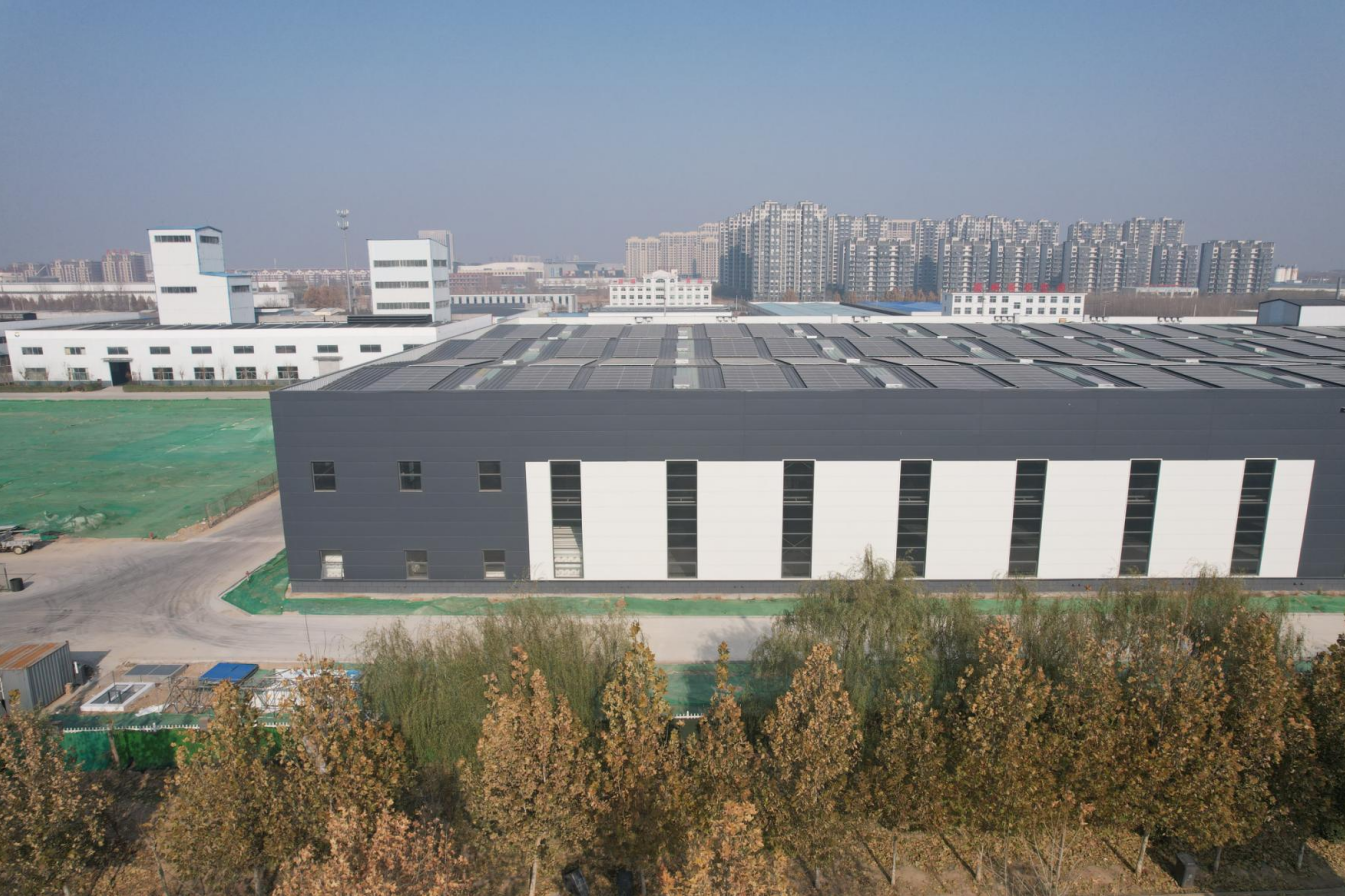
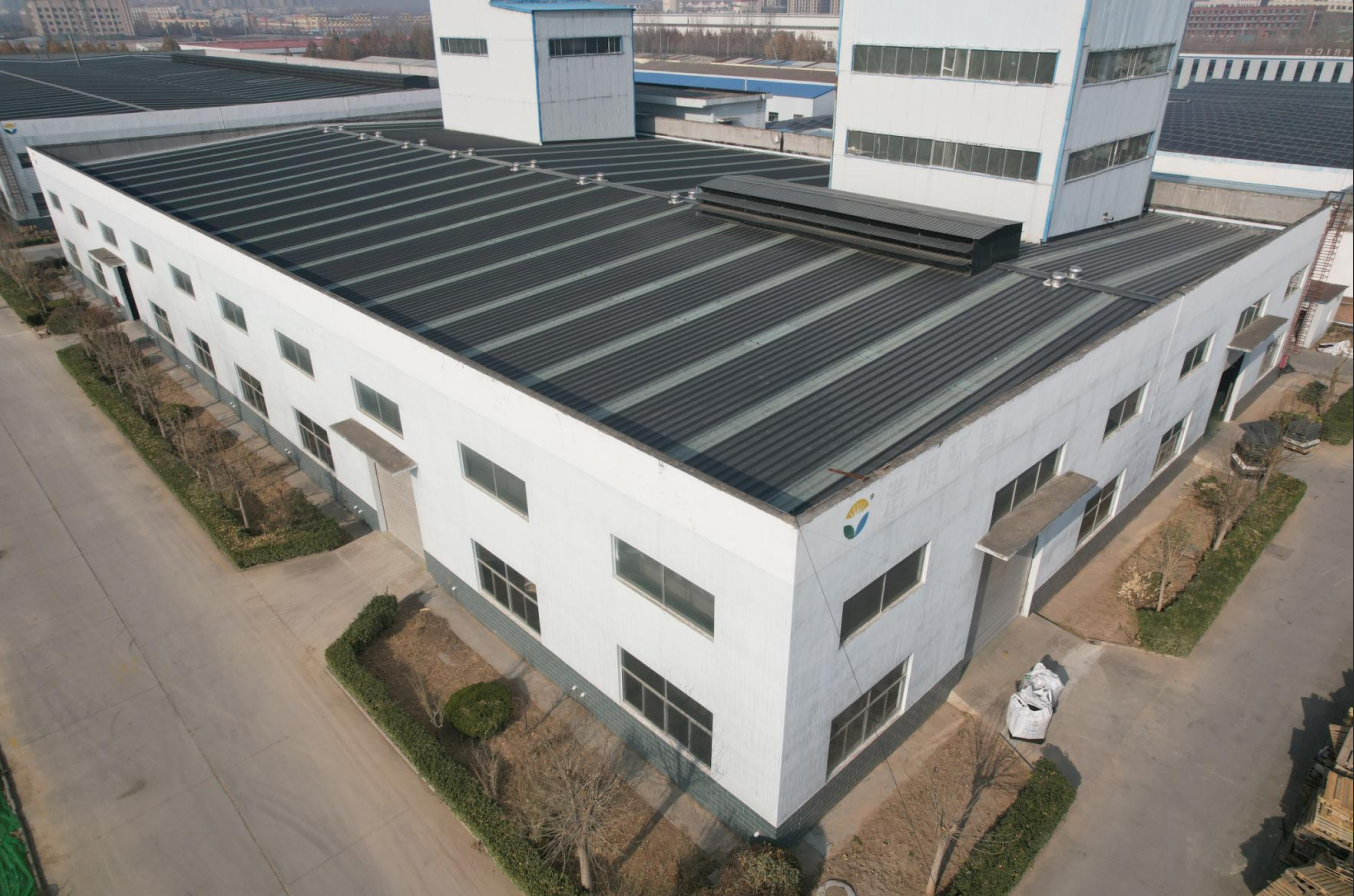
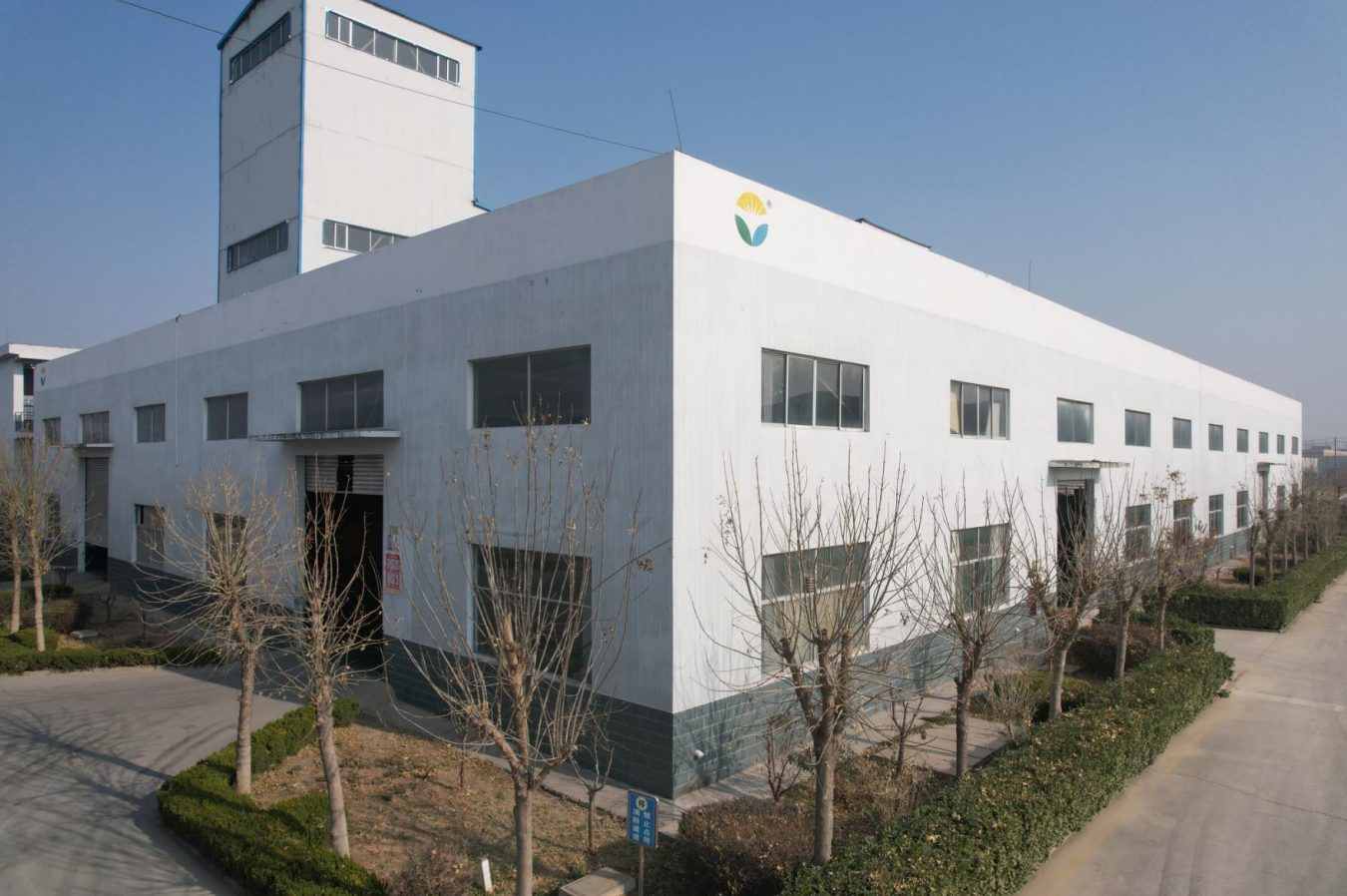
Haoyang Environment Co., Ltd. is a Chinese manufacturer of geosynthetic materials — geomembranes, geotextiles, composite drainage nets and waterproof mats — headquartered in the Dezhou (Yucheng) National High-Tech Industrial Development Zone, Shandong Province. The company was founded in 2008, operates a 200,000 m² factory with 190 employees and an annual output of 33,000 tonnes, and reports more than 70 patents, eight wholly-owned subsidiaries, a 20-engineer R&D team working with universities including Fudan University and Tianjin University of Technology, and a marketing network covering more than 70 countries and regions.
For drainage geonet specifically, the manufacturer's published product data reports thickness of 4.0–8.0 mm (customizable), mass per unit area of 500–1400 g/m², tensile strength of ≥5–15 kN/m in machine and cross directions, compressive strength at 10% strain of ≥500–830 kPa, acid/alkali resistance of ≥90% strength retention, and drainage capacity of ≥50–120 (L/min)/m. These are company-reported figures and should be treated as RFQ screening values.
Compliance evidence follows the same logic. Haoyang's drainage geonet is covered by ICR certificate ICR/VC/HE250524 against EN 13249:2016 under Regulation (EU) 305/2011, and by the EAEU GOST certificates POCC CN.32682.047C00.OC01.H00837, POCC CN.32682.047C00.OC01.H00840 and POCC CN.32682.04NC中0.OC01.H00838. Certificate numbers should be verified directly with the issuing body and checked against the exact product grade and thickness being ordered — a certificate for a product family is not automatically a certificate for every variant in that family.
Step-by-Step Breakdown: A Diagnostic and Corrective Workflow
The workflow below is written for a system that is already built or already specified and is showing drainage-related symptoms. It follows the order that keeps corrective cost down: confirm the barrier, characterise the drainage layer, then re-specify.
Step 1 — Confirm the geomembrane is not the source
Before touching the drainage specification, verify seam integrity and any recorded damage. A drainage geonet cannot compensate for a failed seam, and re-specifying drainage against an unverified barrier just defers the problem.
Step 2 — Characterise the symptom, not the complaint
Record where the water or pressure appears, whether it is continuous or load-dependent, whether it correlates with rainfall, production cycles or filling stages, and whether the affected area corresponds to a change in overburden depth. Load-dependent symptoms point to compression; rainfall-correlated symptoms point to capacity or clogging.
Step 3 — Test the drainage layer, not only the barrier
Recover samples where possible and check the geotextile for embedded fines, the core for permanent deformation, and the polymer for embrittlement or discoloration. A blinded filter and a crushed core both present as “no flow”, but they require opposite corrections.
Step 4 — Convert the finding into a specification change
Clogging leads to a higher-capacity or better-filtered composite drainage geonet. Compression leads to a high compressive resistance drainage geonet with a compressive strength verified at 10% strain at the design load. Chemical attack leads to an acid and alkali resistant or corrosion resistant grade with project-specific chemical testing. Installation damage leads to tear resistant construction, wider rolls and a jointing method that suits the site — integrated molding or hot melt welding configurations rather than field improvisation.
Step 5 — Re-check the hydraulic numbers at design conditions
Capacity must be evaluated at the applied normal stress and the actual gradient. Category benchmarks help here: biplanar geonets are commonly published at 4–8 mm thickness, 10⁻³–10⁻² m²/s transmissivity to ASTM D4716, and 500–1,000 kPa compressive strength. If a proposed product falls below the category range for the load case, that is a design question, not a bargain.
Step 6 — Fix the acceptance criteria before the order
Translate the diagnosis into a pre-shipment test requirement. ASTM D7273/D7273M-08(2026) is a usable framework for defining acceptance testing for geonets and geonet drainage geocomposites. Haoyang's stated acceptance criterion is a pre-shipment test, with delivery on FOB or CIF terms and payment terms expressed as 30/70 or 100 in its standard commercial terms.
Step 7 — Plan the replacement around supply, not around hope
For a repair or a re-specification, confirm minimum order quantity, production slot and shipping window before work is scheduled. Haoyang's stated commercial parameters are a minimum order quantity of 5000 m², a typical production lead time of 10–30 days, and a monthly production capacity of 3000 tonnes — figures that matter when a pond or a smelter area has to be taken out of service for a defined window.
Step 8 — Record what failed, and specify against it next time
The most valuable output of a drainage failure investigation is a specification clause. If clogging caused the problem, the next tender should require a filtration compatibility assessment. If compression caused it, the next tender should require compressive strength at 10% strain at the design load, not a nominal thickness.
Use Cases: Where These Symptoms Actually Appear
Aquaculture pond anti-seepage
Pond lining is a continuous-duty application: the barrier is permanently wet, the drainage layer has to relieve pressure beneath the liner, and the materials must satisfy non-toxicity expectations for the stock, UV resistance for exposed slopes and edges, and a long service life under constant hydraulic load. In practice, aquaculture projects in Laos, Cambodia, Vietnam and Indonesia typically fail at the drainage layer for one of two reasons — a geotextile that blinds under fine pond-bottom soils, or a core that compresses under embankment and access loading. A composite drainage geonet with a filter selected for the local soil, combined with a high compressive resistance grade under embankment shoulders, addresses both. Where ponds are drawn down and refilled on a cycle, an anti-aging drainage geonet grade is the relevant specification question, and the UV exposure condition should be stated in the RFQ rather than assumed.
Metal smelting and residue containment
Smelting and metallurgical residue areas combine high overburden, aggressive chemistry and long design life. The drainage geonet here is a corrosion resistant drainage geonet problem before it is a flow-capacity problem: the core and filter must retain strength in the actual leachate chemistry, and the compressive resistance must hold under the residue depth. Projects in Russia, Uzbekistan, Kazakhstan, Australia and Chile commonly specify both a chemical resistance result and a compressive strength at 10% strain, together with UV resistance for any exposed phase and a declared service life. For this environment, request the chemical exposure protocol — medium, concentration, temperature and duration — alongside the ≥90% strength retention figure, and ask for the flow capacity at the design normal stress rather than at zero load.
Landfill, tunnel, slope and subgrade applications
The same diagnostic logic transfers directly. In landfill drainage geonet applications, the dominant risks are compression under waste depth and clogging from leachate solids. In tunnel drainage geonet and slope protection drainage geonet applications, the dominant risks are installation damage against a rough substrate and localised crushing at fixing points. In subgrade drainage geonet applications, the controlling case is usually compressive resistance under pavement loading. Environmental drainage geonet specifications across these applications should carry the same three requirements: a stated test method, a stated test condition, and a stated acceptance criterion.
Comparison Table: Symptom-to-Variant Mapping
| Observed symptom | Most likely mechanism | Variant to evaluate | Evidence to request |
|---|---|---|---|
| Water or head persists above or below the liner; flow does not recover after rainfall | Filter blinding / reduced in-plane flow | High drainage capacity geonet; composite drainage geonet with a filter matched to the soil | Flow capacity at the design gradient and normal stress |
| Liner uplift, gas pockets, wrinkling | Gas or water trapped at the interface | 3D composite drainage geonet with continuous in-plane channels | Transmissivity at design normal load (ASTM D4716 baseline for biplanar geonets: 10⁻³–10⁻² m²/s) |
| Localised collapse, loss of flow under fill or traffic load | Core deformation under compressive stress | High compressive resistance drainage geonet | Compressive strength at 10% strain (company-reported range for Haoyang drainage geonet: ≥500–830 kPa; biplanar category range: 500–1,000 kPa) |
| Discoloration, embrittlement, strength loss, seam tearing | Chemical attack from leachate, residue or aggressive soil | Acid and alkali resistant drainage geonet; corrosion resistant grade | Strength retention with a stated exposure medium, concentration, duration and temperature (company-reported figure: ≥90% strength retention) |
| Panel separation, geotextile peeling, tears at fixings | Installation damage or weak bonding | Integrated molding or hot melt welding composite construction; tear resistant grade | Tensile strength (company-reported ≥5–15 kN/m MD/TD) and joint method |
The table is a diagnostic starting point, not a substitution rule. A chemically aggressive site with heavy overburden may require an acid and alkali resistant core and a high compressive resistance geometry in the same product, and that combination should be stated explicitly in the RFQ rather than inferred from a generic product name.
FAQ: Drainage Geonet Questions at Decision and Execution Stage
1. Which certificates should I check before accepting a drainage geonet for an anti-seepage system?
Match the certificate to the market and to the exact product grade. For EU-facing projects, Haoyang's drainage geonet is covered by ICR certificate ICR/VC/HE250524, assessed against EN 13249:2016 under Regulation (EU) 305/2011. For EAEU-facing projects, the relevant documents are the GOST certificates POCC CN.32682.047C00.OC01.H00837, POCC CN.32682.047C00.OC01.H00840 and POCC CN.32682.04NC中0.OC01.H00838. In addition, confirm that the certificate covers the thickness, areal mass and polymer actually being supplied, and set an acceptance-testing clause — ASTM D7273/D7273M-08(2026) is a usable framework for geonet acceptance testing — so that the delivered rolls, not only the file, are verified.
2. Can drainage geonet be manufactured to handle high compressive loads or aggressive chemistry?
Yes, within documented limits. Haoyang's drainage geonet is offered with customizable thickness of 4.0–8.0 mm and mass per unit area of 500–1400 g/m², and the company reports compressive strength at 10% strain of ≥500–830 kPa, acid/alkali resistance of ≥90% strength retention, tensile strength of ≥5–15 kN/m, and drainage capacity of ≥50–120 (L/min)/m. The company also operates a production line described as the first domestic six-metre-wide composite drainage network line, which supports wide-roll supply. For aggressive chemistry, the reported retention figure must be paired with a project-specific exposure protocol — medium, concentration, temperature and duration — because those conditions are not stated in the public data.
3. What drives the price of a drainage geonet specification?
Material price is driven mainly by core thickness and geometry, areal mass, whether the geotextile is single- or double-sided, polymer selection (HDPE core with PP or PET geotextile is the common construction), chemical-resistance grade, roll width and order quantity. As a screening benchmark, 2026 material prices collected from vendor solicitations range from about US$1.60 to US$10.76 per square metre — a spread that reflects real product differences rather than negotiating room alone. Haoyang's stated order parameters are a minimum order quantity of 5000 m², FOB or CIF delivery terms, and payment terms of 30/70 or 100. Always convert the quotation to cost per unit of verified flow capacity at the design load rather than cost per square metre alone.
4. How should a sample be validated before full-scale installation?
Use the sample to confirm three things in sequence: that the delivered construction matches the specification (layer count, core geometry, geotextile type), that the measured properties match the datasheet at the design condition, and that the acceptance criterion is written into the order. Haoyang's stated acceptance criterion is a pre-shipment test, which means the verification point sits before dispatch rather than on site. For chemically aggressive or high-load projects, request the underlying test report for compressive strength at 10% strain and for chemical resistance alongside the sample, so the sample is validated against evidence rather than appearance. Sample requests and project-specific datasheets can be raised through Haoyang Geomembrane.
5. What lead time should be planned for a drainage geonet repair or replacement?
Plan on two clocks: production and shipping. Haoyang's typical production lead time is 10–30 days, with a monthly production capacity of 3000 tonnes and a minimum order quantity of 5000 m². A repair order that falls below the minimum order quantity still has to be scheduled, so the practical planning step is to confirm the production slot before the site shutdown date is fixed. Because the company's marketing network covers more than 70 countries and regions — with served markets including Africa, Central Asia, the Middle East, Southeast Asia and Indonesia — transit time to Laos, Cambodia, Vietnam, Indonesia, Russia, Uzbekistan, Kazakhstan, Australia or Chile should be quoted alongside the production window rather than added afterwards. For a re-specification after a drainage failure, send the site diagnosis together with the required quantity so that the product variant and the delivery schedule are quoted in one step.
Conclusion: Diagnose the Drainage Layer Before Re-Specifying the Barrier
Most “anti-seepage failures” are drainage failures wearing a barrier's clothes. The geomembrane is doing its job; the geonet underneath has blinded, compressed or degraded, and the resulting pressure is being read as leakage. The corrective sequence is consistent: verify the barrier, characterise the symptom, test the drainage layer, and then change the specification in the one dimension that actually failed — capacity, compressive resistance, chemical resistance, or installation robustness.
Two disciplines make that work. The first is evidentiary: every specification change should be tied to a test method, a test condition and an acceptance criterion, supported by documents such as ICR/VC/HE250524 under EN 13249:2016 and the GOST certificates POCC CN.32682.047C00.OC01.H00837, POCC CN.32682.047C00.OC01.H00840 and POCC CN.32682.04NC中0.OC01.H00838 where the market requires them. The second is commercial: minimum order quantity, lead time and production capacity are part of the engineering answer, not an afterthought, because a technically correct drainage geonet that arrives after the service window has not solved the problem.

Next step: turn the diagnosis into a quotation
Send the symptom, the design load, the chemical environment and the required quantity, and Haoyang Environment Co., Ltd. will match the drainage geonet variant — composite, 3D composite, high drainage capacity, high compressive resistance, or acid and alkali resistant — to the application, with the certificate pack and pre-shipment test terms attached.
Minimum order quantity: 5000 m² · Typical production lead time: 10–30 days · Monthly capacity: 3000 tonnes
Website: www.haoyanghuanjing.com · Email: 15315800874@163.com · Tel / WhatsApp: +86 15315800874 · Address: No. 1567, Wenhua Street, Shandong Dezhou (Yucheng) National High-Tech Industrial Development Zone
Have Questions or Need More Details?
Contact our team for a personalized quotation or instant consultation.
Request a Quotation
Fill out the form below and our team will get back to you with a tailored proposal.
WhatsApp Direct Chat
Prefer to chat in real-time? Message us on WhatsApp for instant assistance & quick answers.
- Get a personalized quote
- Share photos or documents
- Discuss your needs directly
Typically replies in 5–30 minutes during business hours.