HDPE Geomembrane vs. Composite Drainage Geonet: A Head-to-Head Decision
Short answer: An HDPE geomembrane and a composite drainage geonet are not competing products. The geomembrane is an impermeable barrier that stops liquid migration. The composite drainage geonet is a flow conductor and protection layer that collects and removes liquid while shielding the membrane beneath or above it. The decision is not "which one is better" but "which hydraulic function does the project actually require, and does it require both?"
The two product families frequently appear in the same tender, are certified under the same standard, and are sometimes quoted as alternatives by suppliers who do not distinguish between barrier and drainage functions. That ambiguity creates real procurement risk: a buyer who specifies a drainage geonet where a geomembrane is required will have an unlined containment structure, and a buyer who specifies only a geomembrane where drainage relief is required may create hydrostatic pressure behind the liner.
This article compares the two products across their functional roles, mechanical performance envelopes, EN 13249:2016 certification, project scenarios, and combined-system logic, so that engineering and procurement teams can make a defensible selection.
The Core Functional Difference: Barrier vs. Drainage
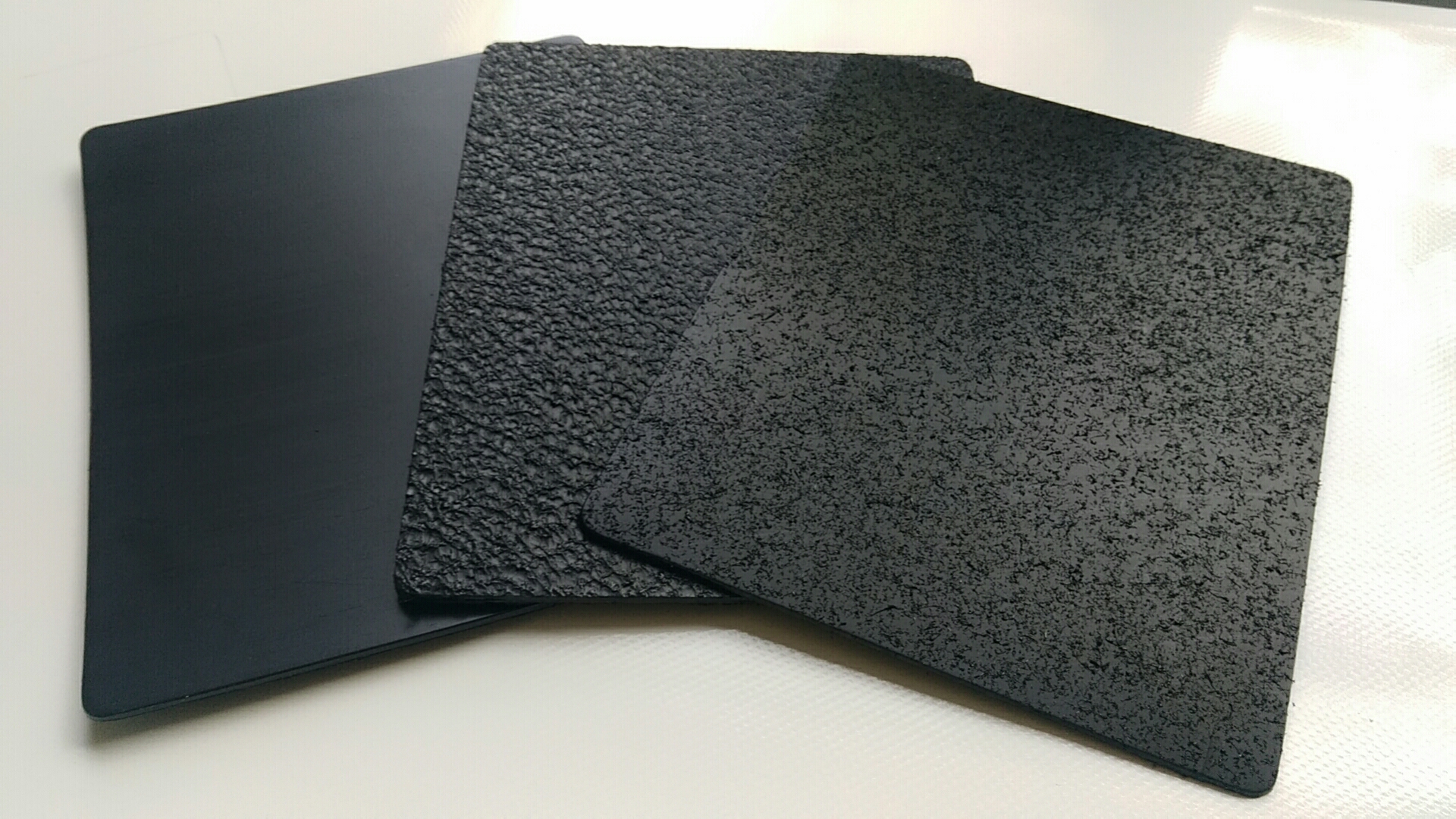
HDPE geomembrane is a manufactured sheet, typically 0.3 mm to 3.0 mm thick, made from high-density polyethylene. Its primary function is to prevent liquid leakage. In an anti-seepage system, the geomembrane is the barrier layer: it stops water, leachate, or process solution from moving out of the containment volume.
A composite drainage geonet is a three-dimensional structure, typically 4.0 mm to 8.0 mm thick, made from HDPE, PP, or PET. Its primary function is to conduct liquid along a defined flow path while supporting the overlying material. In the same anti-seepage system, the geonet is the drainage and protection layer: it relieves pore pressure, collects seepage, and prevents the geomembrane from being punctured by overlying stone or waste.
Decision rule: If the project question is "how do we stop liquid from escaping," the geomembrane is the answer. If the project question is "how do we control liquid flow and protect the barrier," the composite drainage geonet is the answer. If both questions exist, the two products are used together, not as substitutes.
This distinction matters in procurement because the two products are not interchangeable on a one-to-one basis. Replacing a geomembrane with a drainage geonet removes the barrier function. Replacing a drainage geonet with a geomembrane removes the drainage and protection function. The rest of this article evaluates each product on its own terms and then defines the scenarios where one, the other, or both should be specified.
Material and Performance Comparison
Both products are manufactured from polymeric materials and both carry mechanical specifications, but they are tested against different performance criteria. The comparison below is based on the published product data for Haoyang geomembrane and Haoyang composite drainage geonet.
HDPE Geomembrane Performance Envelope
The geomembrane product range covers thicknesses from 0.3 mm to 3.0 mm, with customizable dimensions. Its mechanical profile is designed around barrier integrity: high elongation before break, high puncture resistance, and long-term stress-crack resistance.
- Thickness: 0.3 mm–3.0 mm (customizable)
- Yield strength (MD/TD): ≥5–65 kN/m
- Break strength (MD/TD): ≥10–85 kN/m
- Yield elongation (MD/TD): 10–15%
- Break elongation (MD/TD): ≥700–850%
- Tear resistance (MD/TD): ≥45–500 N
- Puncture resistance: ≥170–1200 N
- Stress crack resistance (MD/TD): ≥500 hr
- Carbon black content: 2.0–2.8%
- Standard OIT: ≥130 min
- High-pressure OIT: ≥430 min
- Oven aging at 85°C (Standard OIT retained after 90 days): ≥60%
The combination of high break elongation and high puncture resistance is what allows the geomembrane to deform around subsurface irregularities without losing its barrier function. The carbon black content and OIT values relate to UV and oxidative durability, which matter in exposed or long-service-life applications.
Composite Drainage Geonet Performance Envelope
The drainage geonet product range covers thicknesses from 4.0 mm to 8.0 mm, with customizable mass per unit area and drainage capacity. Its mechanical profile is designed around flow capacity under load: compressive strength, tensile strength, and chemical resistance.
- Thickness: 4.0 mm–8.0 mm (customizable)
- Mass per unit area: 500–1400 g/m² (customizable)
- Tensile strength (MD/TD): ≥5–15 kN/m
- Elongation at break: 10–25%
- Compressive strength (10% strain): ≥500–830 kPa
- Acid/alkali resistance: ≥90% strength retention
- Drainage capacity: ≥50–120 (L/min)/m (customizable)
The compressive strength at 10% strain is the key design parameter for drainage geonet because it determines whether the flow channels remain open under the weight of overlying soil, waste, or concrete. The drainage capacity figure defines how much liquid the geonet can transmit per metre of width per minute.
Side-by-Side Comparison
| Parameter | HDPE Geomembrane | Composite Drainage Geonet |
|---|---|---|
| Primary function | Impermeable barrier (anti-seepage) | Drainage and protection layer |
| Thickness range | 0.3–3.0 mm | 4.0–8.0 mm |
| Material | HDPE | HDPE / PP / PET |
| Tensile strength (MD/TD) | ≥5–65 kN/m (yield); ≥10–85 kN/m (break) | ≥5–15 kN/m |
| Elongation | 10–15% yield; ≥700–850% break | 10–25% at break |
| Puncture resistance | ≥170–1200 N | Not a specified parameter for this product |
| Compressive strength (10% strain) | Not a specified parameter for this product | ≥500–830 kPa |
| Drainage capacity | Not a specified parameter for this product | ≥50–120 (L/min)/m |
| Chemical resistance | Formulated for acid, alkali, and salt exposure | ≥90% strength retention after acid/alkali exposure |
| EN 13249:2016 certificate | ICR/VC/HE250525 | ICR/VC/HE250526 |
| Typical role in a containment system | Barrier layer | Drainage and protection layer |
EN 13249:2016 Certification and What It Confirms
Both the geomembrane and the composite drainage geonet hold certification under EN 13249:2016. The certificate references are ICR/VC/HE250525 for the geomembrane and ICR/VC/HE250526 for the composite drainage geonet.
For buyers, the certification matters for three reasons. First, it provides a third-party reference point for the product's declared properties, which reduces the risk of relying solely on supplier datasheets. Second, it supports tender compliance in projects where an EN reference is required. Third, it allows the two products to be specified within the same compliance framework rather than treating them as unrelated materials.
Procurement note: A certificate reference should be verified against the issuing body's records and matched to the specific product grade, thickness, and production site. The certificate number confirms that a certification exists; it does not by itself confirm that a particular roll in a particular shipment conforms. That remains a matter of factory testing and incoming inspection.
Scenario-by-Scenario Decision Guide
The following scenarios reflect the project types where Haoyang geomembrane and composite drainage geonet are most commonly specified. Each scenario is framed around the question the buyer is actually trying to answer.
Scenario 1: Aquaculture Pond Anti-Seepage
In aquaculture, the project question is "how do we prevent water from seeping out of the pond while keeping the liner safe for fish." The functional requirement is barrier performance, not drainage. The geomembrane is designed for aquaculture pond anti-seepage systems and operates under leakage prevention conditions. Its role is to prevent water seepage. The application requires a non-toxic, UV-resistant, fish-friendly material with a long service life.
In this scenario, a standalone geomembrane is the appropriate specification. A composite drainage geonet would add drainage capacity that the pond does not need, and would add cost without improving the barrier function. The decision is therefore geomembrane only.
Scenario 2: Mining and Smelting Tailings Ponds
In mining and smelting, the project question is "how do we prevent process solution and tailings liquid from escaping while managing the liquid that collects inside the impoundment." The functional requirement is both barrier and drainage. The geomembrane is designed for leakage prevention and operates in a 24/7 environment. The application requires high chemical resistance, UV resistance, and a long service life. The matched equipment in this scenario is a drainage geonet combined with a geomembrane.
This is the clearest case where the two products should be specified together. The geomembrane provides the barrier. The composite drainage geonet relieves pressure and protects the membrane. Specifying only one of the two leaves a functional gap.
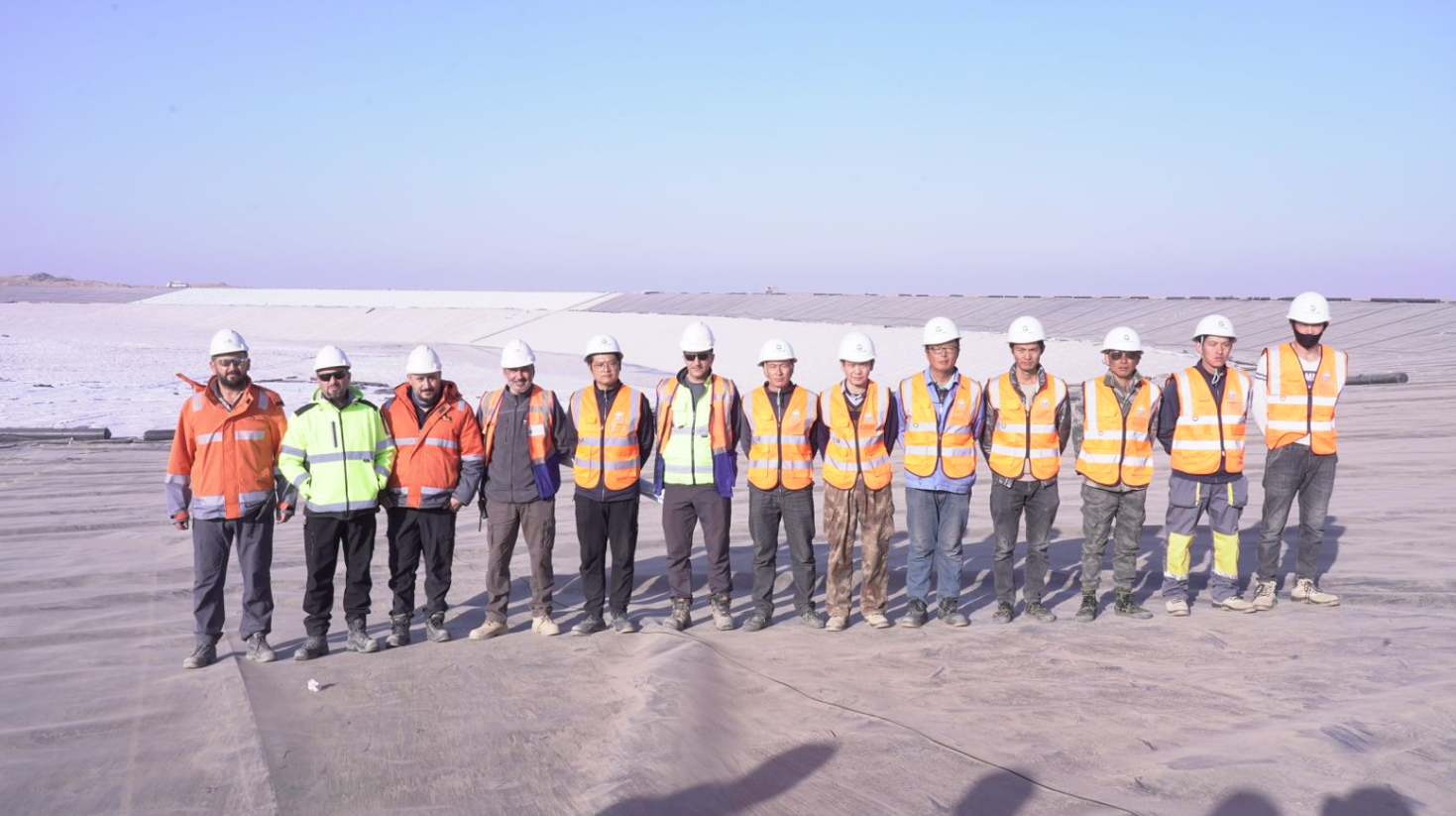
A relevant reference is the 900,000 m² seepage control project at a gold mine tailings pond basin in Uzbekistan. The project used a three-dimensional composite drainage network composed of textured geomembrane and high-strength polypropylene geotextile. The textured geomembrane was produced on a five-layer co-extrusion blow molding line with online double-sided texturing equipment, using a high-temperature, high-pressure air jet process to complete base membrane forming and surface texturing in a single molten state. The rough points form a molecular-level bond with the substrate, which reduced production energy consumption by 25% and avoided the thermal aging risk associated with secondary processing. The project scope ran from material supply to on-site installation and construction.
Scenario 3: Reservoir and Pumped Storage Anti-Seepage
In reservoir and pumped storage projects, the project question is "how do we maintain a reliable barrier under repeated water-level changes." The functional requirement is barrier performance with fatigue resistance under cyclic loading. Geomembrane liners in pumped storage hydropower facilities are subject to stress from rapid water level changes, and geomembranes mitigate this better than traditional materials.
A standalone geomembrane is the core specification. A composite drainage geonet may be added where the design requires underdrainage or pressure relief, but the decision turns on the hydraulic boundary conditions of the specific reservoir, not on a default rule.
Scenario 4: Landfill Capping and Closure
In landfill capping, the project question is "how do we prevent infiltration and manage the gas and leachate that collect beneath the cap." The functional requirement is barrier plus drainage. The geomembrane provides the infiltration barrier. The composite drainage geonet provides the drainage layer for gas and leachate collection.
This is another combined-system scenario. The exact configuration depends on the capping design, but the logic is the same as in mining: barrier and drainage are separate functions, and each requires a separate product.
Scenario 5: Salt Lake Mining and Chemical Exposure
In salt lake mining, the project question is "how do we maintain a barrier under high salt and chemical exposure." The functional requirement is chemical resistance combined with barrier performance. The geomembrane product range includes acid- and alkali-resistant grades, and the drainage geonet is rated for ≥90% strength retention after acid/alkali exposure.
The selection here is driven by the chemistry of the contained liquid. In high-chloride or high-sulfate environments, the geomembrane grade should be matched to the exposure, and the drainage geonet should be confirmed for the same chemical environment.
When the Two Products Should Work Together
The combined system is not a premium option; it is a functional requirement in projects where both barrier and drainage are needed. The general configuration is a geomembrane as the barrier layer, with a composite drainage geonet above or below it depending on the flow direction.
The composite drainage geonet performs three functions in a combined system:
- Pressure relief: it collects liquid that would otherwise build up against the geomembrane.
- Flow conduction: it transmits collected liquid to a collection point at a controlled rate.
- Protection: it separates the geomembrane from overlying stone, waste, or concrete that could puncture it.
In the Uzbekistan tailings project, the composite drainage network was combined with the textured geomembrane specifically to address these three functions in a single installed system. The use of textured geomembrane rather than smooth geomembrane is relevant here: the textured surface increases interface friction, which reduces the risk of sliding between the membrane and the adjacent drainage layer or soil.
Cost and Procurement Considerations
Cost comparison between the two products should be framed as cost per function, not cost per square metre, because the two products do not deliver the same function. A lower unit price for a drainage geonet does not make it a cheaper substitute for a geomembrane, because it does not provide the barrier function.
As a market reference, the price for a standard 1.0 mm smooth black HDPE geomembrane typically ranges from USD 1.20 to USD 2.50 per square metre. This figure is a market-level range for a standard grade and should not be treated as a project quotation. Composite drainage geonet pricing depends on thickness, mass per unit area, drainage capacity, and project volume, and should be obtained through a project-specific quote.
Several procurement variables affect the final cost of either product:
- Thickness and grade: higher thickness and higher performance grades increase unit cost.
- Customization: LOGO, width, scroll length, thickness, GSM, tensile yield strength, tensile fracture strength, and puncture strength can all be customized, and each customization affects price and lead time.
- Order quantity: the minimum order quantity is 5000 m².
- Testing and documentation: 100% testing is standard, and additional test documentation may affect cost.
- Freight and installation: both products are supplied in rolls, and installation method affects total installed cost.
For buyers comparing suppliers, the relevant question is not "which product is cheaper" but "which supplier can deliver the correct product, with the correct certification, at the correct time, with the correct test documentation."
Frequently Asked Questions
1. Are Haoyang's geomembrane and composite drainage geonet certified under EN 13249:2016?
Yes. The geomembrane holds EN 13249:2016 certification under certificate reference ICR/VC/HE250525, and the composite drainage geonet holds EN 13249:2016 certification under certificate reference ICR/VC/HE250526. Buyers should verify each certificate reference against the issuing body's records and match it to the specific product grade and production site before accepting it for a project.
2. Can a composite drainage geonet replace a geomembrane for anti-seepage?
No. The composite drainage geonet is a drainage and protection layer, not a barrier. Its function is to conduct liquid and protect the membrane, not to stop liquid migration. In projects that require anti-seepage, a geomembrane is the barrier product, and the composite drainage geonet is specified in addition to it, not instead of it.
3. How do I estimate the cost difference between the two systems?
Frame the comparison as cost per function. A standard 1.0 mm smooth black HDPE geomembrane typically ranges from USD 1.20 to USD 2.50 per square metre at market level, while composite drainage geonet pricing depends on thickness, mass per unit area, and drainage capacity. Because the two products deliver different functions, a like-for-like unit price comparison is not meaningful; the correct comparison is the total installed cost of the required system, including barrier, drainage, protection, and installation.
4. Can I request samples of both products before placing an order?
Yes. Sample requests for geomembrane and composite drainage geonet can be arranged so that buyers can confirm thickness, surface texture, flexibility, and workability before committing to a project order. Sample evaluation is particularly useful for textured geomembrane, where the surface pattern affects both friction performance and welding preparation.
5. What is the lead time for geomembrane and composite drainage geonet orders?
Standard lead time is 10–30 days, depending on product type, thickness, customization requirements, and order volume. The minimum order quantity is 5000 m², and monthly production capacity is 3000 T. For project schedules with fixed installation windows, lead time should be confirmed at the quotation stage together with the required test documentation and certification copies. To discuss a specific project, request a quote or sample through Haoyang Environment Co., Ltd..
Conclusion
The choice between an HDPE geomembrane and a composite drainage geonet is a choice between two different functions, not two competing brands of the same function. The geomembrane is the barrier. The composite drainage geonet is the drainage and protection layer. In aquaculture ponds and simple reservoir liners, the geomembrane alone is usually sufficient. In mining tailings, landfill capping, and other projects where liquid must be both contained and managed, the two products are specified together.
Both product families are certified under EN 13249:2016, with certificate references ICR/VC/HE250525 for the geomembrane and ICR/VC/HE250526 for the composite drainage geonet. That shared certification framework allows the two products to be evaluated within the same compliance process, which simplifies tender preparation and supplier verification.
The practical decision sequence is therefore: first define the hydraulic function the project requires, then select the product or product combination that delivers that function, then verify certification and test documentation for the specific grade, and finally confirm lead time and installation method against the project schedule. Following that sequence avoids both failure modes: an unlined containment structure and an over-specified system that pays for drainage capacity the project does not need.
Request a Project-Specific Recommendation
Share your project type, containment volume, and chemical exposure, and the Haoyang team can confirm whether a standalone geomembrane or a geomembrane-plus-drainage-geonet system is the appropriate specification. Samples and certification copies are available on request.
Visit Haoyang Environment Co., Ltd. · Email: 15315800874@163.com · WhatsApp: +86 15315800874
Have Questions or Need More Details?
Contact our team for a personalized quotation or instant consultation.
Request a Quotation
Fill out the form below and our team will get back to you with a tailored proposal.
WhatsApp Direct Chat
Prefer to chat in real-time? Message us on WhatsApp for instant assistance & quick answers.
- Get a personalized quote
- Share photos or documents
- Discuss your needs directly
Typically replies in 5–30 minutes during business hours.