Drainage Geonet After-Sales & FAQ: What Long-Term Partners Need to Know
After-Sales & Long-Term Supply
Drainage Geonet After-Sales & FAQ: What Long-Term Partners Need to Know
After-sales support for a drainage geonet order rests on four things a buyer can actually check: the acceptance criteria agreed before shipment, the conformity documents that can be verified independently, the contract terms that define responsibility after delivery, and a technical contact path that stays open during installation. Haoyang Environment Co., Ltd. is a geosynthetics manufacturer headquartered in the Dezhou (Yucheng) National High-Tech Industrial Development Zone, Shandong, China, producing drainage geonet in HDPE, PP and PET from 4.0 mm to 8.0 mm thickness. The company holds three EAEU GOST certificates issued by ПрофСерт (ProfSert) and four ICR Verification of Conformity certificates referencing EN 13249:2016 and CPR (EU) 305/2011. This guide answers the questions procurement specialists and engineers raise after the quotation stage.
Problem Definition: Where Drainage Geonet Orders Actually Lose Time
Most drainage geonet decisions are made at the quotation stage, where buyers compare thickness, drainage capacity and price per square metre. The problems that damage a project schedule usually appear later — after the purchase order is signed, when the material is on site and the specification sheet is no longer in the same room as the delivered roll.
Four post-purchase gaps account for most of that friction. Each one is preventable with documents and agreement terms rather than with a better quotation.
- Acceptance gap. The delivered roll is checked against a datasheet that reports a range, not against the exact thickness and areal mass that were ordered.
- Documentation gap. A certificate number is quoted in a tender file, but nobody confirms that the certificate covers the specific geonet type and market being supplied.
- Responsibility gap. Storage, handling and installation questions arise on site and there is no named technical contact or agreed claim path.
- Continuity gap. A repeat order arrives with a different thickness or mass requirement, and the previous performance reference no longer applies.
There is also a data-quality issue that buyers should plan for. Manufacturer product pages in this category commonly publish performance ranges without stating the hydraulic gradient, normal stress or chemical exposure conditions behind them. Published figures such as drainage capacity ranges are therefore useful as screening values, not as approved design inputs — the test basis has to be agreed separately. A long-term partner programme exists precisely to close that gap once, instead of at every order.
Industry Background: Why Conformity Documents Now Travel With the Order
Drainage geonet is bought against two different document systems, and they are not interchangeable.
For EAEU markets, the relevant evidence is GOST certification issued through a recognised certification body. Haoyang's certificates are issued by ПрофСерт (ProfSert), and their numbers are listed in the section below so that a procurement team can match the number on the certificate to the number in the tender file.
For European Union and EU-referenced projects, the framework is different: the ICR Verification of Conformity route referencing EN 13249:2016 and CPR (EU) 305/2011, the Construction Products Regulation. A buyer supplying into both regions should keep both document sets, because one does not substitute for the other.
International standards provide the third layer — the test and acceptance framework. ASTM catalogue listings identify ASTM D7931/D7931M-21a as a standard guide for specifying drainage geocomposites and ASTM D7273/D7273M-08(2026) as a standard guide for acceptance testing requirements for geonets and geonet drainage geocomposites. The Geosynthetic Institute's GRI-GN4 is the corresponding specification reference for biplanar geonets. A catalogue listing confirms that the standard exists and is applicable; it does not confirm that a specific product complies with it. That distinction belongs in the purchase agreement, not in a brochure.
Market context explains why buyers increasingly want a relationship rather than a transaction. A 2025 commercial market research series projected the global geonet drainage composite market growing from USD 762 million in 2025 to USD 1,138 million by 2032, at a 6.0% CAGR. Growth of that kind moves procurement from one-off buying towards scheduled, repeatable supply — and repeatable supply is where after-sales terms start to matter more than the unit price.
What Haoyang Puts Behind a Long-Term Drainage Geonet Order
Published product scope and customizable parameters
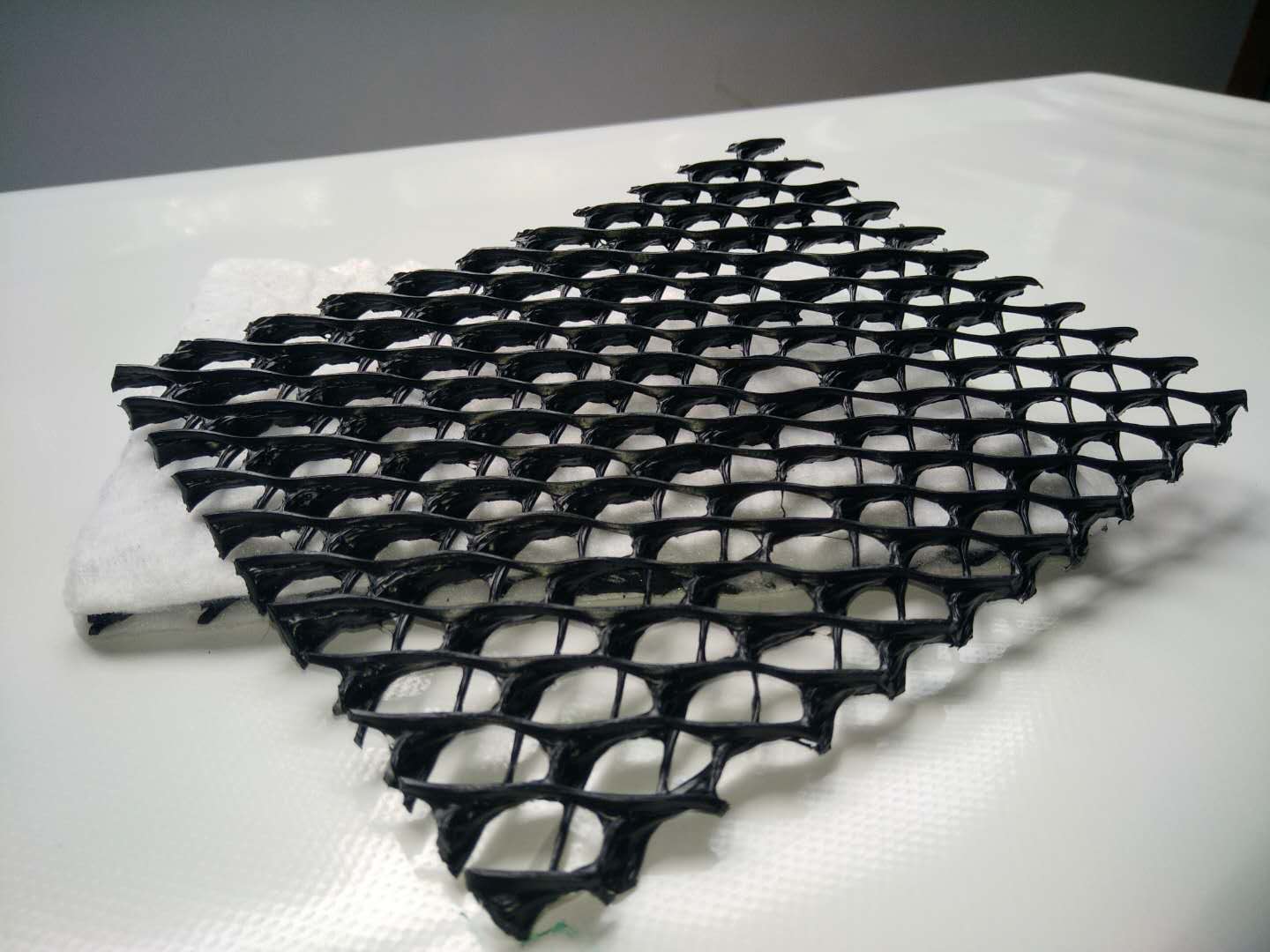
Haoyang's drainage geonet is offered as a composite drainage geonet family that also covers acid and alkali resistant, high compressive resistance, high drainage capacity, 3D composite, polyester filament composite and high-strength polypropylene composite types. The core material is HDPE, PP or PET, and thickness and areal mass are both stated as customizable.
Those published values give a buyer a screening envelope before the technical discussion begins: thickness from 4.0 mm to 8.0 mm, mass per unit area from 500 to 1,400 g/m², tensile strength of at least 5–15 kN/m, elongation at break of 10–25%, compressive strength at 10% strain of at least 500–830 kPa, acid and alkali resistance expressed as at least 90% strength retention, and drainage capacity of at least 50–120 (L/min)/m. Because thickness and mass are customizable, two orders for the same project can legitimately differ — which is exactly why the specification has to be written down and retained.
Conformity documents a buyer can verify independently
The document set a long-term partner should hold is short enough to store in one project folder and specific enough to check line by line.
EAEU GOST certificates, issued by ПрофСерт (ProfSert):
- POCC CN.32682.04NC中0.OC01.H00838
- POCC CN.32682.047C00.0C01.H00840
- POCC CN.32682.047C00.OC01.H00837
ICR Verification of Conformity, referencing EN 13249:2016 and CPR (EU) 305/2011:
- ICR/VC/HE250523
- ICR/VC/HE250524
- ICR/VC/HE250525
- ICR/VC/HE250526
Verification is a three-step habit rather than a research project: confirm that the number on the copy in hand matches the number in the tender file, confirm that the scope described covers the geonet type actually ordered, and record the copy against the project reference. Buyers who follow that routine stop discovering certification problems at customs or at the site gate.
Manufacturing base and engineering support
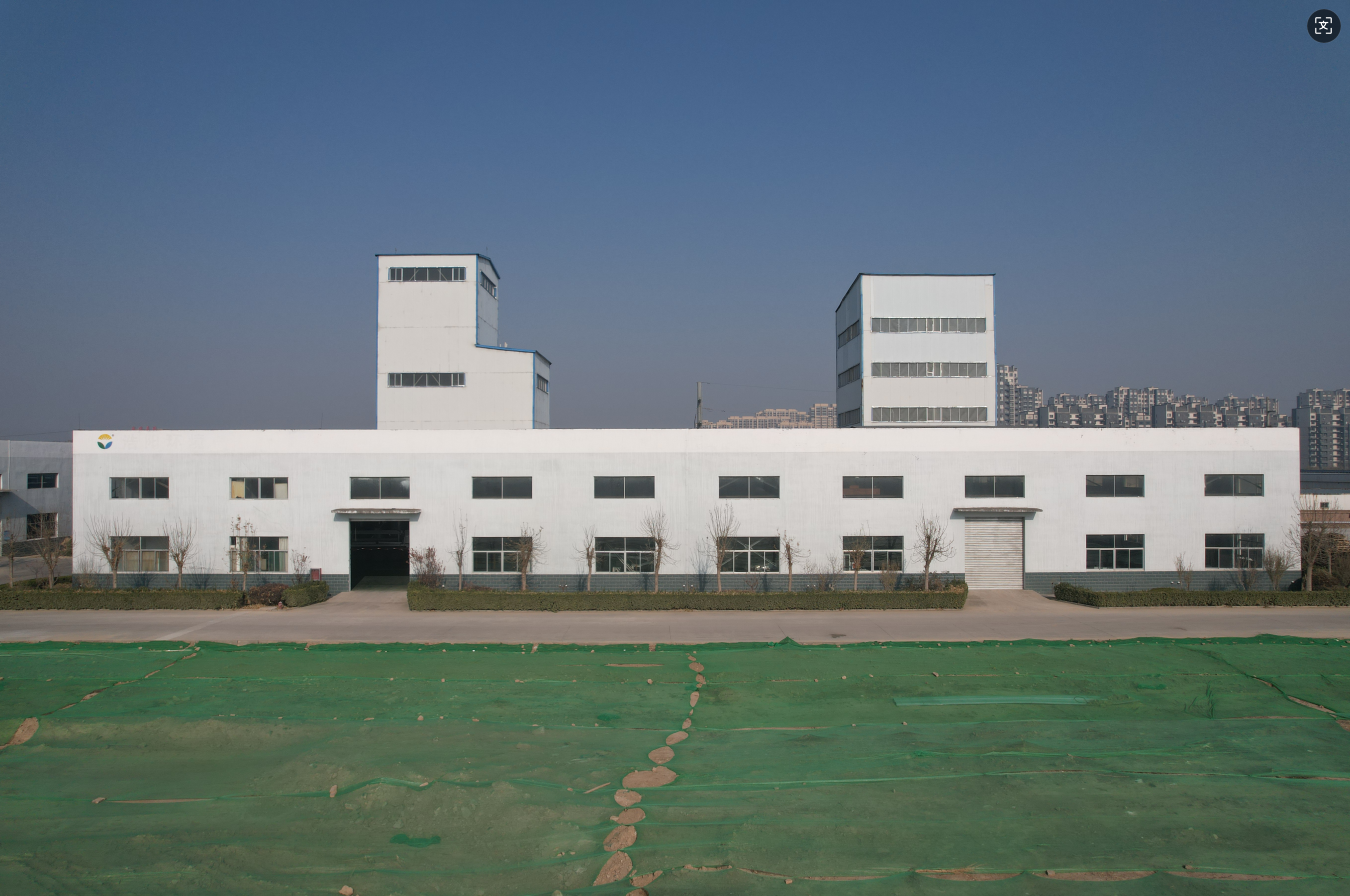
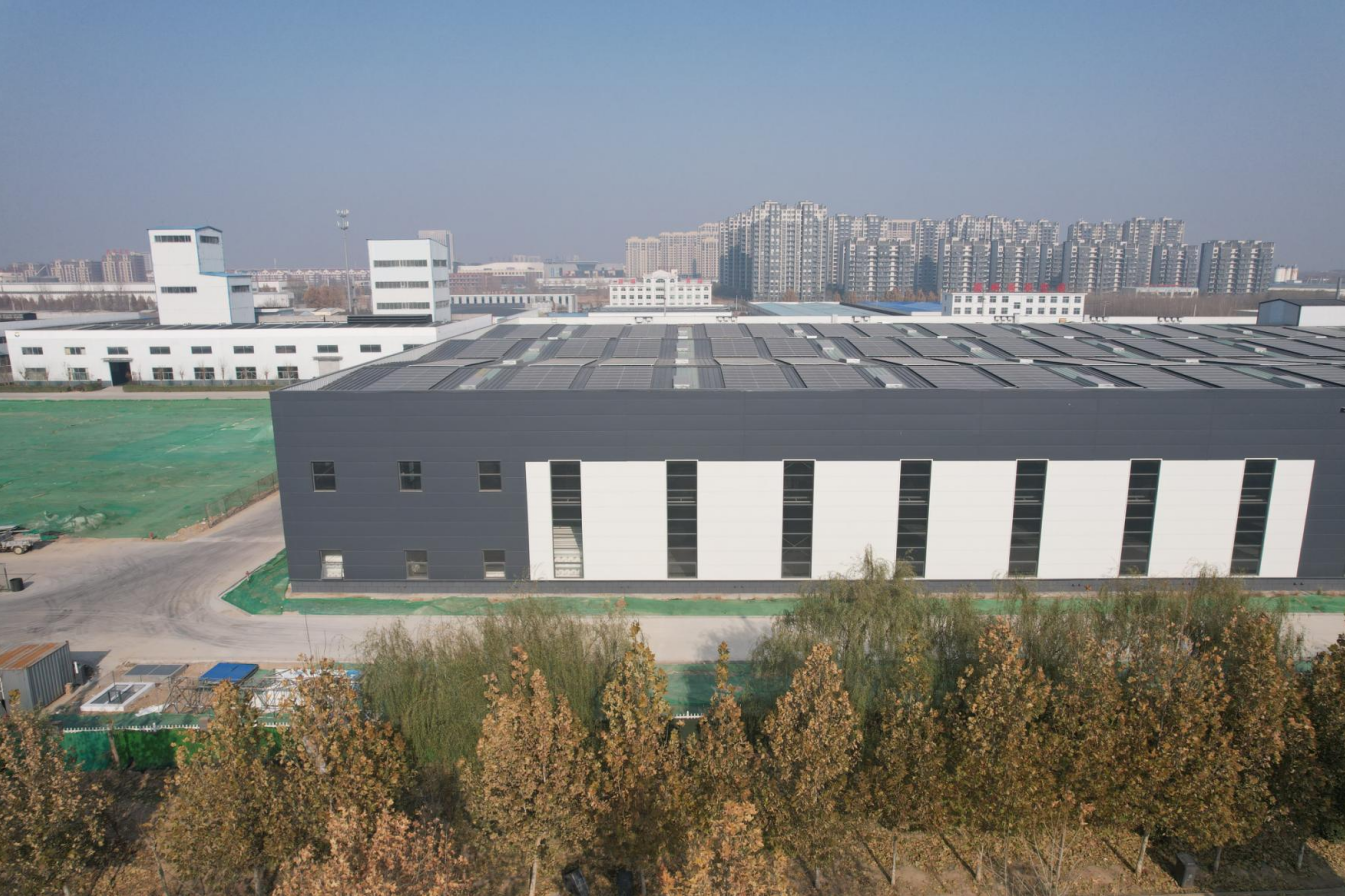
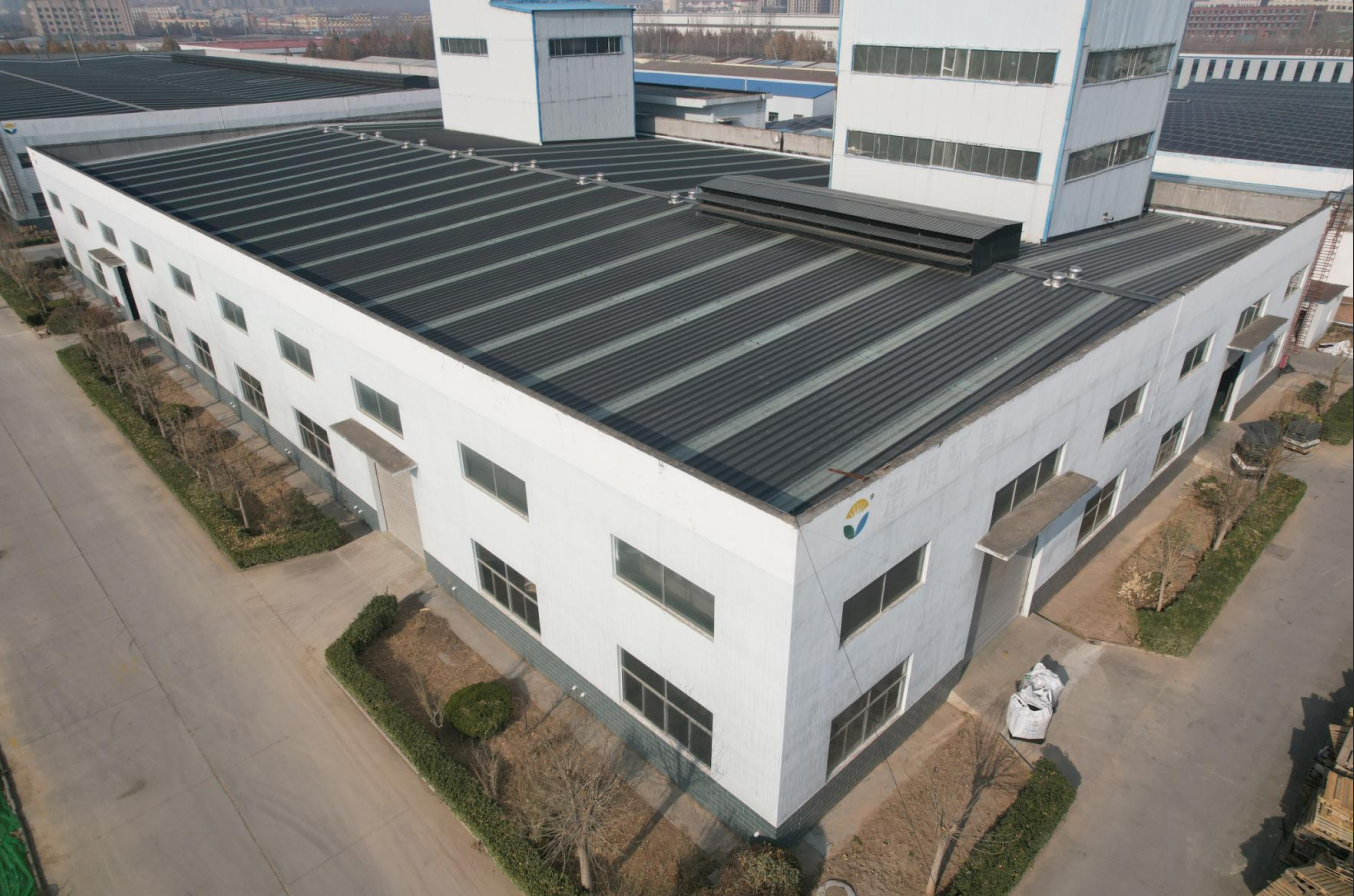
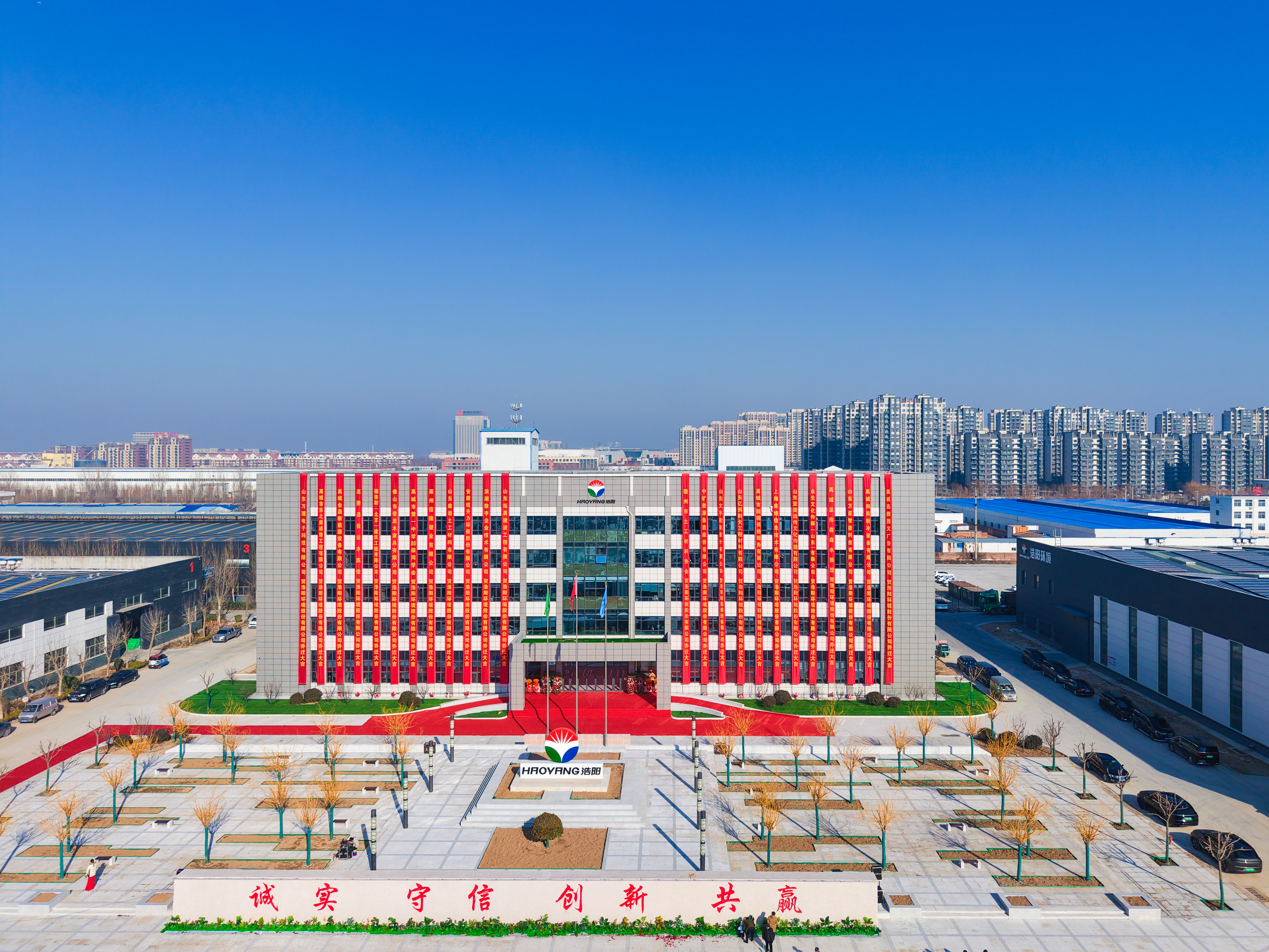
Haoyang Environment Co., Ltd. was founded in 2008 and operates as a comprehensive technology enterprise covering research and development, production, sales and engineering construction services for geosynthetic materials, structured with 8 wholly-owned subsidiaries. Its manufacturing facility covers 200,000 m² with an annual production capacity of 33,000 t, supported by approximately 190 employees, including an R&D team of 20 professional engineers working with cooperative relationships with universities such as Fudan University and Tianjin University of Technology. The company reports more than 70 patents and proprietary technologies.
Export business accounts for 60% of total sales, with a marketing network covering more than 70 countries and regions and principal markets in Africa, Central Asia, the Middle East, Southeast Asia and Indonesia. The company's official website also reports a six-metre-wide composite drainage network production line — a company-reported capability statement rather than an independently audited figure, and one worth confirming against the roll-width plan of a specific order.
Step-by-Step: Running a Drainage Geonet Order From RFQ to Repeat Order
Step 1 — Lock the specification into the RFQ
Write the thickness, areal mass, polymer and required performance values into the request itself, using the published ranges as the envelope and a single point inside that envelope as the requirement. A request that says "drainage geonet, 4.0–8.0 mm" cannot be quoted precisely and cannot be accepted precisely.
Step 2 — Verify documents before the purchase order
Match the GOST and ICR certificate numbers to the product scope being purchased, and confirm which market each document supports. Do this before the PO, because it is the cheapest moment to correct a mismatch.
Step 3 — Agree acceptance criteria and the test basis
Fix the acceptance framework in the purchase agreement. ASTM D7273/D7273M-08(2026) addresses acceptance testing requirements for geonets and geonet drainage geocomposites and works well as a shared reference point. Because published performance ranges in this category often omit the hydraulic and chemical test conditions, the agreement should record the method, the specimen configuration and the conditions in writing.
Step 4 — Confirm the roll and width plan
Roll width and roll length determine both installation productivity and the number of joints. Confirm the plan against the production line capability described by the manufacturer, and record the agreed dimensions with the order specification.
Step 5 — Define the warranty and the claim path in the contract
Warranty terms are a contract item, not a catalogue item. A practical agreement fixes four points: which specification is being warranted (thickness, areal mass, polymer), which performance values are being warranted, which documents travel with the shipment, and what evidence is required when a question is raised. Recording batch and roll identification at goods-in turns a later dispute into a traceable review.
Step 6 — Plan handling and storage before delivery
Agree who is responsible for site storage, and keep rolls dry, off the ground and shielded from prolonged direct sunlight before installation. This matters most in the applications where the product is specified for 24/7 operation with high chemical resistance, UV resistance and long service life requirements — the material's design intent assumes the installation protects the drainage core and filter layer as designed.
Step 7 — Schedule the repeat-order review
Retain the exact specification used, together with the certificate package and the acceptance record. When the second order arrives, the comparison becomes a document check rather than a new technical evaluation — the single biggest efficiency gain a long-term partnership delivers.
Use Cases: Where After-Sales Questions Usually Appear
Metal smelting anti-seepage systems. Drainage geonet is used in anti-seepage system projects in the metal smelting sector, where its role is to prevent liquid leakage under 24/7 operation. The application environment requires high chemical resistance, UV resistance and long service life — which is why acid and alkali resistance stated as at least 90% strength retention, and compressive strength at 10% strain of at least 500–830 kPa, are the values most often queried after delivery.
Aquaculture pond anti-seepage systems. In aquaculture, drainage geonet is used in pond anti-seepage system projects, with requirements covering non-toxicity, UV resistance and long service life. This scenario is common in Laos, Cambodia, Indonesia and Vietnam, and the metal smelting scenario is likewise common across Laos, Cambodia, Indonesia, Vietnam, the Democratic Republic of the Congo, the Republic of the Congo, Russia, Uzbekistan, Kyrgyzstan, Kazakhstan, Australia and Chile.
Civil and infrastructure drainage. Market descriptions of composite drainage geonet commonly list landfill, retaining wall, mining, tunnel and civil engineering applications, alongside biplanar and triplanar structural forms. Where a project falls into one of these categories, the same post-purchase logic applies: agree the acceptance framework, hold the certificate package, and keep the specification record.
Comparison Tables
The tables below separate two things buyers often blend together: what the product can be specified to, and what the paperwork actually proves.
Table 1 — Published drainage geonet parameter envelope (Haoyang, customizable)
| Parameter | Published value | What it decides for a long-term order |
|---|---|---|
| Thickness | 4.0 mm – 8.0 mm (customizable) | Which specification record must be locked per order |
| Mass per unit area | 500 – 1,400 g/m² (customizable) | Freight weight, roll handling plan and repeat-order matching |
| Tensile strength (MD/TD) | ≥5 – 15 kN/m | Installation survivability discussion with the contractor |
| Elongation at break | 10 – 25% | How the material behaves under installation stress |
| Compressive strength (10% strain) | ≥500 – 830 kPa | Load class for subgrade, lining and high-load applications |
| Acid / alkali resistance | ≥90% strength retention | Chemical exposure screening for smelting and landfill use |
| Drainage capacity | ≥50 – 120 (L/min)/m (customizable) | Hydraulic design input — test conditions must be confirmed |
| Material | HDPE / PP / PET | Polymer selection and durability expectation |
Table 2 — Documents and references a buyer can verify
| Document / reference | Type | What it evidences | What the buyer must still confirm |
|---|---|---|---|
| POCC CN.32682.04NC中0.OC01.H00838 POCC CN.32682.047C00.0C01.H00840 POCC CN.32682.047C00.OC01.H00837 | EAEU GOST certificates, issued by ПрофСерт (ProfSert) | Certification status for EAEU market supply | That the certificate scope covers the geonet type ordered |
| ICR/VC/HE250523 ICR/VC/HE250524 ICR/VC/HE250525 ICR/VC/HE250526 | ICR Verification of Conformity referencing EN 13249:2016 and CPR (EU) 305/2011 | EU-referenced conformity documentation | That the number and scope match the tender requirement |
| ASTM D7931/D7931M-21a | Standard guide for specifying drainage geocomposites | A specification framework for tender drafting | That the final specification text reflects project conditions |
| ASTM D7273/D7273M-08(2026) | Standard guide for acceptance testing requirements for geonets and geonet drainage geocomposites | A shared acceptance-testing framework | Which tests apply and who witnesses them |
| GRI-GN4 | Standard specification for biplanar geonets | Industry specification reference for biplanar geonet | That the product form matches the biplanar basis |
A standard or catalogue listing confirms that a reference exists and is applicable. It does not confirm that a specific product complies with it. Product-level compliance is demonstrated through the certificate package and the agreed acceptance record.
FAQ: Post-Purchase Questions From Long-Term Drainage Geonet Partners
Which drainage geonet certificates can be verified before an order is placed?
Two document sets can be verified. First, three EAEU GOST certificates issued by ПрофСерт (ProfSert): POCC CN.32682.04NC中0.OC01.H00838, POCC CN.32682.047C00.0C01.H00840 and POCC CN.32682.047C00.OC01.H00837. Second, four ICR Verification of Conformity certificates — ICR/VC/HE250523, ICR/VC/HE250524, ICR/VC/HE250525 and ICR/VC/HE250526 — referencing EN 13249:2016 and CPR (EU) 305/2011. Verification means matching the number on the copy in hand to the number in the tender file, confirming the scope covers the geonet type being bought, and filing the copy against the project reference. The GOST set supports EAEU market supply and the ICR set supports EU-referenced requirements; a project that touches both markets needs both.
What manufacturing capability supports a repeat drainage geonet order?
Haoyang Environment Co., Ltd., founded in 2008, operates a 200,000 m² manufacturing facility with an annual production capacity of 33,000 t, approximately 190 employees and an R&D team of 20 professional engineers, within a group structure of 8 wholly-owned subsidiaries. Export business accounts for 60% of total sales, with a marketing network covering more than 70 countries and regions and principal markets in Africa, Central Asia, the Middle East, Southeast Asia and Indonesia. The company's official website additionally reports a six-metre-wide composite drainage network production line, which is a company-reported capability statement. Buyers running a supplier audit should treat these as company-reported figures and request order-specific production and inspection records for the specification being purchased.
How should a buyer budget drainage geonet pricing across a multi-year programme?
Start from a benchmark and then replace it with a quotation. A 2026 vendor-solicitation benchmark placed drainage geonet material valuations between USD 1.60 and USD 10.76 per square metre — a derived range drawn from marketplace solicitations, not a binding quotation, and one that excludes freight, Incoterms and project-specific testing. Within that range, the cost drivers are thickness (4.0–8.0 mm), areal mass (500–1,400 g/m²), polymer choice between HDPE, PP and PET, the drainage capacity class required, and the documentation and acceptance testing attached to the order. For multi-year programmes, the practical approach is to budget against a fixed specification and re-quote when the specification changes rather than when the calendar changes.
What should a drainage geonet sample evaluation actually confirm?
A sample is only meaningful if it is tied to the exact specification being purchased. Because Haoyang's published data is expressed as ranges — thickness 4.0–8.0 mm and areal mass 500–1,400 g/m², both customizable — a sample request should name the precise thickness, areal mass and polymer, and should ask for the performance values that apply to that combination rather than to the range as a whole. The evaluation should then confirm three things: that the delivered sample matches the named specification, that the performance values quoted for it are accompanied by the conditions under which they were measured, and that the sample can be retained as a physical reference for the incoming inspection on the first volume shipment.
How should lead time be confirmed for a drainage geonet order?
Lead time should be confirmed per order, against a locked specification, rather than assumed from a general figure. Two product characteristics drive this: thickness and areal mass are both customizable, so each order is a specific production configuration, and roll width and length must be agreed against the production line plan before scheduling. Export documentation is routine for this supplier, since export business accounts for 60% of total sales across more than 70 countries and regions, but the scheduled date still belongs in the order confirmation. To move forward, send the specification — thickness, areal mass, polymer, required drainage capacity and destination market — to the team by email at 15315800874@163.com or WhatsApp on +86 15315800874, and request a quotation with a confirmed delivery schedule.
Conclusion: The Partner Test Is Documentation, Not Slogans
A drainage geonet supplier is easy to compare on price and difficult to compare on what happens after delivery. The difference becomes visible in four places: whether acceptance criteria were agreed before shipment, whether the certificate numbers can be matched to the product scope, whether the contract states what is warranted and how a claim is raised, and whether the technical contact survives the end of the sales conversation.
For buyers in metal smelting, aquaculture and civil drainage projects, that checklist is the practical definition of a long-term partner. Haoyang Environment Co., Ltd. supports it with a published parameter envelope from 4.0 mm to 8.0 mm thickness and 500–1,400 g/m² areal mass, a 200,000 m² manufacturing facility with 33,000 t annual capacity, EAEU GOST certificates issued by ПрофСерт (ProfSert), and ICR Verification of Conformity certificates referencing EN 13249:2016 and CPR (EU) 305/2011 — facts a procurement team can verify rather than accept.
Next Step for Long-Term Partners
Send your drainage geonet specification — thickness, areal mass, polymer, drainage capacity class and destination market — and request a quotation together with the current certificate package. The team can be reached by email at 15315800874@163.com, by telephone on +86 15315800874, or by WhatsApp on +86 15315800874. Company details and the full product range are published at haoyanghuanjing.com.
Drainage geonetComposite drainage geonetHigh compressive resistanceHDPE / PP / PETGOST & ICR certified
Have Questions or Need More Details?
Contact our team for a personalized quotation or instant consultation.
Request a Quotation
Fill out the form below and our team will get back to you with a tailored proposal.
WhatsApp Direct Chat
Prefer to chat in real-time? Message us on WhatsApp for instant assistance & quick answers.
- Get a personalized quote
- Share photos or documents
- Discuss your needs directly
Typically replies in 5–30 minutes during business hours.