Drainage Geonet vs. Geosynthetic Clay Liner in Anti-Seepage Systems: A Buyer's Comparison
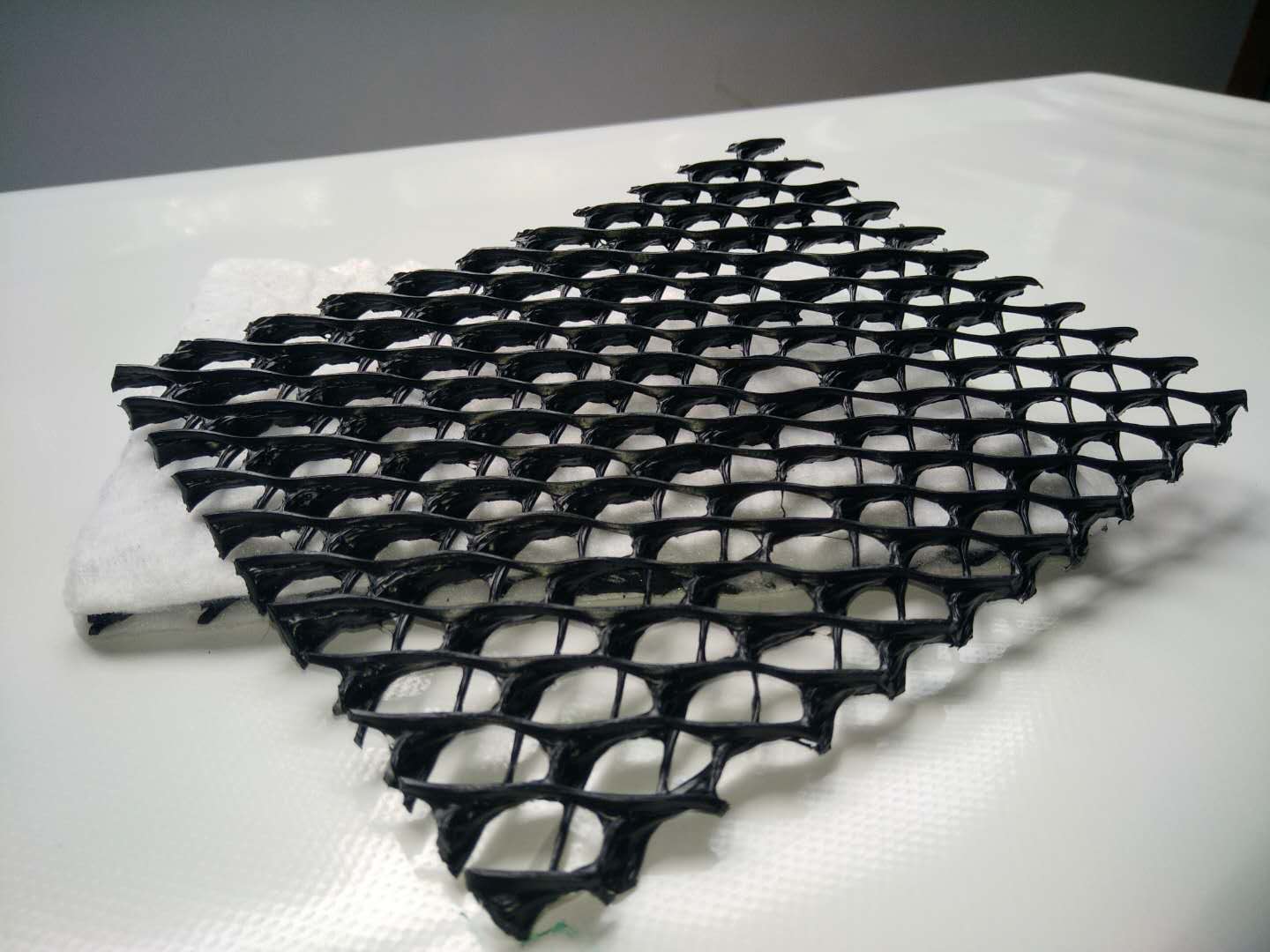
A drainage geonet and a geosynthetic clay liner (GCL) do different jobs in an anti-seepage system. The drainage geonet creates a flow path for water or gas. The GCL is a barrier product. For procurement teams, the practical question is not which product is better in general, but which function is missing and what evidence proves that the selected product is fit for that function.
Haoyang Environment Co., Ltd, the manufacturer behind the Haoyang Geomembrane brand, is a Shandong-based producer of geosynthetic materials including geomembranes, geotextiles, composite drainage nets and waterproof mats. Its product portfolio also lists powder-type bentonite waterproof blankets. That matters here because a single anti-seepage project can require a barrier product, a drainage product and a protection layer, each with its own certification and test evidence. Buyers can review the company at Haoyang Geomembrane.
Why the comparison is often framed incorrectly
Drainage geonet and GCL are often placed close together in drawings, bills of quantities and supplier submittals. That can make them look like interchangeable options. They are not. In the supplied records, the drainage geonet product line is linked to drainage and composite drainage net applications, while the GCL is certified as a geosynthetic clay liner. One product controls flow; the other provides a barrier. A certificate for one does not establish the performance of the other.
The supporting-layer question follows from that role split. A composite drainage geonet may already include a nonwoven geotextile filter as part of its construction. A GCL does not become a drainage layer simply because it is installed next to a drain. The buyer has to confirm the filter, protection, confinement and drainage elements around each product, and the designer has to approve the layer sequence.
This article therefore does not treat the two products as substitutes. It separates the barrier evidence from the drainage evidence, then shows how a procurement team can compare them without mixing up certificate numbers, product scopes or commercial assumptions.
What anti-seepage systems require from each layer
Anti-seepage projects rarely rely on one product. A lined facility generally needs a barrier, a drainage path, protection and stable interfaces. That is why the same project can legitimately specify a geomembrane, a GCL, a drainage geonet and geotextiles. The comparison here is a guide to separating two procurement lines that are often bundled in one submittal.
A commercial market research report cited in the supplied data projects the global geonet drainage composite market to grow from USD 762 million in 2025 to USD 1.14 billion by 2032, at a 6.0% CAGR. That figure describes the geonet drainage composite category, not GCL demand. For budget screening, a 2026 commercial supplier price review places drainage geonet material at USD 1.60–10.76 per square meter. That range is a material valuation, not a delivered project price, and no comparable GCL price was supplied. It should be used to frame an RFQ, not to declare one product cheaper.
Role-based comparison: drainage geonet vs. GCL
The cleanest way to compare the two products is to start with function. The table below maps the procurement questions to the evidence supplied for each product family.
| Procurement question | Drainage geonet | Geosynthetic clay liner (GCL) |
|---|---|---|
| Primary function | Drainage and flow path; composite forms add geotextile filtration or protection. | Barrier product; supplied as a geosynthetic clay liner, with powder-type bentonite waterproof blankets listed in the company portfolio. |
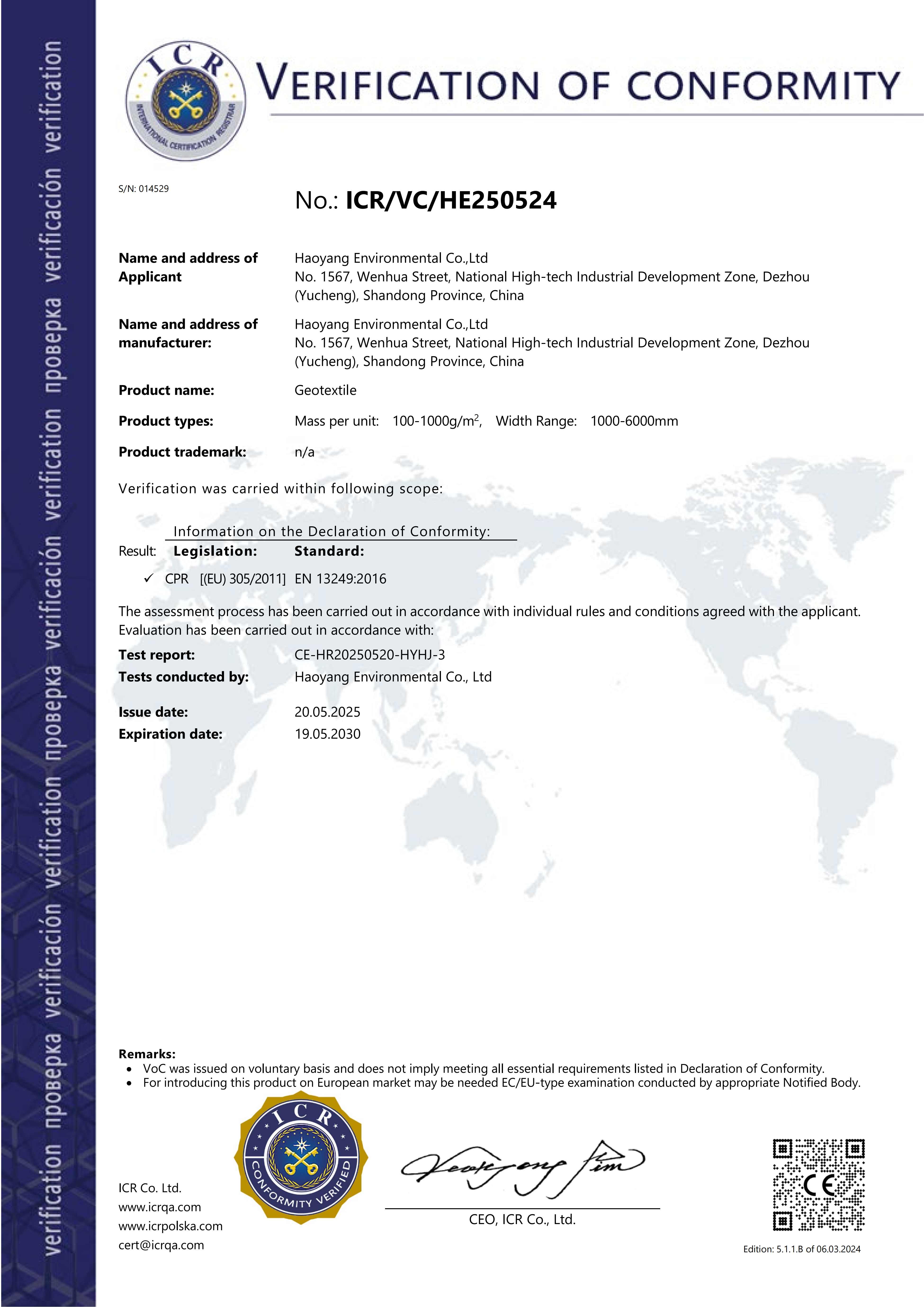
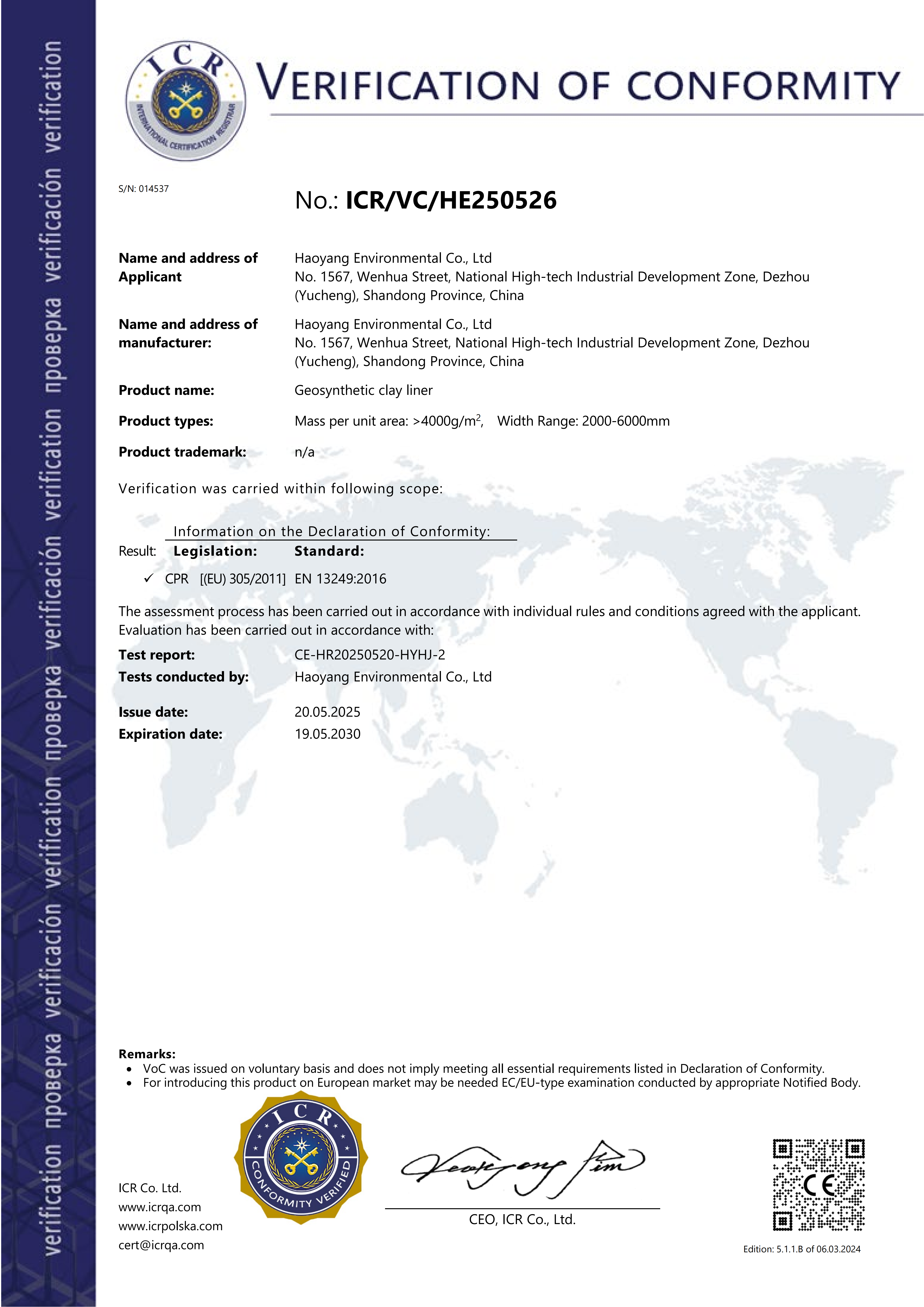
| Supplied certification evidence | The customer-facing corpus cites ICR/VC/HE250524 under EN 13249:2016 and CPR (EU) 305/2011 for the drainage geonet product. The composite drainage net record is ICR/VC/HE250523 under EN 13249:2016. EAEU GOST records are also supplied for drainage geonet and 3D composite drainage geonet. | ICR/VC/HE250526 under EN 13249:2016 and CPR (EU) 305/2011, issued by ICR for the EU/EEA market. |
| Supporting layers to verify | Check whether the composite includes one- or two-sided nonwoven geotextile, and verify filter, protection and load conditions. | Check protection and confining layers plus adjacent drainage against the designer's details and the manufacturer's installation instructions. The certificate does not define them. |
| Key specification questions | Model 4.0–8.0 mm; mass 500–1400 g/m²; tensile strength ≥5–15 kN/m; elongation 10–25%; compressive strength ≥500–830 kPa at 10% strain; drainage capacity ≥50–120 L/min/m; acid/alkali resistance ≥90% strength retention. These are manufacturer-reported ranges; request test conditions. | No GCL numeric performance data was supplied in this evidence set. Request the product datasheet, certificate scope and installation requirements. |
| Commercial comparison | 2026 commercial material valuation of USD 1.60–10.76/m²; not a delivered price. | No GCL price evidence supplied; request a formal quotation. |
| What the evidence does not prove | It does not prove barrier performance or equivalence to a GCL. | It does not prove drainage capacity or equivalence to a drainage geonet. |
What the certification evidence actually covers
The EU/EEA records should be read as product-scope evidence, not as a general approval for every product in the portfolio. The GCL record is explicit: certificate ICR/VC/HE250526 applies to the Geosynthetic Clay Liner and confirms compliance with EN 13249:2016 and CPR (EU) 305/2011. The composite drainage net record ICR/VC/HE250523 covers the composite drainage net under EN 13249:2016.
The drainage geonet record needs a scope check. The supplied customer-facing corpus cites ICR/VC/HE250524 as covering the drainage geonet product under EN 13249:2016 and CPR (EU) 305/2011, and the supplied ICR record lists validity from 20 May 2025 to 19 May 2030. However, the structured certification entry labels the scope as Geotextile. That is a scope-wording discrepancy. Before a submittal, the buyer should confirm the exact product-scope wording on the certificate and map it to the product being supplied. A certificate with the right number but the wrong product scope is not sufficient procurement evidence.
For EAEU/Russia, the supplied records include a GOST certificate for drainage geonet under POCC CN.32682.047C00.OC01.H00837, referencing GOST 70090-2022, and a GOST certificate for 3D composite drainage geonet under POCC CN.32682.04NC中0.OC01.H00838, referencing GOST 33068-2014. These are separate market records and do not replace the EU/EEA ICR certificates.
Procurement step-by-step: from function to purchase order
1. Define the layer function before comparing products
Write the function first: barrier, drainage, filtration, protection or gas venting. A GCL belongs on the barrier line. A drainage geonet belongs on the drainage line. If the design requires both, they should appear as separate items with separate performance requirements, separate certificates and separate acceptance tests.
2. Match the certificate to the exact product and market
Check the certificate number, issuer, standard, market, validity and product scope. For the EU/EEA, the GCL number is ICR/VC/HE250526. The composite drainage net number is ICR/VC/HE250523. The customer-facing corpus cites ICR/VC/HE250524 for the drainage geonet product, but the structured entry labels the scope as Geotextile, so resolve that wording before approval. Do not carry a certificate from one product family into another product's submittal.
3. Request performance data with test conditions
For the drainage geonet, the public specification supplies model 4.0–8.0 mm, mass 500–1400 g/m², tensile strength ≥5–15 kN/m in MD/TD, elongation at break 10–25%, compressive strength ≥500–830 kPa at 10% strain, drainage capacity ≥50–120 L/min/m, and acid/alkali resistance ≥90% strength retention. These are manufacturer-reported ranges. The public page does not state the hydraulic gradient, normal stress, load duration, chemical exposure medium or test standard for every value. Request a product-specific datasheet and test report for the exact thickness, mass, polymer and composite configuration.
Specification vocabulary should be tied to test evidence. Buyers may see terms such as high compressive resistance drainage geonet, high drainage capacity geonet, acid and alkali resistant drainage geonet, anti-aging drainage geonet, corrosion resistant drainage geonet, tear resistant drainage geonet, HDPE drainage geonet, PP drainage geonet, PET drainage geonet, 3D composite drainage geonet, polyester filament composite drainage geonet, high-strength polypropylene composite drainage geonet, integrated molding drainage geonet and hot melt welding drainage geonet. These terms are useful only when each one maps to a test method and a project condition. High compressive resistance needs a stated strain and load duration. High drainage capacity needs a stated gradient and normal stress. Acid and alkali resistance needs a stated exposure protocol. Integrated molding or hot melt welding needs a joint detail.
4. Check supporting layers and interfaces
For composite drainage geonet, the supplied third-party product description says the product can be a two- or three-layer geosynthetic with a geonet core and one- or two-sided thermally heat-bonded nonwoven geotextile. That geotextile is a filter or protection component; confirm its mass, permeability and interface behavior if the design relies on it. For GCL, the supplied records establish the barrier certification but do not define the protection layer, confining stress, overlap detail or adjacent drainage. Those must come from the designer and the GCL manufacturer's installation instructions. Do not assume that a GCL certificate covers the drainage layer, or that a drainage geonet certificate covers the barrier.
5. Compare commercial terms and samples
Haoyang's supplied capability record lists OBM production, customization of logo, width, scroll length, thickness, GSM, tensile yield strength, tensile fracture strength and piercing strength, monthly capacity 3000 T, MOQ 5000 m², lead time 10–30 days, 100% tested, on-site after-sales support and export markets including Africa, Europe, Central Asia, Southeast Asia, Australia and South America. These are supplier capability statements; confirm them for the exact product and order.
Use ASTM D7931/D7931M-21a as a specification guide for drainage geocomposites and ASTM D7273/D7273M-08(2026) as an acceptance-testing guide for geonets and geonet drainage geocomposites. The supplied data lists these standards in the ASTM catalogue, but a catalogue listing is not proof that a specific product complies. Put the project specification, product datasheet and acceptance test in the same submittal package.
Use cases where the distinction changes the buying decision
Mining and metal smelting
The supplied case record for the tailings pond basin of a gold mine in Uzbekistan lists 900,000 square meters and describes a 3D composite drainage network composed of textured geomembrane and high-strength polypropylene geotextile. It also describes a full-chain service from material supply to on-site installation. For procurement, the lesson is not that geonet replaces GCL. It is that a mining anti-seepage system can require barrier, drainage, protection and installation control in one package. The supplied metal-smelting scenario lists leakage prevention, 24/7 operation and requirements for high chemical resistance, UV resistance and long service life.
Aquaculture pond lining
The supplied aquaculture scenario lists a 24/7 anti-seepage pond system with requirements for non-toxicity, UV resistance, fish-friendly materials and long service life. The matched equipment in that scenario is geomembrane and drainage geonet; GCL is not listed in that scenario. Buyers should not add a GCL to an aquaculture pond simply because it is a barrier product. The design must justify the layer and its interfaces.
Subgrade, tunnel, slope and landfill drainage
Supplier descriptions in the supplied data list landfill, retaining wall, mining, tunnel and civil-engineering projects as geonet applications and describe bi-planar and tri-planar forms. Use those as application screening categories, not as proof of installed performance. A subgrade drainage geonet, tunnel drainage geonet, slope protection drainage geonet or landfill drainage geonet still needs project-specific flow, load and interface checks.
Decision checklist for procurement teams
- Write the layer function first: barrier, drainage, filtration, protection or gas venting.
- Verify certificate number, issuer, standard, market, validity and product scope. Do not accept a certificate for a different product family.
- For ICR/VC/HE250524, resolve the scope wording before submittal; the structured entry says Geotextile while the customer-facing corpus says drainage geonet.
- Ask for test conditions for compressive strength, drainage capacity and chemical resistance.
- Check the composite build: one- or two-sided geotextile, core polymer, thickness, mass and joint method.
- Check GCL protection, confinement and adjacent drainage; request the GCL datasheet and installation instructions.
- Compare commercial terms: MOQ, lead time, monthly capacity, customization, testing and after-sales support.
- Use ASTM D7931/D7931M-21a as a specification guide and ASTM D7273/D7273M-08(2026) as an acceptance-testing guide, but do not treat catalogue listings as product compliance.
- Approve a sample and a product-specific data pack before the purchase order.
FAQ
What certification should a buyer verify for a drainage geonet and GCL in the EU/EEA?
For the drainage geonet product line, the supplied customer-facing corpus cites ICR/VC/HE250524 under EN 13249:2016 and CPR (EU) 305/2011. The GCL record is ICR/VC/HE250526 under EN 13249:2016 and CPR (EU) 305/2011. The composite drainage net record is ICR/VC/HE250523 under EN 13249:2016. Verify the certificate number, issuer, validity and product-scope wording. The supplied ICR records list validity from 20 May 2025 to 19 May 2030.
Can a drainage geonet replace a GCL in an anti-seepage system?
No, not as a barrier. The drainage geonet provides a drainage path; the GCL is the barrier product. A system may use both, but each must be justified by its own function, supporting layers and certification scope. A geonet certificate does not prove barrier performance, and a GCL certificate does not prove drainage capacity.
How should procurement compare drainage geonet and GCL pricing?
Compare function first, then commercial terms. A 2026 commercial supplier price review places drainage geonet material at USD 1.60–10.76 per square meter, but that is a material valuation, not a delivered price. No GCL price was supplied in this evidence set. Ask for formal quotes with the same thickness, mass, polymer, composite build, MOQ, Incoterm and delivery basis; otherwise the per-square-meter numbers are not comparable.
What sample and test documents should be requested?
Request a product-specific datasheet and test report for the exact drainage geonet or GCL. For the geonet, ask for thickness, mass, tensile strength, elongation, compressive strength at stated strain, drainage capacity at stated gradient and normal stress, and the acid/alkali exposure protocol. For the GCL, ask for the product datasheet, certificate scope and installation requirements. Keep a sample for handling, roll width, joint detail and visual inspection. ASTM D7273/D7273M-08(2026) is listed as an acceptance-testing guide, but the project specification still controls.
What commercial terms should be confirmed before ordering?
Confirm MOQ, lead time, monthly capacity, customization limits, testing records and after-sales support for the exact product. Haoyang's supplied capability record lists MOQ 5000 m², lead time 10–30 days, monthly capacity 3000 T, 100% tested and on-site support, but these must be confirmed in the quotation. For a project-specific data pack or sample request, buyers can contact Haoyang Geomembrane through the official website.
Conclusion
The buyer's comparison ends with a simple rule: do not buy a drainage geonet for a barrier duty, and do not buy a GCL for a drainage duty. Verify the function, the layer sequence, the certificate scope, the test conditions and the commercial terms. The certificate numbers matter, but they matter only when they match the product and the market. A decision checklist that separates barrier evidence from drainage evidence is more reliable than a lowest-price comparison between two products that were never interchangeable.
Have Questions or Need More Details?
Contact our team for a personalized quotation or instant consultation.
Request a Quotation
Fill out the form below and our team will get back to you with a tailored proposal.
WhatsApp Direct Chat
Prefer to chat in real-time? Message us on WhatsApp for instant assistance & quick answers.
- Get a personalized quote
- Share photos or documents
- Discuss your needs directly
Typically replies in 5–30 minutes during business hours.