Efficient Drainage Geonet Procurement: Avoiding Risks and Ensuring Quality
The Ultimate Guide to Efficient Drainage Geonet Procurement: Avoiding Risks and Ensuring Quality
Procuring drainage geonet for industrial projects—especially in harsh environments like metal smelting and aquaculture—carries significant risks. Inconsistent product quality, mismatched specifications, unreliable supply, and hidden compliance gaps can lead to project delays, costly failures, and environmental liabilities. This guide equips procurement professionals with a structured approach to evaluate suppliers, verify product performance, and secure a reliable partnership. We'll draw on verified data from Haoyang Environment Co., Ltd., a leading Chinese manufacturer, to illustrate best practices.
What Is a Drainage Geonet?
A drainage geonet is a three-dimensional polymeric net structure designed to efficiently convey fluids within a plane. It functions as a synthetic drainage layer, replacing traditional granular materials like gravel. By providing high flow capacity under load, it prevents hydrostatic pressure buildup, protects underlying geomembranes, and stabilizes soil structures. Common materials include HDPE, PP, and PET, each offering distinct chemical and mechanical properties.
- Composite drainage geonet – bonded with geotextile on one or both sides for filtration and separation.
- Acid and alkali resistant drainage geonet – formulated to withstand aggressive leachates in mining or industrial applications.
- High compressive resistance drainage geonet – designed to maintain drainage capacity under deep burial loads (e.g., landfills, tailings dams).
- 3D composite drainage geonet – integrates a drainage core with high-strength polypropylene geotextile for enhanced performance.
Why Procurement Risk Mitigation Matters
In industries such as metal smelting and aquaculture, drainage geonets operate under extreme conditions: high chemical concentrations, UV exposure, heavy loads, and continuous hydraulic pressure. A single material failure can contaminate groundwater, kill fish stocks, or cause catastrophic slope instability. Procurement teams must therefore look beyond price and consider total lifecycle cost, manufacturer credibility, and compliance with international standards.
Industry Background and Growing Demand
Global investment in mining tailings storage facilities and modern aquaculture ponds is accelerating, particularly in regions like Central Asia, Southeast Asia, Africa, and South America. Countries such as Uzbekistan, Indonesia, Vietnam, and the Democratic Republic of Congo are expanding their base-metal and precious-metal operations, while aquaculture producers in Southeast Asia seek sustainable, leak-proof pond systems. These developments drive demand for specialized drainage geonets that offer high drainage capacity, tear resistance, and anti-aging properties.
Haoyang Environment Co., Ltd. (headquartered in Dezhou National High-tech Zone, Shandong, China) exemplifies the capabilities required to serve these markets. With a 200,000㎡ factory, 190 employees, and an annual output exceeding 33,000 tons, the company has supplied drainage geonet and geomembrane solutions to over 70 countries. Its products carry multiple certifications, including CE (EN 13249:2016) and GOST (for EAEU markets), ensuring compliance with rigorous international standards.
How to Select the Right Drainage Geonet: A Step-by-Step Procurement Framework
Step 1: Define Your Application Requirements
Begin by assessing the physical and chemical environment:
- Load conditions: For deep landfill or tailings pond applications, choose a high compressive resistance drainage geonet with compressive strength (10% strain) ≥500–830 kPa.
- Chemical exposure: In metal smelting, leachates often contain sulfuric acid or heavy metals. Require acid/alkali resistance ≥90% strength retention after standard testing.
- Hydraulic flow: Confirm the required drainage capacity, which can range from ≥50 to 120 L/min per meter (customizable).
- Thickness and mass: Typical thicknesses are 4.0–8.0 mm, with mass per unit area from 500–1400 g/m². Customization is common.
Step 2: Evaluate Supplier Credentials and Certifications
Request evidence of third-party testing and certifications:
- CE marking: Haoyang’s composite drainage net complies with EN 13249:2016 (Verification of Conformity ICR/VC/HE250523).
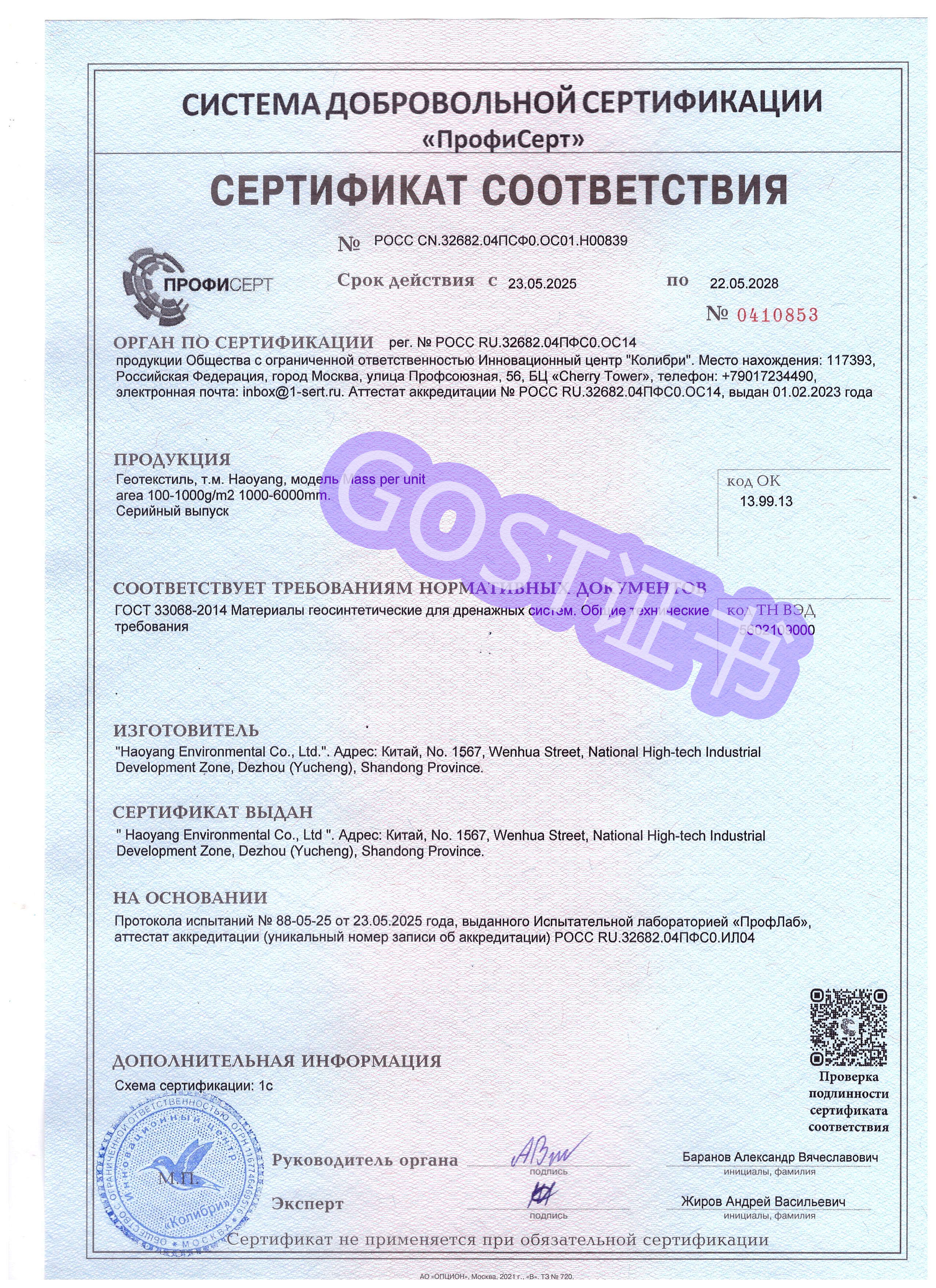
- GOST certification: For EAEU/Russia projects, ensure the supplier holds GOST 33068-2014 or relevant standards (e.g., certificate POCC CN.32682.041C00.OC01.H00839).
- CNAS laboratory testing: Haoyang operates a CNAS-accredited national laboratory, performing full-process quality inspection on every batch.
Step 3: Request Technical Data and Samples
Ask for a detailed datasheet including:
- Tensile strength (MD/TD): ≥5–15 kN/m
- Elongation at break: 10–25%
- Hydraulic conductivity / drainage capacity under normal load
- Chemical resistance test reports
Reputable suppliers like Haoyang can provide pre-shipment testing and even on-site support during installation.
Step 4: Negotiate Terms That Protect Your Interests
Based on Haoyang's standard commercial terms:
| Parameter | Typical Value |
|---|---|
| Minimum Order Quantity (MOQ) | 5,000 m² |
| Payment Terms | 30% deposit + 70% before shipment, or 100% T/T |
| Delivery Incoterms | FOB or CIF |
| Inspection | Pre-shipment test by CNAS lab |
| Lead Time | 10–30 days |
Step 5: Verify Quality Through Real-World Case Studies
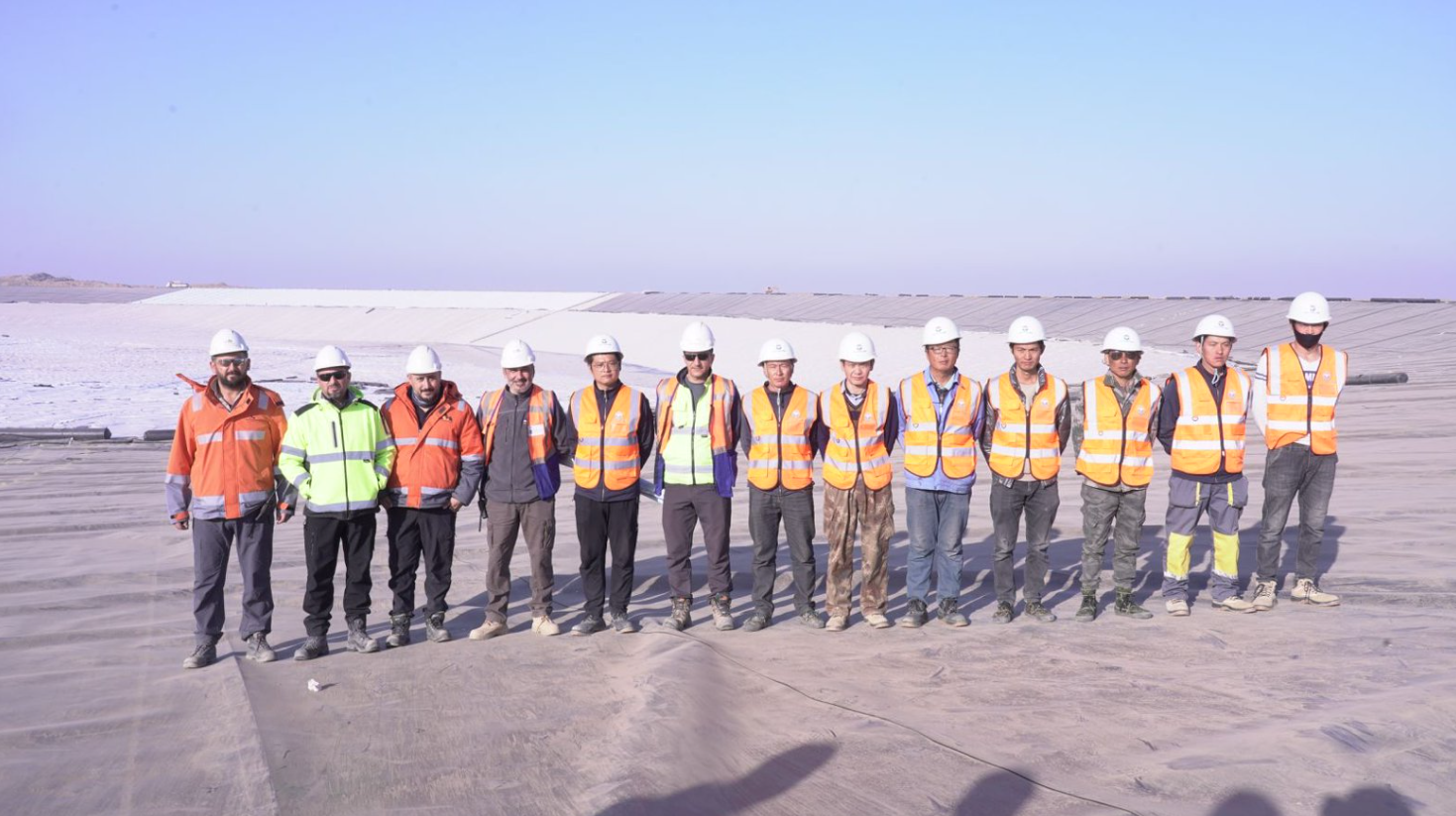
A supplier’s track record speaks volumes. Haoyang executed a large-scale seepage prevention project for a gold mine tailings pond in Uzbekistan, supplying 900,000 m² of textured geomembrane and 3D composite drainage geonet. The three-dimensional drainage net combined high-strength polypropylene geotextile with a drainage core, achieving a 70-year design life. The project required innovative manufacturing—using a five-layer co-extrusion line with online double-sided texturing—that reduced energy consumption by 25% while eliminating thermal aging risks from secondary processing. This case exemplifies the total solution approach: from material supply to on-site installation and construction supervision.
Frequently Asked Questions (FAQ)
Q: What is a drainage geonet and how does it work?
A: A drainage geonet is a polymeric net that provides in-plane drainage under load. It collects and conveys liquids (leachate, groundwater) to collection points, preventing pressure buildup and protecting liners.
Q: Who uses drainage geonets?
A: Mining operators, aquaculture farmers, landfill engineers, civil contractors, and infrastructure developers requiring reliable drainage in harsh environments.
Q: How do I choose between HDPE, PP, and PET materials?
A: HDPE offers excellent chemical resistance and UV stability; PP provides higher temperature resistance; PET delivers superior tensile strength. Selection depends on the specific chemical environment and loading.
Q: What is the typical minimum order quantity?
A: For Haoyang Environment, the MOQ is 5,000 m². Smaller trial quantities may be negotiable for sample testing.
Q: What payment terms are standard?
A: 30% deposit with 70% before shipment, or 100% T/T. FOB or CIF incoterms are commonly used.
Q: How can I be sure of product quality before shipment?
A: Request a pre-shipment inspection report from a CNAS-accredited lab. Haoyang conducts 100% testing and provides certificates of conformity (CE, GOST).
Q: What after-sales support is available?
A: Haoyang offers on-site installation guidance and technical support for large projects, ensuring correct deployment and long-term performance.
Conclusion
Efficient procurement of drainage geonet demands a systematic approach: define technical requirements, validate supplier credentials via certifications and third-party testing, negotiate protective terms, and rely on proven case studies. By partnering with a manufacturer like Haoyang Environment Co., Ltd., which combines 200,000㎡ of production capacity, a 190-person team, and a portfolio of more than 70 patents, buyers can minimize risk and maximize project success. For inquiries, contact Haoyang via email at 15315800874@163.com, phone +86 15315800874, or WhatsApp +86 15315800874. Visit our official blog at blog.haoyanghuanjing.com for more resources.
Request a Quote or Sample
Contact our sales team today to discuss your project requirements and receive a customized solution.
Have Questions or Need More Details?
Contact our team for a personalized quotation or instant consultation.
Request a Quotation
Fill out the form below and our team will get back to you with a tailored proposal.
WhatsApp Direct Chat
Prefer to chat in real-time? Message us on WhatsApp for instant assistance & quick answers.
- Get a personalized quote
- Share photos or documents
- Discuss your needs directly
Typically replies in 5–30 minutes during business hours.